
7 Best Strategies for Serving Unresponsive Pro Se Litigants Effectively
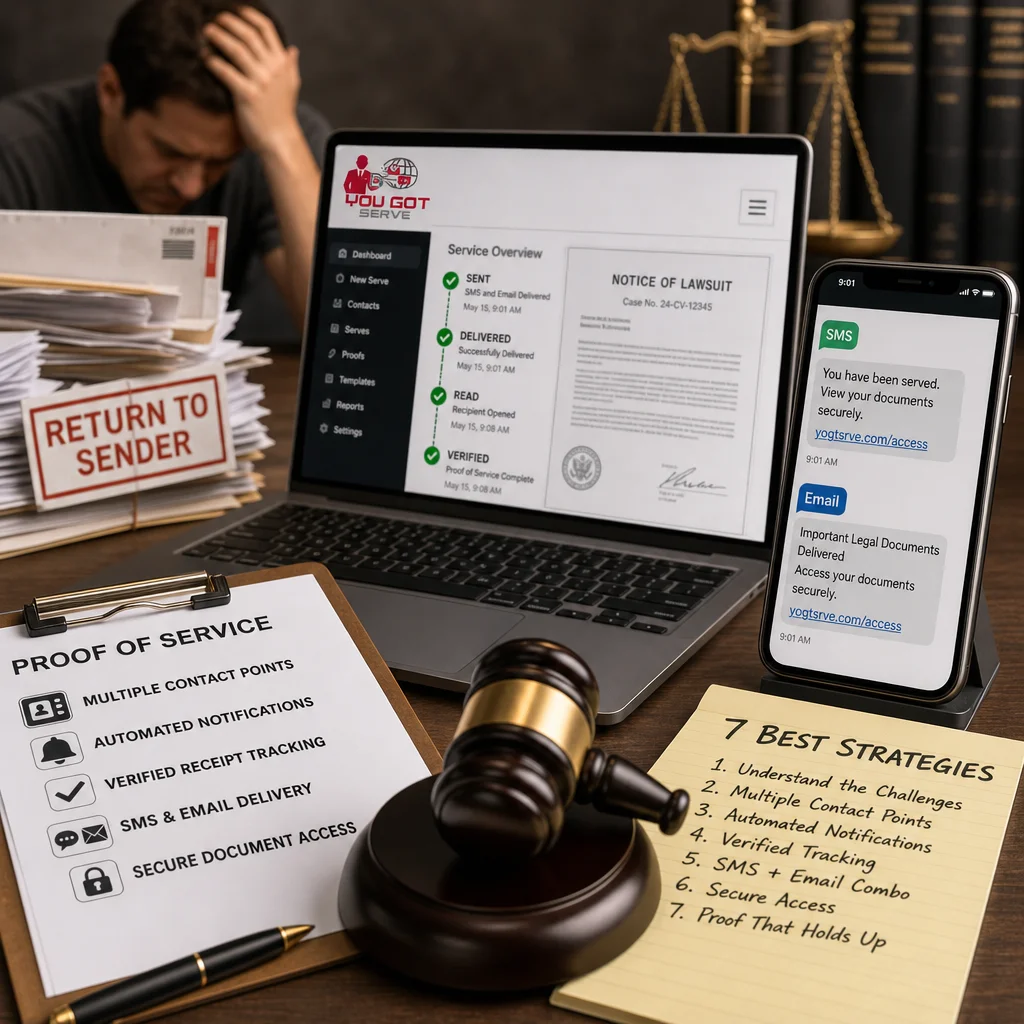
1. Understanding Why Pro Se Litigants Ignore Traditional Service
Pro se litigants often miss service because they operate outside typical professional workflows. They don't have office staff checking registered mail. They may lack a stable address or use mail forwarding services inconsistently. Unlike corporate defendants with legal departments, individuals frequently overlook certified letters or view them as spam.
Many pro se parties also experience genuine hardship locating reliable mail delivery. Frequent moves, job instability, and limited address stability mean traditional methods fail at the first hurdle. When certified mail bounces back undelivered, you're back to square one with no documented proof of a good-faith attempt.
The core issue is reach, not intent. Pro se litigants aren't deliberately evading service in most cases—they're simply difficult to contact through channels they don't monitor regularly. Recognizing this distinction shapes your entire service strategy. Instead of repeating failed methods, you need alternative channels that catch their attention where they actually engage: their phone and email inbox.
We designed YouGotServe to solve exactly this problem. Our platform delivers documents via SMS and email with verified receipt tracking, automated follow-ups, and documented proof of service. The result: you reach unresponsive defendants faster and build an auditable record the court will accept.
Takeaway: Replace assumptions about deliberate avoidance with a strategy addressing real accessibility gaps.
2. Leveraging Multiple Contact Points for Higher Reach
A single phone number or email address often isn't enough. Effective service to pro se litigants requires you to cast a wider net across multiple verified contact points.
Start by gathering all available information during skip tracing. We've integrated investigative skip tracing into our platform specifically for this reason—you locate the defendant's primary phone, secondary contacts, known family members' numbers, and multiple email addresses. Then you send notifications across all of them simultaneously.
This multi-channel approach dramatically increases the likelihood someone reads your message:
- Send to both primary and secondary email addresses
- Deliver to the defendant's phone plus any alternate numbers on file
- Include emergency contact information when available and permitted
- Reach out to known family members if jurisdictional rules allow it
When a defendant claims they never received notice, you have timestamped evidence showing delivery attempts across multiple verified channels. That creates a compelling factual record. If one email bounces, another might land. If one phone number is outdated, a secondary contact succeeds.
Pro se litigants often maintain multiple digital accounts without realizing courts may attempt service through any of them. By sending to several simultaneously, you eliminate the "I didn't check that account" defense.
Takeaway: Gather and verify multiple contact points during your initial investigation, then use them all simultaneously in your service delivery.
3. Using Automated Daily Notifications to Break Through
A single notice rarely lands. Pro se litigants often delete or ignore first contact, assuming it's marketing or a scam. Strategic repetition changes the outcome.
Our 60 and 90-day notification cycles deliver messages on a schedule you set, ensuring multiple delivery attempts across an extended period. You're not sending one email and hoping—you're building a pattern of verifiable contact attempts.
Daily or regular notifications work because they:
- Overcome initial dismissal as spam or irrelevant
- Create layered proof of persistent, good-faith attempts
- Give defendants multiple opportunities to acknowledge receipt
- Establish a clear timeline courts appreciate in their records
Set the frequency according to your jurisdiction's rules. Some courts permit daily notifications; others require specific intervals. The goal is maintaining contact pressure without crossing into harassment.
When a defendant claims non-service, you present a timeline showing ten documented delivery attempts across different dates. That evidence is far stronger than a single failed certified mail attempt. Combined with verified delivery confirmation, it becomes nearly unassailable.
Takeaway: Schedule recurring notifications over weeks or months, not one-off attempts, to overcome dismissal and build court-ready documentation.
4. Implementing Verified Receipt Tracking and Confirmation
Traditional service methods offer minimal verification. Certified mail provides a return receipt, but that only confirms delivery to an address, not that the defendant actually opened and read it. Email offers even less certainty.
We designed verified receipt tracking to solve this gap. When you send documents through our platform, the recipient must enter a code to access the document. That interaction creates timestamped proof they accessed the content. You're not guessing whether service occurred—you know exactly when they opened the notice.
This verification layer provides:
- Timestamped proof of actual document access, not just delivery
- A verifiable chain of evidence for the court record
- Reduced likelihood of "I didn't receive it" arguments
- Clear documentation of when the defendant became aware of the case
If your jurisdiction permits electronic service, track document delivery features give you complete visibility. You can monitor which notifications were opened, when they were read, and from which device. That transparency becomes your strongest defense against service challenges.
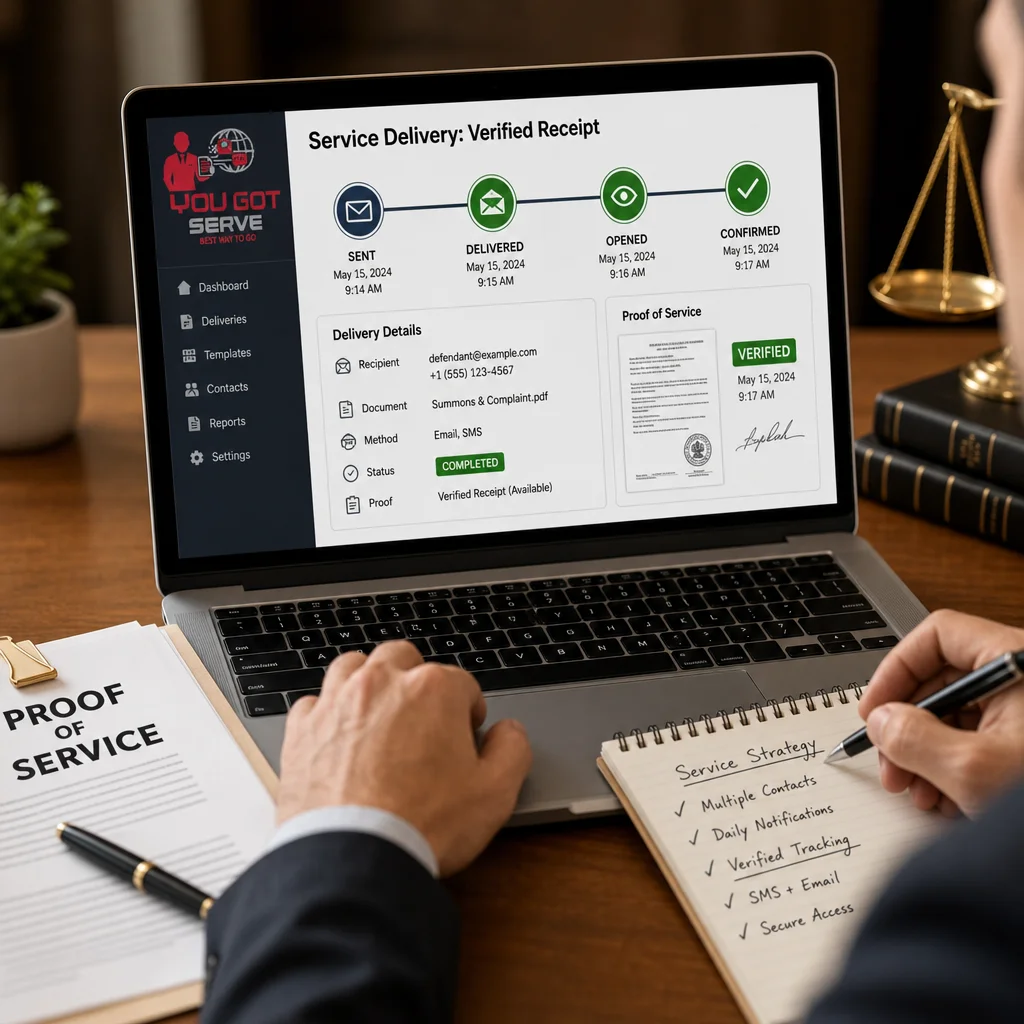
Some jurisdictions require verified delivery before electronic service counts as legally effective. Check your local court rules, but verified tracking generally strengthens your position significantly.
Takeaway: Implement code-protected document access that creates timestamped proof of actual reading, not just delivery.
5. Combining SMS and Email for Maximum Compliance
SMS and email serve different purposes in service strategy. Email works for longer documents and formal notices; SMS excels at immediate alerts and breakthrough messages.
Combining both maximizes your compliance odds:
SMS delivery advantages:
- Higher open rates than email (typically 98% within 3 minutes)
- Cuts through inbox clutter
- Reaches users even with older devices
- Creates urgency through familiarity with text messages
Email delivery advantages:
- Accommodates longer documents and full court filings
- Provides professional formatting and attachments
- Offers a permanent written record
- Better for formal legal notices and comprehensive service packets
Our dual SMS and email approach sends both simultaneously. The SMS alerts the defendant that an important notice is coming, driving them to check email. Email contains the full document with access details. When combined, SMS and email create a layered notification strategy that's difficult to miss or ignore.
Pro se litigants monitor text messages more reliably than email. A text saying "You have an important legal notice waiting—click here to access it" prompts action. They then find detailed information via email where they can reference it later.
Takeaway: Lead with SMS to capture attention, follow with email for document substance and permanence.
6. Securing Documents with Code-Protected Access Systems
Pro se litigants lack the professional security infrastructure of law firms. Sending sensitive court documents via standard email or SMS without protection exposes private information. You need layered security that protects the defendant while maintaining your compliance record.
Code-protected document access solves this. The defendant receives an SMS or email alerting them to a notice but doesn't see the actual document content until they enter a code. That code prevents accidental forwarding of sensitive materials and ensures only the intended recipient accesses the documents.
This security approach provides:

- End-to-end encryption for document transmission
- Verified confirmation that only the intended recipient accessed the filing
- Protection against credential compromise or unintended disclosure
- Court-admissible proof the defendant controlled the access key
When a defendant enters their code to view documents, the timestamp and access confirmation become part of your court record. The security step simultaneously protects privacy and creates verification evidence.
This matters particularly when serving divorce decrees, financial information, or other sensitive filings. Pro se litigants deserve privacy protection, and you avoid liability for unsecured disclosure. Security and compliance work together here.
Takeaway: Require code entry to access documents—it protects privacy, prevents forwarding, and creates verifiable access records.
7. Maintaining Detailed Electronic Records for Court Admissibility
Electronic service only matters if courts accept your proof. That requires meticulous documentation of every step in your service process.
We design our platform to generate court-ready records automatically. Every notification sent, timestamp, delivery confirmation, access record, and failed attempt is logged in one place. You export a comprehensive report showing the complete service timeline.
Courts evaluating electronic service admissibility typically review:
- Dates and times of all delivery attempts
- Proof the defendant's contact information was valid and verified
- Documentation the defendant accessed or received the notice
- Evidence of compliance with jurisdictional rules
- A clear chain showing good-faith, persistent attempts
Detailed records transform borderline service cases into airtight documentation. If a defendant claims non-service, you present timestamped SMS delivery records, email open confirmations, and document access logs. The judge sees a methodical, documented effort.
Check your local court rules before relying on electronic service—acceptance varies by jurisdiction. When courts permit electronic service, your detailed records ensure you meet the admissibility standard.
Keep your electronic records organized and accessible for years after service. Digital documentation lasts longer than physical mail records and supports appeals or post-judgment enforcement long after the initial case closes.
Takeaway: Export complete timestamped records automatically and organize them by case for instant court submission and defense against service challenges.
For further reading: Track document delivery.