
Motion Practice and Court-Ready Templates for Electronic Service Defense
Why Courts Now Accept Electronic Service of Documents
Courts have increasingly embraced electronic service because it accelerates litigation while maintaining verifiable proof of delivery. Federal Rule of Civil Procedure 5(b)(2) and similar state court rules now authorize service by email when parties consent or courts order it. This shift reflects a practical reality: traditional personal service and certified mail often fail when defendants are hard to locate or deliberately avoid service.
Modern courts recognize that timestamped electronic delivery provides superior documentation compared to conventional methods. When you serve documents electronically, you create an automatic audit trail. The recipient receives notice immediately, and you obtain instantaneous proof rather than waiting days for a return receipt from the postal service.
Your jurisdiction's court rules determine what electronic service methods are permitted. Before filing a motion to serve electronically, review your local civil procedure rules and any standing orders from your assigned judge. Some courts require prior consent, while others allow electronic service after a good-faith attempt at traditional service fails.
The Challenge Legal Professionals Face Defending Service Methods
Courts scrutinize service methods carefully because improper service can void a judgment. When you rely on electronic service, you must demonstrate both that the method was authorized and that the defendant received actual notice. Judges want clear evidence: Who received the notification? When? Through which channel?
Many litigants struggle to present this evidence because their service method lacks built-in documentation. An email sent from a standard inbox doesn't generate court-ready proof. You might know the defendant read it, but you cannot prove it in front of a judge without additional corroboration.
The burden falls on you to construct a compelling motion that addresses three critical questions: Was electronic service authorized under the court rules? Did the recipient actually receive notice? Is there documented evidence of delivery? Weak answers to any of these invite opposing counsel to challenge your service method and delay the case.
How We Support Motion Practice with Verified Delivery Records
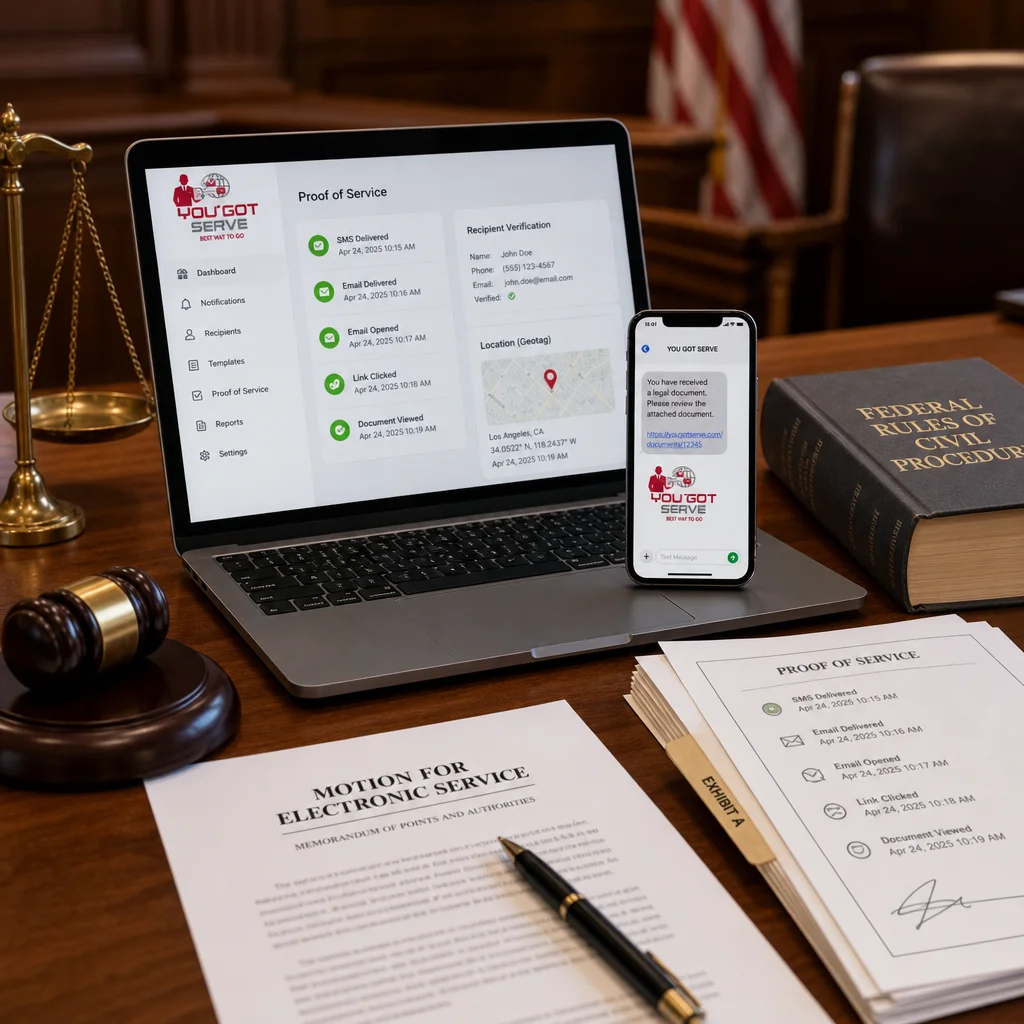
We designed our platform specifically to address the evidentiary gaps that courts identify during service disputes. Our system generates court-ready documentation for every notification attempt: delivery timestamps, recipient verification codes, and geolocation data when applicable.
When you use our platform to serve documents electronically, every step is logged. The recipient must enter a secure code to access the document, creating verified proof they received it. This code-protected access prevents opposing counsel from claiming the defendant never saw the notice.
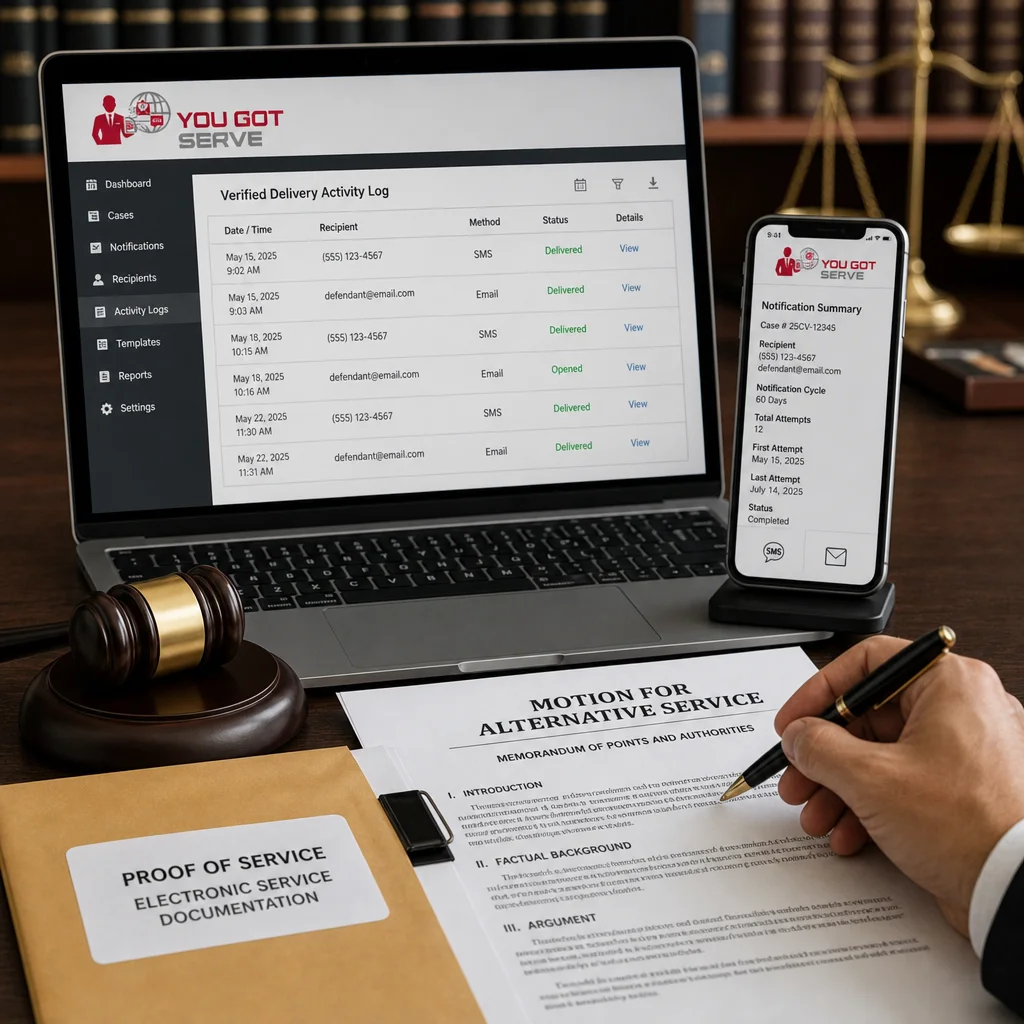
We also maintain detailed activity logs showing when notifications were sent, which channels were used (SMS or email), and when recipients interacted with the documents. This complete record becomes your motion exhibit, transforming what might otherwise be disputed into verifiable fact.
Building Your Motion with Documented Notification Cycles
Our platform supports both 60 and 90-day notification cycles, allowing you to demonstrate persistent, good-faith attempts at service. Your motion should explain the notification schedule: "On [date], we sent the initial notice via SMS and email. The defendant did not respond. On [date], we sent a second notification."
Courts appreciate documented persistence because it shows you did not attempt service just once and give up. Multiple notification attempts across weeks or months establish that the defendant had genuine opportunity to receive notice, even if they were initially unreachable or ignored the first attempt.
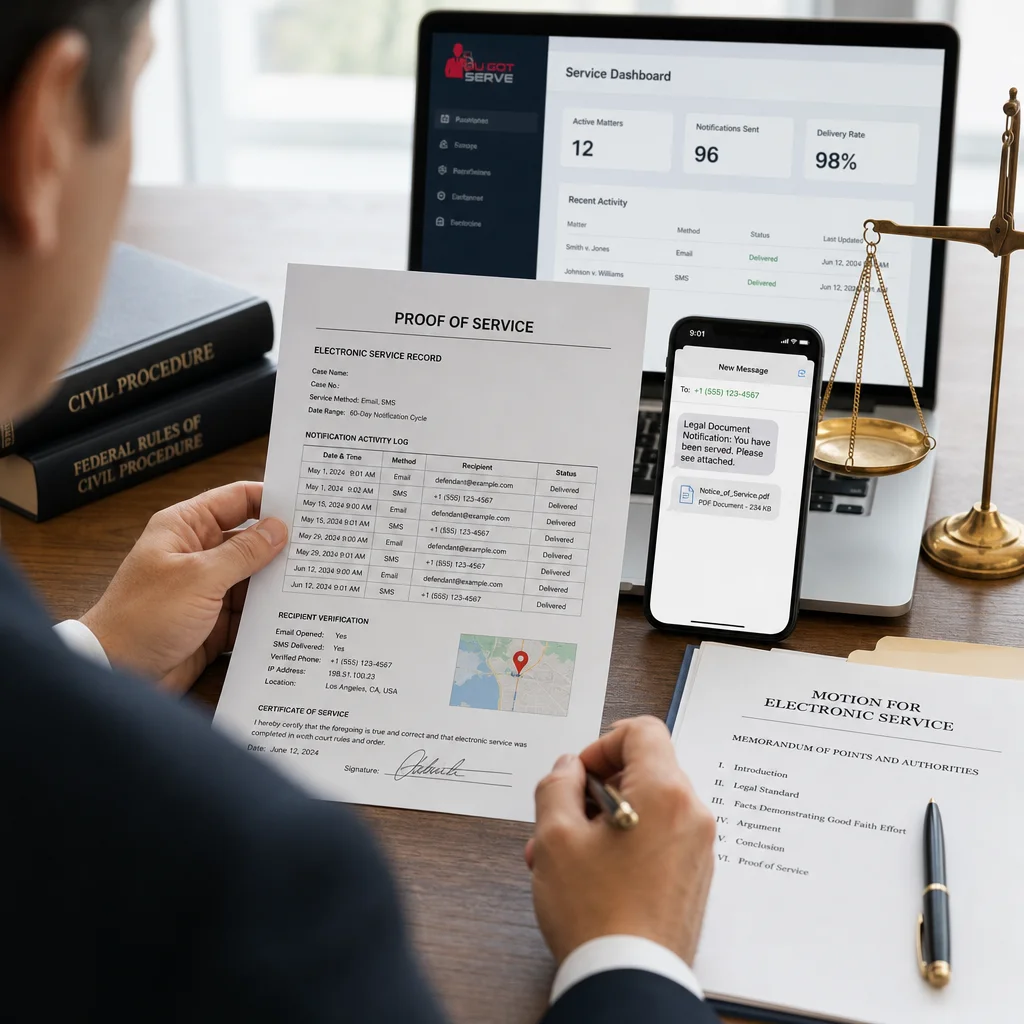
Your motion should include a timeline table listing each notification date, the method used (SMS, email, or both), and the outcome. Reference our platform's activity logs as the source for this timeline. When the court can see a systematic, documented approach, objections based on "I never got it" become much harder to sustain.
Leveraging Recipient Verification and Geolocation Data in Court Filings
Recipient verification codes provide concrete proof that someone accessed the document. When you file your motion, include the timestamp showing when the code was entered and which device accessed the secure portal. This detail matters because it directly refutes claims of non-delivery.
Geolocation data, when available and legally permissible in your jurisdiction, strengthens your motion further. It can show that the recipient accessed documents from a known address or location consistent with their residence or business location. Courts find this persuasive corroboration that the right person received the notification.
In your motion exhibits, label these verification records clearly. For example: "Exhibit A: Platform Delivery Report showing SMS delivery at 2:47 PM on [date] to [phone number], with recipient code entry logged at 3:12 PM the same day from [location]." This specificity transforms abstract claims into documented evidence.
Presenting Proof of Service Through Timestamped Activity Logs
Timestamped activity logs form the backbone of your service affidavit and motion exhibits. These logs show every action: notification sent, delivery confirmed, code accessed, document viewed, and any resend attempts. Courts rely on this granular detail to evaluate whether service was actually effective.
Our platform generates these logs automatically and in a format judges recognize. The logs include:
- Date and time of each notification attempt
- Delivery channel (SMS, email, or both)
- Recipient response or interaction (code entry, document access)
- Any system errors or failed delivery attempts
- Notification cycle history
Do not simply state "service was achieved." Instead, walk the court through the activity log chronologically. Narrative plus documentation creates credibility. The judge sees not only your claim but the underlying evidence supporting it.
Complying with Local Court Rules and Electronic Service Requirements
Before relying on electronic service, verify your court's specific requirements. Some jurisdictions require that you first attempt traditional personal service and fail. Others require the defendant's prior written consent. Still others permit electronic service only in specific case types.
Check local court rules and any administrative orders from your district. Many courts have adopted electronic service protocols for all litigants, while others require court approval by motion. Your jurisdiction's stance directly affects how you frame your motion and what evidence you must present.
We designed our platform to support compliance with varying jurisdictional rules. Our documentation is flexible enough to satisfy different court standards, but your motion must still address your specific court's requirements. When you check local rules first and then reference them explicitly in your motion, you demonstrate preparation and respect for the court's authority.
Common Motion Objections and How Our Platform Addresses Them
Opposing counsel will likely raise these objections: the defendant did not consent, the method was not authorized, there is no proof the defendant actually received notice, or the notification came too late before a deadline.
Our verified delivery records directly counter the "no receipt" objection. The code-protected access log proves someone accessed the document. If opposing counsel claims they did not know to check, our notification evidence shows multiple attempts across weeks or months.
For authorization objections, our platform's documentation supports your motion by showing you attempted good-faith service using reasonable methods. For timing objections, our timestamped logs prove notification was sent well before relevant deadlines. When you present comprehensive platform documentation, opposing counsel must argue substantive grounds for objecting, not procedural technicalities.
Preparing Your Service Affidavit with Complete Delivery Documentation
Your service affidavit should walk the court through your service process step by step. Begin by explaining why traditional personal service failed or was impractical. Then describe the electronic service method you selected and why it complies with court rules.
Include a detailed account of each notification attempt, referencing specific dates and times. For example: "On March 15, 2026, I served the defendant via SMS and email at [contact information]. The recipient accessed the secure document portal on March 15 at 2:47 PM using a verification code, as shown in Exhibit A. I sent a second notification on March 22 after no response, which the defendant accessed on March 23."
Conclude by attaching the platform's activity log as your primary exhibit. Your affidavit narrates the story; the platform documentation proves it happened. This combination is far more persuasive than either alone.
Templates and Best Practices for Motion Submissions
Start your motion with a clear caption: "MOTION TO ACCEPT ELECTRONIC SERVICE OF PROCESS" or "MOTION FOR AUTHORIZATION OF ELECTRONIC SERVICE" depending on your court's preferred language.
Structure your motion as follows:
- Introduction stating the defendant's identity and case background
- Statement of facts detailing why traditional service failed or was impractical
- Legal argument citing your jurisdiction's rules permitting electronic service
- Description of the electronic service method and platform used
- Evidence section referencing exhibits (activity logs, delivery records, verification timestamps)
- Conclusion requesting court approval and acceptance of service
Use clear, short sentences and active voice. Avoid dense paragraphing. Headers within your motion improve readability and help the judge follow your argument. Reference exhibit numbers consistently (Exhibit A, Exhibit B, etc.) so the court can easily cross-reference supporting documentation.
Real-World Examples of Successful Electronic Service Defenses
Consider a case where a defendant evaded service for eighteen months. Traditional process servers failed to locate them. The plaintiff's attorney obtained court authorization for electronic service via SMS to a known phone number. Our platform sent monthly notifications across a 90-day cycle. When the defendant eventually accessed the portal, the verified delivery log became dispositive proof of service. The court accepted service, and the case proceeded without appeal.
Another scenario: A self-represented plaintiff needed to serve an out-of-state corporate defendant that claimed to have no registered agent. Electronic service via email to the company's known contact address, with delivery verification, provided reliable proof sufficient for jurisdictional purposes. The court accepted service after reviewing our platform's timestamped records, which showed multiple delivery attempts and confirmed access.
These examples illustrate that courts accept electronic service when you provide verifiable delivery documentation. The key is presenting evidence, not just assertion.
Next Steps to Strengthen Your Service of Process Strategy
Start by reviewing your local court rules and any standing orders governing electronic service. Identify whether your jurisdiction requires prior court approval or party consent.
Prepare your service motion now, before attempting electronic service. Your motion framework should include the elements outlined above. Gather all necessary contact information for the defendant and verify it is current.
When you use our electronic service platform, maintain detailed records from the start. Our system handles documentation automatically, but you should review activity logs regularly and organize them for motion exhibits. This proactive approach ensures you never lack evidence when the moment arrives to file your motion.
Contact our team to discuss your specific case requirements and how our platform can generate the verified delivery documentation your motion needs. We can help you build a court-ready service defense that stands up to scrutiny.