
Skip Tracing and Electronic Service: Finding and Serving Hard-to-Locate Recipients
When Traditional Service Fails: The Problem With Hard-to-Locate Recipients
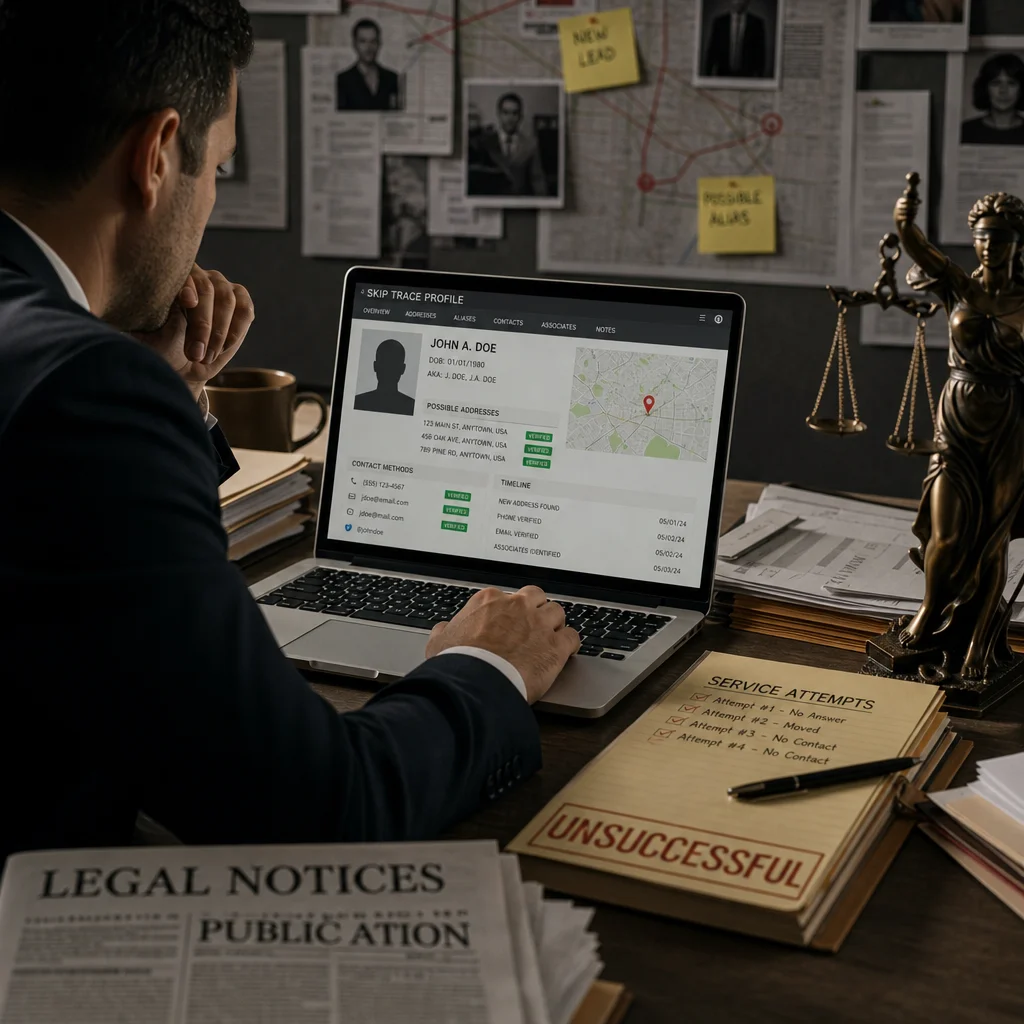
Finding a defendant who doesn't want to be found is one of litigation's oldest challenges. People relocate without forwarding addresses, use aliases, or simply refuse to answer doors. When traditional personal service fails repeatedly, your case stalls. Months pass. Court deadlines approach. The plaintiff grows frustrated, and resolution feels impossible.
This scenario plays out in courtrooms and legal offices across the country. Whether you're pursuing a debt claim, enforcing a contract, or handling a family law matter, you need proof that notice reached the defendant. Without verified service, no judgment holds weight.
The consequence is clear: without a reliable way to locate and serve respondents, litigation becomes expensive, slow, and uncertain. That's where skip tracing and electronic service change the equation.
Why Skip Tracing Matters in Modern Litigation
Skip tracing is investigative research designed to locate individuals who are hard to find. It combines public records, data aggregation, and verification techniques to uncover current addresses, phone numbers, email accounts, and other contact information.
For litigation purposes, skip tracing serves a practical function: it provides current contact details for defendants or respondents who have evaded traditional service attempts. Instead of assuming someone is unreachable, you have concrete leads to pursue.
Modern skip tracing tools access databases that personal service processes cannot leverage. These include utility records, social media profiles, employment data, and telecom registries. The result is a higher likelihood of locating the target and a documented record of the effort.
When integrated with electronic service, skip tracing accelerates the entire process. You move from "I don't know where they are" to "I have their contact information and verified proof they received notice." This shifts litigation from stalled to moving forward.
The Limits of Traditional Personal Service and Newspaper Publication
Traditional personal service requires a process server to locate and hand-deliver documents to the defendant in person. When that fails, many jurisdictions fall back on newspaper publication as a last resort. Both methods have significant drawbacks.
Personal service is expensive and time-consuming. A process server charges per attempt, and tracking down a mobile or evasive defendant can require dozens of visits. Newspaper publication is slower still. You must typically publish a notice for weeks or months, wait for a statutory period to expire, and then proceed. This adds weeks or months to your timeline.
Neither method provides real-time proof of delivery or recipient engagement. With newspaper publication, you have no way to confirm the defendant actually saw the notice. Courts accept it as constructive service based on the assumption that a reasonable person would see a published notice, but that assumption is exactly that—an assumption.
The cost difference is stark. A series of failed personal service attempts and subsequent newspaper publication can cost hundreds to thousands of dollars. Electronic service, by contrast, is a fraction of that expense.
How Electronic Service Bridges the Gap
Electronic service delivers court documents via email and SMS to verified contact information. The method is faster, more affordable, and produces timestamped proof of delivery that newspaper publication cannot match.
Here's the practical advantage: once you have current contact details (via skip tracing or other investigation), you can notify the recipient immediately. Our platform sends documents via multiple channels, tracks delivery, and logs every interaction. If the recipient opens the email or clicks the SMS link, you have documented evidence of receipt.
Electronic service also works where traditional service has exhausted options. If a defendant has moved frequently, changed phone numbers repeatedly, or actively avoided service, electronic service to a verified email or phone number can succeed where in-person attempts fail.
The critical qualification: acceptance of electronic service varies by jurisdiction. Before relying on electronic service, check your local court rules. Many courts now permit it under specific conditions, especially when personal service has been attempted and failed. We design our platform to support compliance with those requirements, but the final determination rests with your court.
Combining Skip Tracing Intelligence With Verified Electronic Delivery
The most powerful approach combines skip tracing with electronic service. Skip tracing locates the defendant and provides contact information. Electronic service then delivers notice reliably and creates proof of delivery.
Consider this scenario: You have a default judgment defendant who has ignored collection efforts for months. A process server cannot find them. Traditional newspaper publication would take 8-12 weeks and cost $800-1,200.
With skip tracing, you locate a current email address and phone number within days. With electronic service, you deliver notice the same week and receive timestamped confirmation of delivery within hours. Total cost: a fraction of newspaper publication. Total time: 7-10 days instead of 3+ months.
This combination works because each method compensates for the other's limitations. Skip tracing provides accurate contact details. Electronic service ensures reliable, documented delivery. Together, they create a complete solution for defendants who are difficult to reach through conventional means.
Our Integrated Approach to Recipient Verification
We've designed our platform to verify recipient identity before documents are accessible. This protects against fraud and ensures documents reach the intended recipient, not a wrong number or inactive account.
When we send a notice, the recipient receives a secure code. They must enter that code to access the document, which verifies they are the intended recipient and confirms they actively engaged with the notification. This verification step provides stronger proof of service than simple delivery logs alone.
The process is straightforward for the recipient. They receive an SMS or email with a link and code. They click or enter the code. The document appears in a secure portal. The entire interaction is timestamped and logged.
For you, this means clear documentation: not only was the email sent and opened, but the recipient verified their identity and accessed the document. Courts recognize this as reliable proof of service because it requires active participation from the recipient.
Multiple Contact Points: Email, SMS, and WhatsApp Capabilities
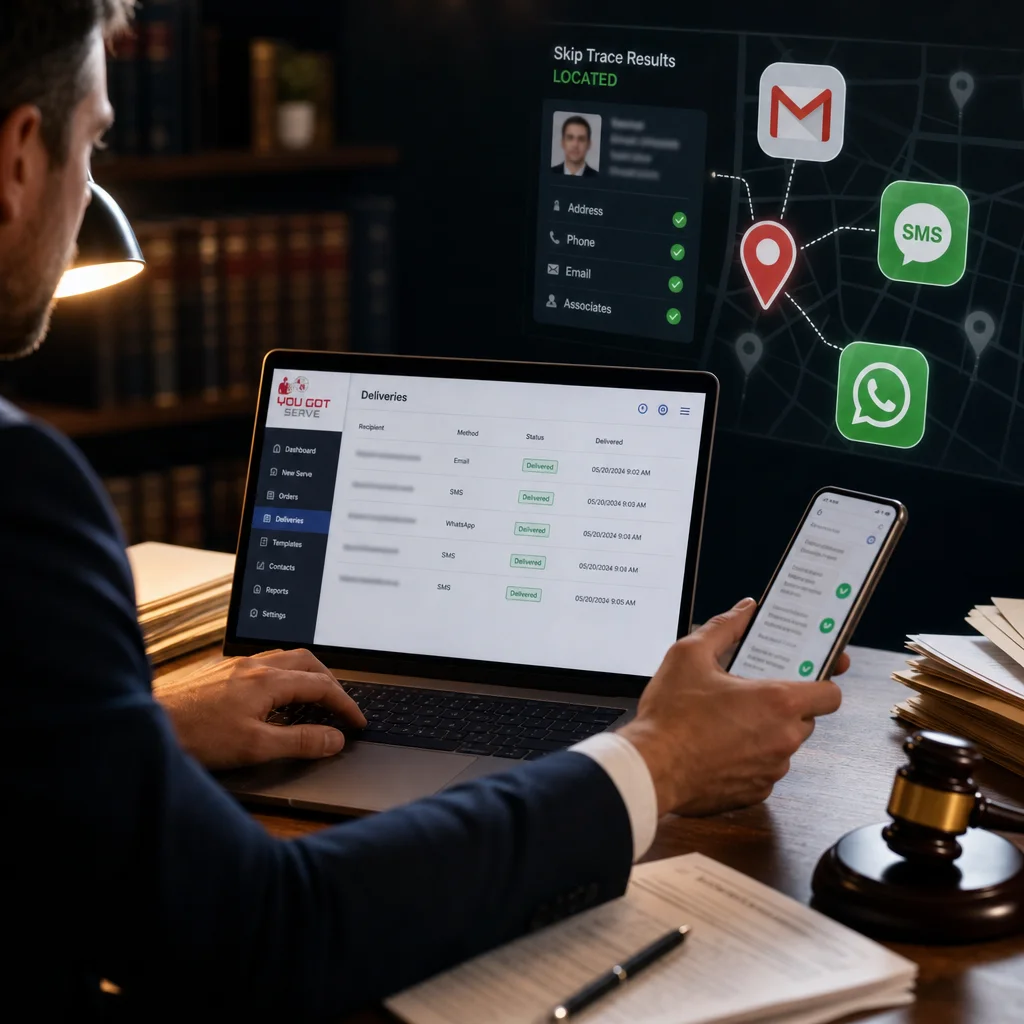
We know that relying on a single contact method is risky. Email can go to spam. Phone numbers change. That's why our platform delivers via multiple channels simultaneously.
When you serve documents through us, we send notification via email and SMS at the same time. This dual approach dramatically increases the likelihood that the recipient notices and engages with the notice.
SMS is particularly effective for recipients who check email sporadically. A text message notification arrives immediately and typically gets read within minutes. Email provides a formal record and allows for larger documents or detailed explanations.
WhatsApp capability expands reach even further, especially for recipients with international contacts or those who rely on messaging apps instead of traditional email and SMS. Multiple contact points mean fewer excuses for claiming they never received notice.
Extended Notification Campaigns: 60-Day and 90-Day Service Options
Court rules often require repeated notice attempts before service can be considered complete. We build this requirement into our platform with 60-day and 90-day notification cycles.
These cycles send multiple reminders to the recipient over an extended period. If the recipient doesn't acknowledge receipt after the first notice, a second notice follows after a set interval. If they still don't respond, a third notice is sent later.
This approach satisfies court requirements for multiple attempts at service while maintaining a complete audit trail. Every notification is logged with timestamps and delivery status. You can track every document delivery and receipt in real time.
Extended campaigns also increase the practical likelihood of reaching the recipient. Life happens. People miss emails. They see a text and dismiss it. Multiple touchpoints over weeks or months dramatically improve the odds that notice eventually lands and is read.
Documented Proof of Service for Court Compliance
Proof of service is what the court cares about most. You need to demonstrate to a judge that the defendant received notice and had an opportunity to respond.
Our platform generates a detailed affidavit of service that documents every step: when the notice was sent, via what channels, when it was delivered, and when the recipient accessed it. This documentation is far more detailed than a process server's return of service or a newspaper publisher's affidavit.
Judges recognize electronic delivery documentation because it's objective and timestamped. There's no discretion involved. The server didn't decide whether service was good enough. The system logged measurable events: email sent, delivery confirmed, code accessed, document opened.
This level of documentation strengthens your legal position. It removes ambiguity from the record and gives the court confidence that the defendant had genuine notice. Document tracking and proof of service are built into our system, so you have everything needed for court filings from day one.
Cost-Effective Alternative to Newspaper Publication
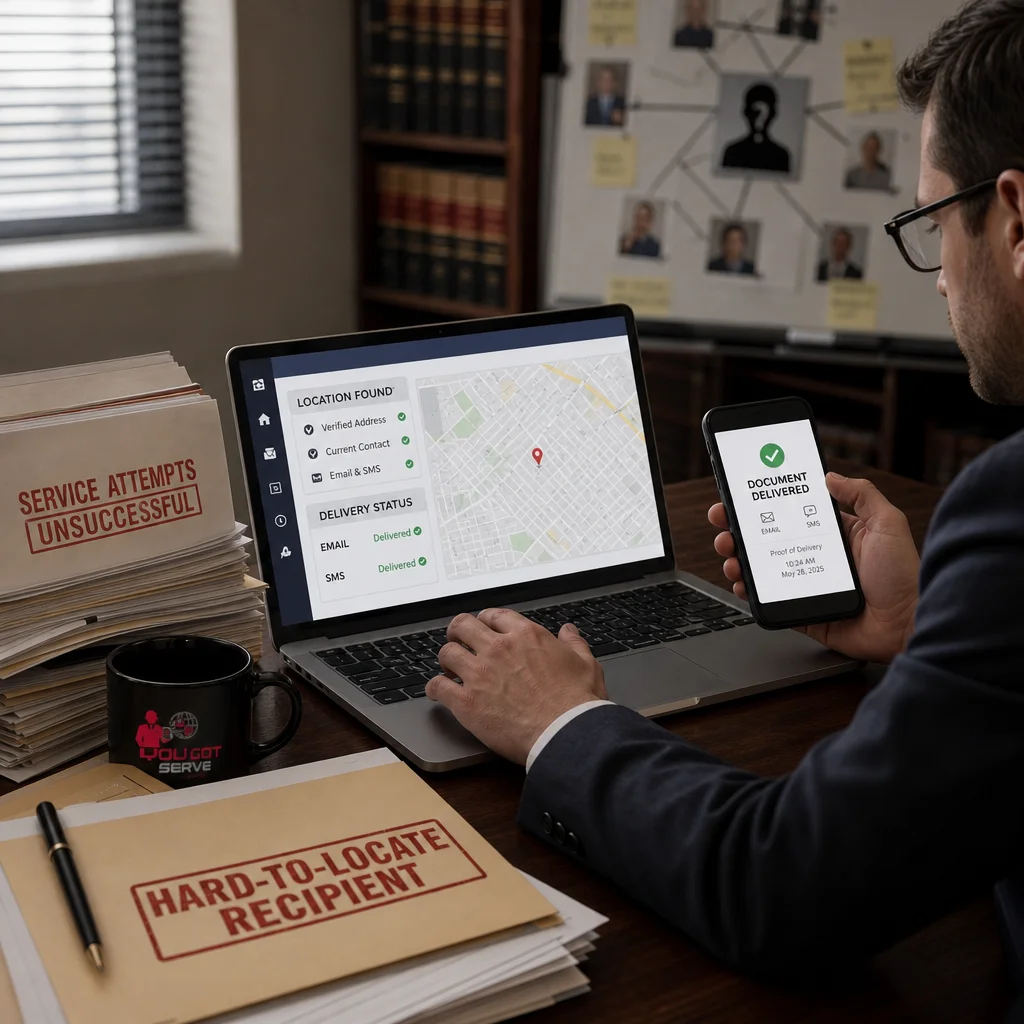
Newspaper publication remains expensive and slow. Publisher fees alone run $600-1,500 depending on your state and newspaper. Add publication time (2-6 weeks minimum), waiting periods, and affidavit preparation, and you're looking at months and significant cost for constructive service with no real confirmation of notice.
Electronic service with skip tracing costs a fraction of that amount and delivers results in days instead of weeks. You receive actual proof of delivery rather than relying on the legal fiction that someone might have seen a newspaper notice.
The savings are particularly dramatic when you need to serve multiple defendants or use notification cycles over 60 or 90 days. Each additional attempt through traditional newspaper publication adds cost and delay. Our platform handles multiple cycles at a single, predictable price.
Beyond dollars and cents, consider what faster service means for your case. If you can serve a defendant in one week instead of twelve, you recover damages and resolve disputes sooner. That's value that goes beyond the cost difference.
Security and Recipient Verification Features That Matter
Serving documents electronically raises legitimate security concerns. How do you ensure the recipient's information stays confidential? How do you prevent interception of sensitive legal documents?
We use end-to-end encryption and secure code protection to safeguard documents throughout delivery and access. Documents are encrypted in transit and at rest. The recipient accesses them through a secure portal, not via direct email attachment. Even if someone intercepts the notification SMS or email, they cannot access the actual document without the verification code.
Timestamping creates an immutable record of every transaction. This protects both you and the recipient. You have proof of when service occurred. The recipient has proof that they accessed documents at a specific time. This transparency actually reduces disputes about service validity.
These security measures also satisfy compliance requirements in many jurisdictions. Courts increasingly expect electronic service platforms to use encryption and verification protocols. Our design anticipates those expectations and makes compliance straightforward.
Getting Started With Electronic Service Today
If you're facing a situation where traditional service has failed or costs are prohibitive, electronic service may be the practical solution. Start by confirming that your jurisdiction permits electronic service under your specific circumstances. Court rules vary, so local verification is essential.
Next, gather or obtain current contact information for the defendant. This is where skip tracing becomes valuable if you don't already have reliable phone numbers or email addresses.
Then use our platform to deliver documents with verification and tracking built in. You'll receive real-time notification of delivery, access, and recipient verification. Your complete proof of service documentation is ready for court filing.
The process is designed to be straightforward for legal professionals and self-represented litigants alike. If you have questions about whether electronic service fits your case, we're ready to help you navigate the specifics and ensure compliance with your local rules.