
What Judges Accept as Proof of Service: Affidavits, Logs, and Evidence
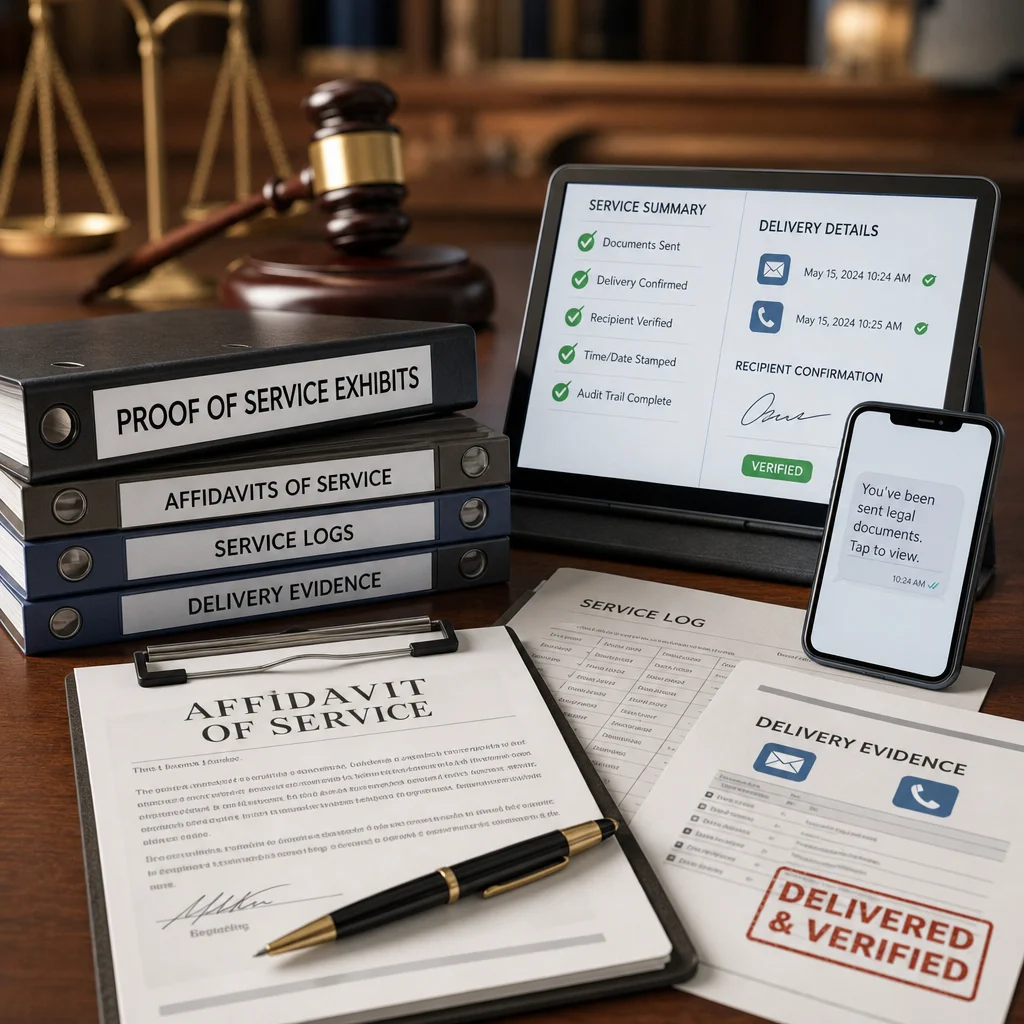
Why Traditional Proof of Service Matters in Court
Proof of service is your legal foundation. Without it, a court cannot confirm that the defendant or other party actually received notice of the lawsuit or motion. This single document determines whether your case can proceed and whether any judgment you obtain will stand.
Judges scrutinize proof of service carefully because serving documents is not optional—it is a constitutional requirement. A defendant has the right to know they are being sued. If you cannot document service, the court may dismiss your case, delay proceedings, or void a judgment entirely. That risk makes quality proof of service documentation as important as the substantive legal arguments in your case.
Courts have established clear expectations about what counts as sufficient proof. If your documentation falls short, you will need to file a new affidavit, amend your papers, or restart service altogether. This creates delay and cost. The better approach is to collect the right evidence from the start so your proof of service stands without challenge.
The Core Exhibits Judges Require and Expect
Every court requires certain core elements in your proof of service package. The specific combination depends on your jurisdiction and the method of service, but the foundation is always the same: evidence that the recipient was notified, when they were notified, and how.
Most courts expect you to provide:
- An affidavit or sworn statement from the person who performed service
- Documentation of the delivery method (mail tracking, email confirmation, SMS receipt logs)
- The date and time service was completed
- The identity of the person who received the documents
- A copy of the documents that were served
Some jurisdictions also require notarized signatures, certified mail receipts, or court-approved service providers' declarations. A few courts allow electronic service records alone, without a separate affidavit, if the records are timestamped and linked to a verified recipient. Your local court rules determine what combination is necessary, so always check your jurisdiction's civil procedure rules before filing.
The judge expects these pieces to work together as a complete package. A timestamped delivery log is stronger when paired with an affidavit that corroborates the details. A recipient confirmation is most persuasive when tied to a secure verification process. Gaps between these elements create doubt.
Affidavits of Service: What Makes Them Legally Sufficient
An affidavit of service is a sworn statement, signed under penalty of perjury, attesting that service was completed. It is the traditional backbone of proof of service documentation.
A legally sufficient affidavit must include:
- The date, time, and location where service occurred
- The name and relationship of the person who performed service (the "process server" or authorized individual)
- The name of the recipient or a clear description of how the recipient was identified
- The method of service used (hand delivery, mail, email, SMS, or other method)
- Certification that the documents served match the originals filed with the court
- A signature under penalty of perjury, often with a notary acknowledgment
Courts treat affidavits seriously because they are sworn statements. A false affidavit exposes the signer to criminal perjury charges. This weight carries procedural power: judges rely on affidavits to resolve disputes about whether service actually happened.
The language matters too. Vague statements like "I sent documents to the defendant" or "Service was completed sometime last week" will not satisfy a judge. Instead, your affidavit should be specific and precise: "On January 15, 2026, at 2:47 p.m. Eastern Time, I delivered court documents to Maria Chen via SMS to the number 555-0147, and she confirmed receipt by responding with a verification code at 2:48 p.m."
Digital Logs and Activity Records as Admissible Evidence
Modern courts increasingly accept digital logs and activity records as admissible evidence of service, even without a traditional affidavit. This shift recognizes that electronic delivery often creates a clearer audit trail than paper-based methods.
Digital logs are admissible when they meet two criteria: they must be authentic, and they must be reliable. Authentication means you can prove the log comes from the system that created it and has not been altered. Reliability means the system consistently records accurate information in real time.
Examples of strong digital evidence include:
- Email delivery and read receipts with exact timestamps
- SMS delivery reports showing message sent, delivered, and read status
- Platform activity logs showing when a recipient accessed a secure portal and opened documents
- IP address logs and device fingerprinting confirming recipient identity
- Keystroke timestamps showing when a recipient entered a verification code
Courts favor digital logs because they are created automatically by computer systems, not by human memory. A human-written affidavit can be misremembered or questioned. A timestamped server log generated in real time is harder to dispute. If your platform logs show that a message was delivered at 10:33 a.m. and opened at 10:35 a.m., a judge can verify those facts electronically.
To be admissible, your digital logs should be formatted clearly, labeled with dates and times, and accompanied by a declaration explaining how the system works and why the records are reliable. If you are using a third-party platform, that platform's custodian may need to provide a declaration of authenticity.
Verified Delivery Documentation and Recipient Confirmation
Proof that the recipient actually received and acknowledged the documents is the strongest form of service evidence. It moves beyond "the message was sent" to "the person confirmed they got it."
Verified delivery evidence includes:
- Recipient signature or mark confirming receipt
- Verification code entered by the recipient in response to a system prompt
- Read receipts showing the recipient opened email or accessed a document portal
- Reply confirmations where the recipient responds to a service notification
- Phone or video confirmation of delivery by a process server
The key difference is between passive delivery (the system confirmed it was sent) and active confirmation (the recipient affirmatively acknowledged receipt). Judges weight active confirmation more heavily because it eliminates the claim that a message went to the wrong number or was never read.
Verification codes are particularly effective. When a recipient must enter a code to access documents, they demonstrate knowledge and intent to review the materials. The timestamped code entry becomes part of the service record, creating a clear chain showing the recipient was notified and engaged with the documents.
When collecting verified delivery documentation, preserve the complete record. Do not edit or cherry-pick logs. Courts expect to see the full sequence of events: the initial notification, any failed delivery attempts, resend notices, and final confirmation. That complete picture is far more persuasive than a summary stating "service was successful."
Security Features That Strengthen Your Evidence Package
Security features do more than protect document confidentiality; they strengthen your proof of service by making evidence more reliable and harder to challenge.
End-to-end encryption demonstrates that only the intended recipient could access the documents. If you serve via an unencrypted email to the wrong address, the recipient might not have received the documents, or the message could have been intercepted. Encrypted delivery with access controls proves the recipient had to authenticate to view the materials.
Code-protected document access creates a documented interaction. When a recipient must enter a code or password to open documents, that action is recorded and timestamped. A skeptical party cannot claim they never received the documents if the access log shows they entered the correct code at a specific time.
Timestamp verification adds temporal certainty. Courts understand that dates and times can be disputed or manipulated in written affidavits. Timestamped digital records generated by a secure system are far harder to challenge. If your platform records delivery at 2:47 p.m. and document access at 2:49 p.m., that sequence is nearly impossible to contest.
These security layers transform your service documentation from "I believe service happened" to "Here is verifiable, timestamped, digitally logged proof that service was completed." That shift dramatically improves your position if service is ever contested.
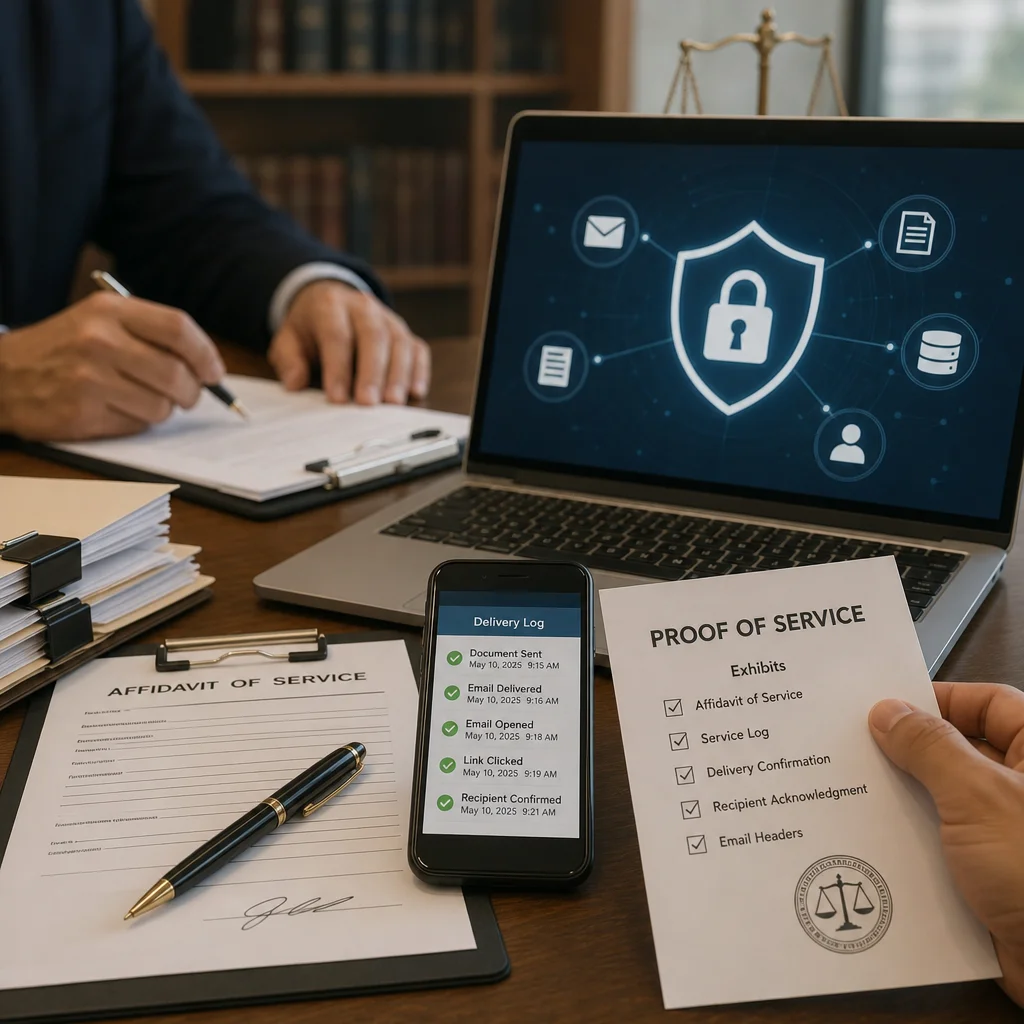
How Electronic Service Creates Superior Documentation
Electronic service—via SMS, email, or secure portal—inherently creates better documentation than traditional paper service. How electronic service works involves multiple automated checkpoints that generate records a judge can verify.
When you serve a document via certified mail, you receive a signature card. That is your only physical proof. If the card goes missing or is challenged, you may struggle to reconstruct what happened. With electronic service, every step is logged: the message was queued at X time, delivered to the recipient's device at Y time, opened at Z time, and a verification code was entered at Q time. That multi-layer record is far more detailed and defensible.
Electronic service also allows for automated retry logic. If an SMS fails to deliver, the system automatically resends. A paper server might miss a defendant on the first attempt but not document multiple attempts clearly. Electronic systems create a complete audit trail showing how many times service was attempted and when it finally succeeded.
Additionally, electronic platforms can verify recipient identity more rigorously than traditional methods. A process server relying on a doorbell or phone number has limited ways to confirm they reached the right person. An electronic platform can cross-reference phone numbers, email addresses, and device information, or require the recipient to answer security questions before accessing documents.
Electronic service records also integrate easily into court filings. You can attach log exports, screenshots, or formatted data directly to your proof of service affidavit. Courts increasingly expect and accept these digital attachments, making electronic service more convenient for compliance.
Building a Complete Evidence Package for Court Review
A complete proof of service package is greater than the sum of its parts. Each piece of evidence supports and reinforces the others, creating a compelling, hard-to-challenge narrative.
Start with the affidavit. This is your sworn statement explaining what happened, when, and how. Include specific times, dates, methods, and recipient information. Make your affidavit detailed and clear, as if a skeptical stranger were reading it.
Attach all supporting documentation in this order:
- Delivery confirmations (email read receipts, SMS delivery reports, mail tracking)
- Digital access logs (timestamps showing when the recipient opened documents or entered codes)
- Platform declarations or custodian affidavits explaining how your service system works
- Screenshots or exported data showing the complete delivery sequence
- Any communication from the recipient acknowledging receipt
Organize these exhibits so a judge can flip through them in logical sequence. Label each exhibit clearly. If you are using electronic service, include a brief summary explaining how the platform ensures compliance with service rules.
The goal is to leave no room for doubt. When a judge reviews your package, every exhibit should confirm and reinforce the same conclusion: service was completed, the recipient was notified, and delivery is proven by multiple independent records. If even one piece contradicts another, a skeptical party will exploit that gap.
Common Gaps in DIY Service Documentation
Many litigants and self-represented individuals underestimate the detail courts expect. Common documentation gaps lead to challenges or dismissals.
Incomplete timestamps are a frequent problem. If your affidavit says service was completed on "January 15" but your email receipt shows "January 15 at 10:33 a.m. EST," those details matter. A judge might question whether service truly happened on the date you claimed. Always include hours, minutes, and time zone.
Missing identity verification is another gap. If you served someone at a phone number or email address, your documentation should explain how you verified you reached the right person. A bare statement like "I sent an SMS to 555-0147" leaves open the question: How do you know that is the defendant's number? Was it taken from court records? A prior conversation? A skip trace? That chain of custody matters.
Incomplete delivery logs are also common. If your email platform shows "delivered" but not "read," a recipient could argue they never actually opened the documents. Relying on delivery alone, without confirmation that the recipient accessed the materials, is weaker than relying on both delivery and read receipt. Collect and preserve the complete log.
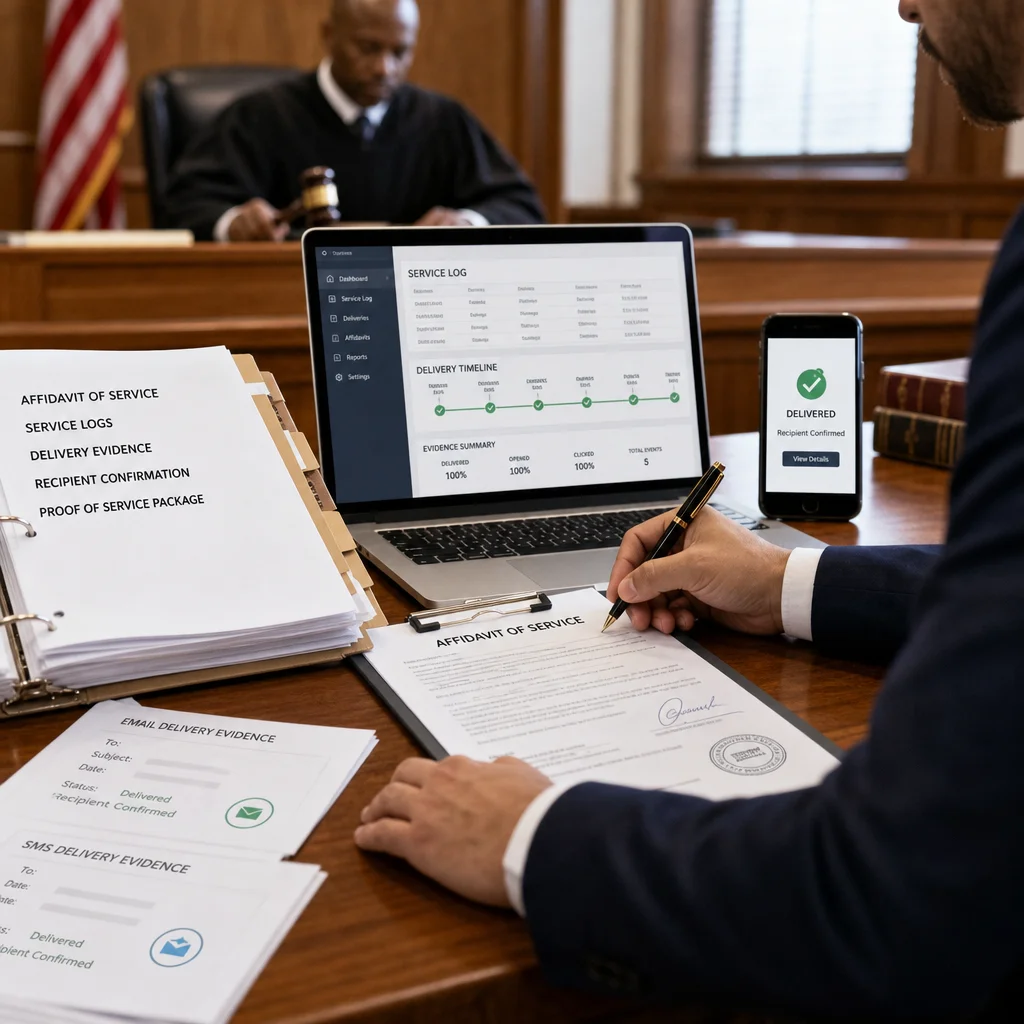
Unsigned or unsworn affidavits create procedural problems. An affidavit must be signed and often notarized. If you submit an unsigned statement or a simple email declaration without proper legal language, a judge may reject it as insufficient. Ensure your affidavit complies with your jurisdiction's formal requirements.
Vague language undermines credibility. Statements like "I served the documents promptly" or "I believe service was successful" are not sufficient. Courts need facts: specific times, names, methods, and confirmation details. Precision builds trust.
Our Platform Automates Compliant Evidence Collection
We designed our platform to eliminate these gaps automatically. When you serve documents through YouGotServe, our system generates the proof of service documentation as service happens.
Here is how it works:
- You upload documents and recipient contact information
- Our platform delivers via SMS and email with verified receipt tracking
- The system automatically captures timestamps for each step: queued, delivered, opened, verified
- A recipient must enter a verification code to access documents, creating an authenticated access record
- Our platform generates a timestamped activity log showing the complete delivery sequence
- You receive a formatted evidence package ready to attach to your court filing
Our secure code-protected document access ensures that only the intended recipient can view materials. The recipient's entry of the correct code becomes part of the permanent service record, creating unambiguous proof of delivery and access.
We also provide 60 or 90-day notification cycles, meaning your documents can be served multiple times if initial contact fails. Each attempt is logged and timestamped, so you have a complete record of service attempts and eventual successful delivery. This persistent service approach reduces the likelihood of a "service failed" challenge.
For harder-to-find recipients, our integrated investigative skip tracing helps locate current contact information. Accurate phone numbers and email addresses mean your service is more likely to reach the right person, and our logs will prove it.
All records are encrypted end-to-end and timestamped by our secure infrastructure. When you need to prove service in court, you attach our evidence export directly to your affidavit. Judges increasingly accept these digital records as superior to traditional paper service documentation.
Preparing Your Materials for Judge Review
When you are ready to file proof of service with the court, take time to organize your materials for judge review. A professional, well-organized package creates confidence in your documentation.
Format your affidavit clearly. Use standard legal margins and font sizes. Number paragraphs and reference specific exhibits. Make it easy for a judge to follow your reasoning from statement to supporting evidence.
Create a cover sheet or index listing all exhibits in order. This simple step helps the judge navigate your package and confirms nothing is missing.
Include a platform declaration if you used electronic service. This brief statement from our service (or your platform's operator) explains how the system works, why records are reliable, and how timestamps are generated. Courts expect this explanatory context when evaluating digital evidence.
Review your jurisdiction's proof of service requirements one final time. Different courts have different rules about notarization, affidavit language, and acceptable service methods. A form that works in one state may not work in another.
When you submit your proof of service, consider including a brief cover memo if service was contested or complex. For example: "Service of process was completed via SMS and email delivery on January 15, 2026, with recipient verification code entry on the same date. Attached exhibits show delivery confirmations (Exhibit A), activity logs (Exhibit B), and platform declaration (Exhibit C)." This summary guides the judge through your evidence logically.
Finally, keep a copy of everything for your records. If service is later questioned or if you need to prove service in a different proceeding, you will have a complete documentation trail to reference.
Proof of service is not an afterthought in litigation—it is a critical procedural step. By collecting detailed, timestamped, verified evidence from the moment service occurs, you eliminate doubt and strengthen your position in court.