
When Traditional Service Fails: The Growing Case for Electronic Alternatives
Finding a defendant who doesn’t want to be found is one of the oldest challenges in litigation. Skip tracing, repeated attempts at personal service, and newspaper publication all consume time and money, often with no guarantee of actual notice. When traditional methods fail or become prohibitively expensive, electronic service offers a documented, efficient path forward.
We’ve seen this frustration firsthand. Clients pursuing legitimate claims find themselves trapped: they can’t locate the defendant, repeated attempts at traditional service yield nothing, and newspaper publication feels like shouting into a void. Electronic service through SMS and email solves this by creating multiple verified touchpoints with documented proof. Rather than hoping a newspaper notice reaches someone, you’re sending direct notifications and logging every attempt.
Courts increasingly recognize that electronic service can achieve what traditional methods cannot: actual notice to the defendant in a cost-effective way. When your motion demonstrates good-faith efforts and uses a reliable delivery platform, judges see a rational solution rather than an end-run around procedural requirements.
Why Courts Are Approving Electronic Service in More Cases
The shift toward electronic service reflects both practical necessity and judicial evolution. As defendants become harder to locate and digital communication becomes the norm, courts are reexamining rigid reliance on traditional service methods. Many judges now view persistent electronic notification as more reliable than a single attempt at personal service or a newspaper ad.
Rule 4.1 of the Federal Rules of Civil Procedure allows service by other means when “authorized by these rules, by the law that provides the basis for jurisdiction, or by a court order.” Individual states and courts have expanded this authority significantly. New York, California, Florida, and many others now have explicit rules permitting electronic service under specific circumstances, particularly when a defendant cannot be located or has evaded service.
The rationale is straightforward: electronic service, when well-documented, proves notice better than traditional alternatives. A timestamped SMS and email campaign with access logs and recipient verification creates an auditable record. A newspaper notice generates no confirmation that anyone read it. Judges understand this difference and are approving electronic service motions with greater frequency when the supporting documentation is thorough and honest.
What Judges Need to See: Documentation and Compliance Standards
A successful motion for electronic service rests on three pillars: compliance with local rules, good-faith efforts to locate and serve the defendant, and clear documentation of why traditional methods failed or are inappropriate.
Judges expect to see concrete evidence of your efforts before turning to electronic service. This includes:
- Multiple attempts at personal service with dates, locations, and outcomes
- Results from investigative skip tracing or database searches showing the defendant’s location is unknown or inaccessible
- Explanation of why newspaper publication is inadequate (cost, time, lack of defendant engagement)
- Confirmation that electronic service is permitted under your jurisdiction’s rules or that you’re seeking an exception
Your affidavit must also demonstrate that the proposed electronic method is reasonably likely to reach the defendant. If you have email addresses or phone numbers on file, say so. If you’ve confirmed the defendant uses social media or maintains an active digital presence, that strengthens your case. The court wants assurance that the method you’re proposing will actually notify the defendant.
Finally, be transparent about compliance with local rules. Reference the specific rule or statute that permits electronic service in your jurisdiction. If you’re asking for relief under a general “other means” provision, explain how your method aligns with the policy behind that rule. Judges are more inclined to grant motions that show careful attention to procedural requirements.
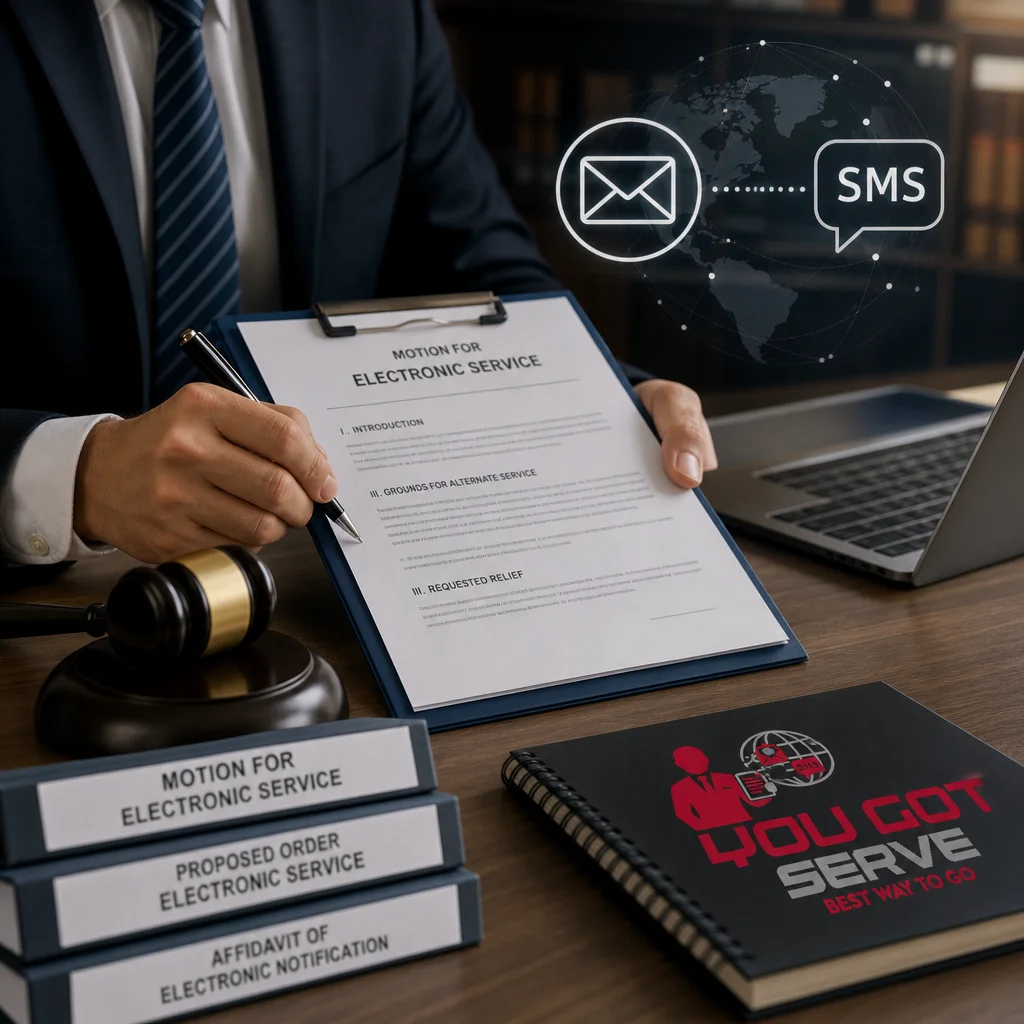
Building Your Motion: Key Components Judges Expect
A motion for electronic service should follow your jurisdiction’s motion template but include several specific elements. Start with a clear caption identifying the case, the parties, and the relief sought. Then structure your motion in this order:
Statement of Facts: Describe the defendant, the case background, and—critically—your efforts to serve. Name the persons or entities contacted, dates of service attempts, results, and any evidence that traditional methods will not succeed.
Legal Argument: Cite your jurisdiction’s rules permitting electronic service. Explain how your proposed method complies with those rules. If you’re relying on a “good cause” exception or a general “other means” provision, explain the policy reasons supporting electronic service in your case.
Proposed Electronic Service Method: Specify the channels you’ll use (email, SMS, WhatsApp, etc.), the contact information you have, and the notification schedule. Will you send daily notifications for 60 days? Weekly reminders? Explain your approach and why it’s reasonable.
Why Traditional Service Is Inadequate: Be direct. Does skip tracing show the defendant is evading location efforts? Is newspaper publication too costly or time-consuming? Has personal service failed despite diligent attempts? Judges appreciate candor here.
Request for Relief: Ask the court to approve your proposed electronic service method and to declare that compliance with it constitutes valid service of process. Include a proposed order (see section below).
How You Got Serve Generates Court-Ready Proof and Documentation
Our platform is built to support exactly this motion process. We generate court-ready documentation automatically, eliminating guesswork about what evidence judges need to see.
When you serve documents through us, every action is logged with timestamps: each SMS and email sent, each notification delivered, each time a recipient accesses their document using their secure code. We capture and document recipient verification data when available, including geolocation, device information, and access patterns. This creates an auditable trail that demonstrates the defendant received actual notice.
Our investigative skip-tracing capability helps you gather contact information before filing your motion. If you don’t have verified phone numbers or email addresses, we can assist in locating them, strengthening your argument that you’ve conducted a diligent search.
Most importantly, we generate a complete delivery report and affidavit template that documents your entire service campaign. This report becomes Exhibit A to your motion and your supporting affidavit, giving the court a professional, detailed accounting of every notification attempt and outcome. You’re not asking the court to trust your memory or your handwritten notes; you’re presenting an automated, system-generated record.
Template Structure: Motion, Proposed Order, and Supporting Affidavit
A complete motion package includes three documents working together. We provide templates for all three, customized to your case details.
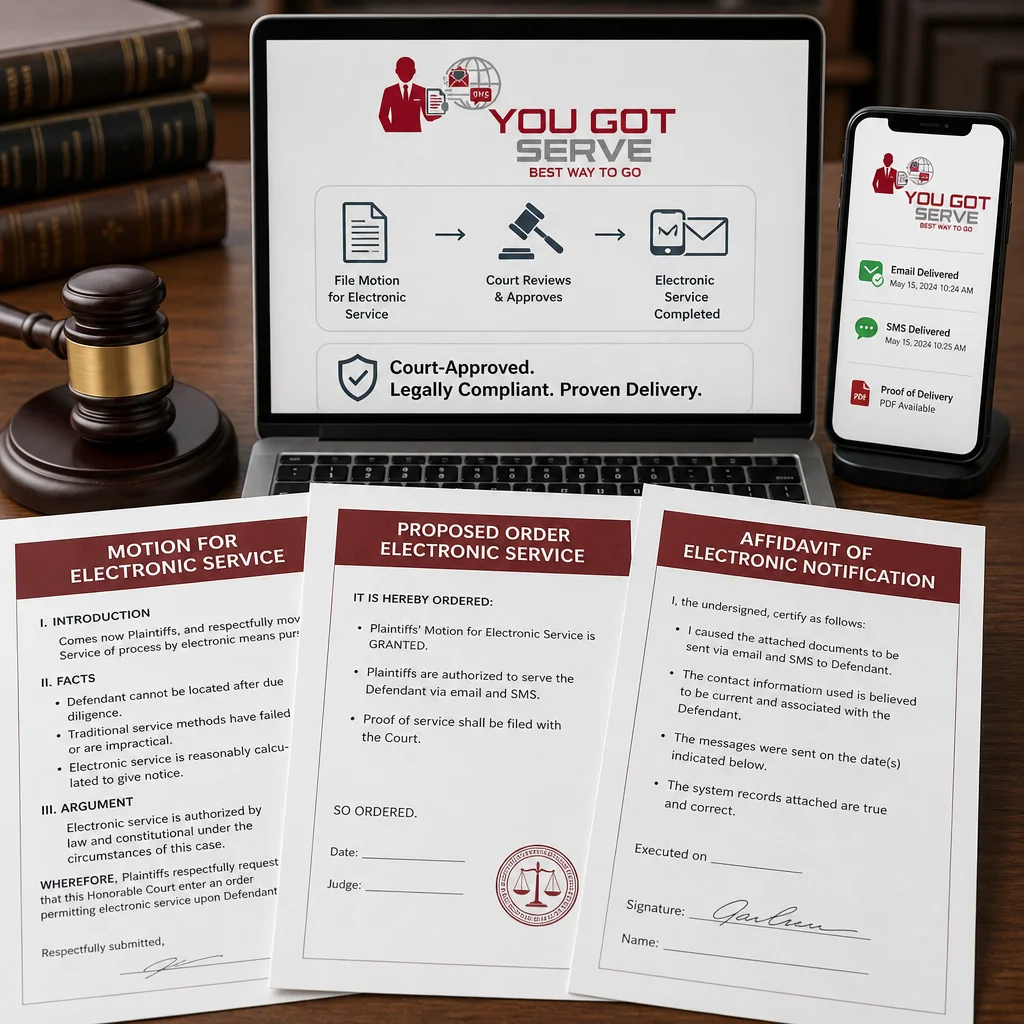
The Motion Itself: This is your argument to the court. It asks for approval to serve the defendant electronically and explains why traditional service has failed or is impractical. Keep it concise: three to five pages maximum. Courts appreciate brevity and clear reasoning.
The Proposed Order: This is the order you want the judge to sign. It should state exactly what electronic service method is approved, the contact information for the defendant, the notification schedule, and a declaration that compliance with this order constitutes valid service of process. Courts often use proposed orders verbatim, so precision matters.
The Supporting Affidavit: This is your sworn statement detailing your efforts to locate and serve the defendant, why those efforts failed, and why electronic service is appropriate. This is where you cite specific dates, locations, and skip-tracing results. Attach the delivery report from our platform as an exhibit, showing how electronic service will work and what documentation it will generate.
Courts often grant these motions when all three documents are cohesive, well-organized, and clearly cross-referenced. The motion explains your reasoning, the affidavit provides detailed evidence, and the proposed order gives the judge a ready-made ruling.
Preparing Your Electronic Service Records Before Filing
Before you file your motion, gather and organize all evidence supporting your request. This includes your skip-tracing records, logs of attempted personal service, and any communications with the defendant or third parties about their location.
If you’re already using our platform to serve documents, export your delivery records and review them for completeness. Confirm that all contact information is accurate and that your notification schedule is clearly documented. A clean, organized delivery report strengthens your motion considerably.
Also prepare a summary chronology of your service attempts over time. List each attempt by date, method, and result. If you attempted personal service on three different dates and all failed, say so explicitly. If skip tracing revealed the defendant’s phone number but not a mailing address, document that. This chronology becomes part of your affidavit and demonstrates the progression from traditional service to electronic service.
Check local court rules to see whether your jurisdiction requires any additional documentation, such as a certificate of diligent search or proof of investigative efforts. Different courts have different standards. Some require affidavits from process servers; others accept detailed written accounts. Confirm these details before filing.
Jurisdiction-Specific Requirements and Court Rule Compliance
Electronic service rules vary significantly by jurisdiction. A motion that succeeds in one court may fail in another if it doesn’t address local procedural requirements.
Federal courts use Federal Rule of Civil Procedure 4, which permits service by “other means” if authorized by court order. This requires you to show why traditional service under Rule 4(e)-(f) is inadequate and why your alternative method is reasonable.
State courts operate under their own rules. New York permits electronic service by court order under CPLR 308. California allows it under CCP 1010.6 when the defendant has an email address on file. Florida permits electronic service by court order under Fla. Stat. 48.161. Each has slightly different standards and evidence requirements.
Before drafting your motion, research your specific court’s rules and prior rulings on electronic service. Check your local court’s standing orders or website for any local rules addressing electronic service. If your court has issued precedent on this topic, cite it. Judges appreciate counsel who demonstrate familiarity with their court’s existing framework.

Also confirm whether your proposed electronic service method aligns with your court’s preferences. Some courts favor email; others emphasize SMS as more intrusive and therefore more likely to ensure notice. If your court has expressed a preference, tailor your proposal accordingly.
Our Platform’s Role in Supporting Your Motion Success
We designed our platform specifically to support motions for electronic service. Rather than cobbling together email logs and SMS records from separate vendors, you have one integrated source of truth for your entire service campaign.
Our 60- and 90-day notification cycles align with many courts’ expectations for persistent, documented service attempts. We send notifications through multiple channels (email, SMS, WhatsApp where available) to increase the likelihood of reaching the defendant while creating comprehensive logs of every attempt. Recipients access documents using a secure code, and we document when they do, adding another layer of proof to your motion.
Verification features such as geolocation, timestamp logging, and access activity create the kind of detailed documentation judges now expect. You’re not asking the court to assume the defendant received your notification; you’re showing them precisely when and how the defendant accessed the document.
Our platform also handles international digital service where legally and technically appropriate, expanding your options if the defendant is located outside the United States. Our investigative capability helps you build the case that you conducted a diligent search before requesting electronic service approval.
When you’re ready to file your motion, we provide a complete delivery report and affidavit template populated with your specific case data. This report becomes your primary evidence, reducing the work of translating service records into court-ready documentation.
Next Steps: Filing Your Motion with Complete Delivery Evidence
Start by gathering your skip-tracing and service attempt records. Document precisely why traditional service has failed and what electronic service contact information you have. If you don’t have adequate contact information, use our platform’s investigative assistance to locate email addresses and phone numbers.
Then draft your motion and affidavit using our templates as a starting point. Tailor each section to your jurisdiction’s rules and your specific case facts. Be honest and detailed about your efforts to locate the defendant; courts respect candid, well-organized arguments.
Before filing, review your proposed order to ensure it clearly describes the electronic service method, contact information, notification schedule, and the declaration that compliance constitutes valid service. Run your motion by a local attorney if you’re self-represented; procedural requirements vary, and a quick review can prevent costly delays.
File your motion well in advance of any relevant deadlines. Include your delivery report and any skip-tracing affidavits as exhibits. Serve the defendant with the motion if their location is known; if not, comply with your court’s requirements for service on other parties.
Once the court approves your motion, begin your electronic service campaign immediately. Keep detailed records throughout, and preserve all delivery logs and access documentation. If the defendant later challenges service, your complete record will demonstrate compliance with the court order and the reliability of our platform’s documentation.
The courts are ready to approve electronic service when you present a thorough, honest case. We’re here to help you build that case with complete, court-ready documentation.
For further reading: How it works.