
The Challenge: Serving Documents Across State Lines Without Court Delays
Serving court documents to defendants or respondents across state lines creates real friction. Traditional methods like certified mail, personal service, or newspaper publication can take weeks or months, cost hundreds of dollars, and still fail to confirm that the recipient actually received notice. When a defendant is hard to locate or unresponsive, the delay compounds: courts won’t move forward until you’ve satisfied service requirements, and those requirements vary significantly from state to state.
Many litigants and legal professionals face a bottleneck: state courts accept electronic service under certain conditions, but those conditions differ. What works in one jurisdiction may not be permitted in another. Without clear guidance and a reliable delivery platform, you risk service being rejected and having to start over.
Our goal is to help you navigate these state-level rules and execute electronic service efficiently. The right platform gives you proof of delivery, automated tracking, and documented attempts across all contact points, eliminating ambiguity when you present proof of service to the court.
Why Electronic Service Matters: Cost, Speed, and Compliance
Electronic service eliminates many inefficiencies of traditional methods. Instead of paying for registered mail or waiting for a process server to locate the defendant, you can deliver documents via email and SMS in minutes. Costs drop from hundreds to a predictable, affordable price. Speed improves dramatically: notifications can be sent daily, creating a documented record of attempts within days rather than weeks.
Compliance becomes measurable too. When you use a platform with timestamped delivery logs, recipient verification, and geolocation data, you build a defensible proof-of-service record. Courts increasingly recognize electronic service when statutory requirements are met, and your documentation makes approval straightforward.
For self-represented litigants and small law firms, electronic service levels the playing field. You gain access to infrastructure and verification tools that were once available only to large practices. Cost savings can be reinvested in case preparation or client communication.
Federal and State Electronic Service Rules at a Glance
Federal courts operate under Federal Rule of Civil Procedure 5(b)(2)(E), which permits electronic service by any method agreed to by the parties or authorized by court order. This flexibility is a starting point, but state courts apply their own rules.
State courts typically reference rules like:
- California (Code of Civil Procedure 1010.6): permits electronic service for most civil cases with consent or court order.
- New York (CPLR 213): allows electronic service under specific conditions; rules vary by court.
- Texas (Texas Rules of Civil Procedure 21a): permits electronic service with prior consent or court authorization.
- Florida (Florida Rules of Civil Procedure 1.080): allows electronic service with consent or court order.
Each state also has special rules for particular case types: family law, probate, small claims, collections, or administrative proceedings. Some states impose notice requirements; others require a specific format for documents.
The common thread: most states accept electronic service when parties consent, when court orders permit it, or when service rules explicitly authorize it. Your responsibility is to confirm which rule applies before relying on any electronic method.
How YouGotServe Meets Multi-State Electronic Service Requirements
We designed our platform to support compliant electronic notification across multiple jurisdictions. Here’s how we address state-level requirements:
Multiple contact channels: You can enter up to three email addresses and three phone numbers per recipient. This redundancy meets state rules that require reasonable attempts to reach the recipient. Daily automated notifications through email, SMS, and WhatsApp (where available) create a documented pattern of attempts.
Extended notification cycles: Our 60-day and 90-day service plans ensure adequate notice periods align with state expectations. Recipients cannot claim surprise; the record shows persistent, daily outreach.
Secure document access and verification: Recipients retrieve documents using a unique one-time access code. We capture available verification data including selfie confirmation, geolocation, timestamps, and notification history. This multi-layer verification strengthens your proof of service in court.
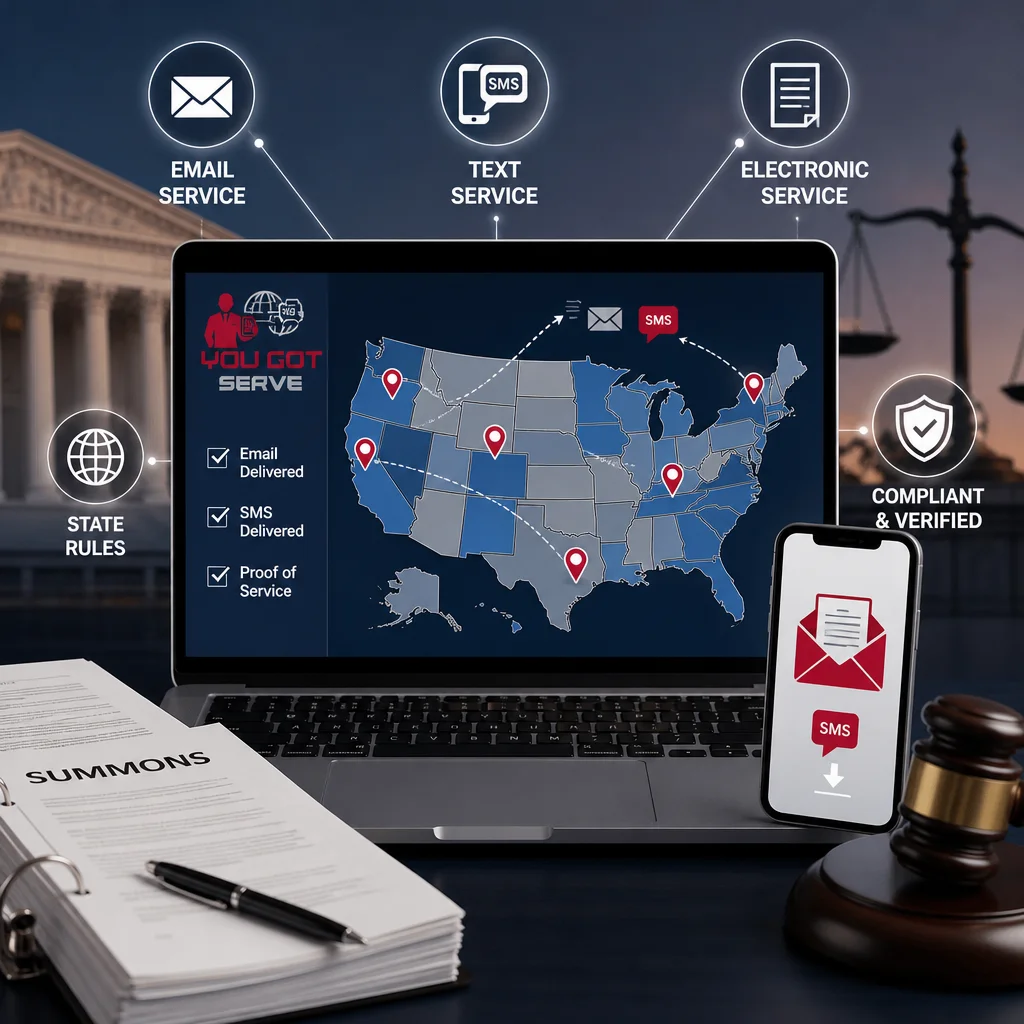
Detailed activity logs: Every notification sent, every document viewed, and every access attempt is timestamped and logged. You export this complete record as your proof of service, eliminating guesswork about what the court will accept.
These features work together to support compliance with electronic service rules across jurisdictions. We don’t provide legal advice, but we build the documentation courts expect to see.
State-by-State Compliance: What Rules Allow Electronic Notification
Before you serve electronically in any state, verify the specific rule that permits it. Here are common categories:
Consent-based service: Many states permit electronic service if the defendant or their attorney consents in writing. Email, SMS, or a signed agreement on file can establish consent.
Court order authorization: When consent isn’t feasible, you can petition the court for an order permitting electronic service. Grounds often include: defendant’s address is unknown, defendant is evading service, or traditional methods have failed.
Statutory electronic service rules: Some states (California, Florida, Texas, New York) have codified rules allowing electronic service in specific contexts without requiring prior consent, particularly in business disputes or administrative proceedings.
Publication and alternative service: When personal service fails, most states permit publication in a newspaper or, increasingly, electronic notice on a state-authorized platform or the defendant’s known digital accounts.
Your first step: identify which rule applies to your case type and jurisdiction. Courts maintain online rule libraries; legal databases also provide state-specific guidance. If unsure, consult a local attorney familiar with the court’s practices.
Verification and Proof Requirements Across Different Jurisdictions
Courts expect proof that service was effective. Proof-of-service standards vary by state, but they generally require:
Attestation of delivery: Who sent the documents, when, to which addresses, and confirmation that delivery occurred or was attempted.
Evidence of recipient access (when applicable): Some courts want to see that the defendant actually opened the email or read the message. Others accept proof of transmission alone.
Timeliness: Service must occur within statutory deadlines (often 30 to 90 days before a hearing or trial).
Adequate notice period: Many states require at least 10 to 21 days between service and the hearing to give the recipient fair opportunity to respond.
Our platform provides all these elements automatically. Your proof-of-service record includes:
- Complete notification history with timestamps and recipient contact information
- Document access activity, including date, time, and geolocation (if available)
- Selfie verification or other recipient confirmation (if captured)
- Status indicator (Pending or Delivered)
When the time comes to file proof of service with the court, you attach our generated activity report. The level of detail often exceeds court expectations, strengthening your position.
Building Your Service Strategy: Email, SMS, and Multi-Channel Delivery
A single-channel approach risks failure. Email addresses change; phone numbers get reassigned; people ignore messages from unknown senders. Multi-channel delivery significantly improves the odds that the recipient sees your notice.
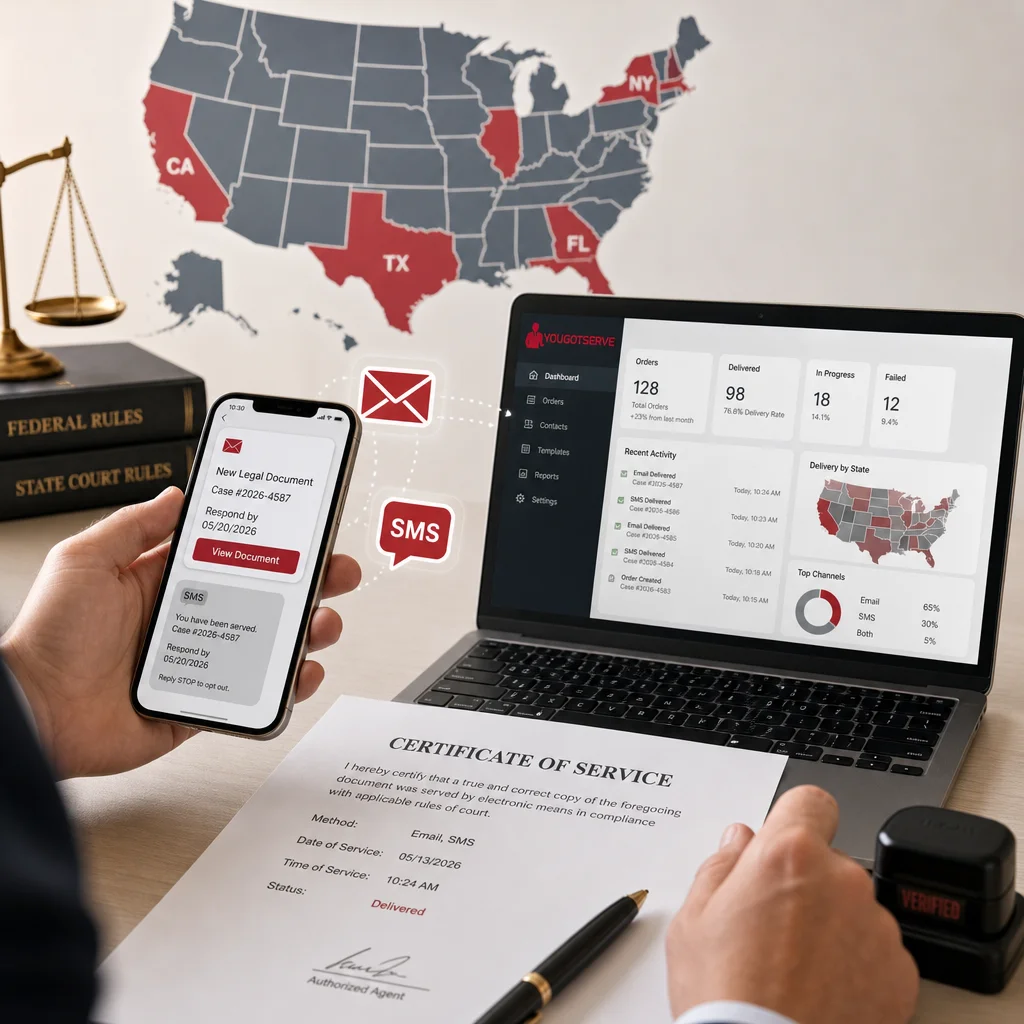
Here’s a practical strategy:
Start with all available contacts: Upload three email addresses and three phone numbers. If the defendant’s current information is uncertain, include former addresses or numbers. Redundancy increases the chance of reaching the person.
Layer SMS and email for maximum reach: Email is formal and creates a digital record. SMS is immediate and hard to ignore. Together, they cover most communication preferences. WhatsApp extends reach where other channels fail (particularly international cases).
Automate daily notifications: Don’t rely on a single send. Our platform delivers notifications every day during your service period. This pattern demonstrates reasonable, persistent effort and aligns with most state court expectations.
Document each attempt: Every notification attempt, whether opened or not, appears in your activity log. This creates an ironclad record: you tried, repeatedly, through multiple channels.
When you build this documented trail, even if the defendant claims they didn’t receive notice, your proof shows you acted diligently and reasonably. Courts recognize this level of effort.
When Traditional Service Fails: Investigation and Alternative Location Support
Sometimes you lack current contact information. The defendant’s address is stale, phone number disconnected, email unknown. Before you pivot to newspaper publication (slow and expensive), investigative services can help locate the person.
We partner with investigative professionals to assist customers who need skip tracing or updated contact data. A targeted search often uncovers a current address, phone number, or email within days. Once you have that information, electronic service becomes feasible and cost-effective.
Steps to consider:
- Provide any known details: last known address, employment history, names of relatives, previous phone numbers, social media profiles.
- Allow 3 to 5 business days for investigation and updated information.
- Once new contact data arrives, upload it to our platform and launch your electronic service campaign.
This combination—investigation followed by electronic service—frequently succeeds where newspaper publication alone would be slow and uncertain. You gain a higher likelihood of actual notice, faster resolution, and complete documentation.
Comparing Electronic Service to Newspaper Publication and Other Methods
Newspaper publication is the traditional fallback when you can’t locate a defendant. It’s expensive (often $500 to $1,500 per publication), slow (4 to 8 weeks for multiple required publications), and provides no proof the defendant actually read the notice. The newspaper runs your ad, you file an affidavit, and the court accepts it. But did the defendant see it? Unknown.
Certified mail with return receipt is reliable but slower than electronic service. If the defendant refuses delivery, you’re back to square one.
Electronic service with our platform is faster, more affordable, and provides better proof of actual delivery or access. For $350 to $500 over 60 or 90 days, you get daily notifications, multi-channel delivery, and complete activity logs. That’s 1/3 to 1/10 the cost of newspaper publication, with far better documentation.
The trade-off: electronic service requires court authorization or statutory permission in your jurisdiction, whereas newspaper publication is available as a fallback in most courts. But once you confirm that electronic service is permitted in your case, it’s the smarter choice.
Creating Your Documented Service Record for Court Acceptance
When you’re ready to file proof of service, courts expect a clear, organized record. Here’s what to include:
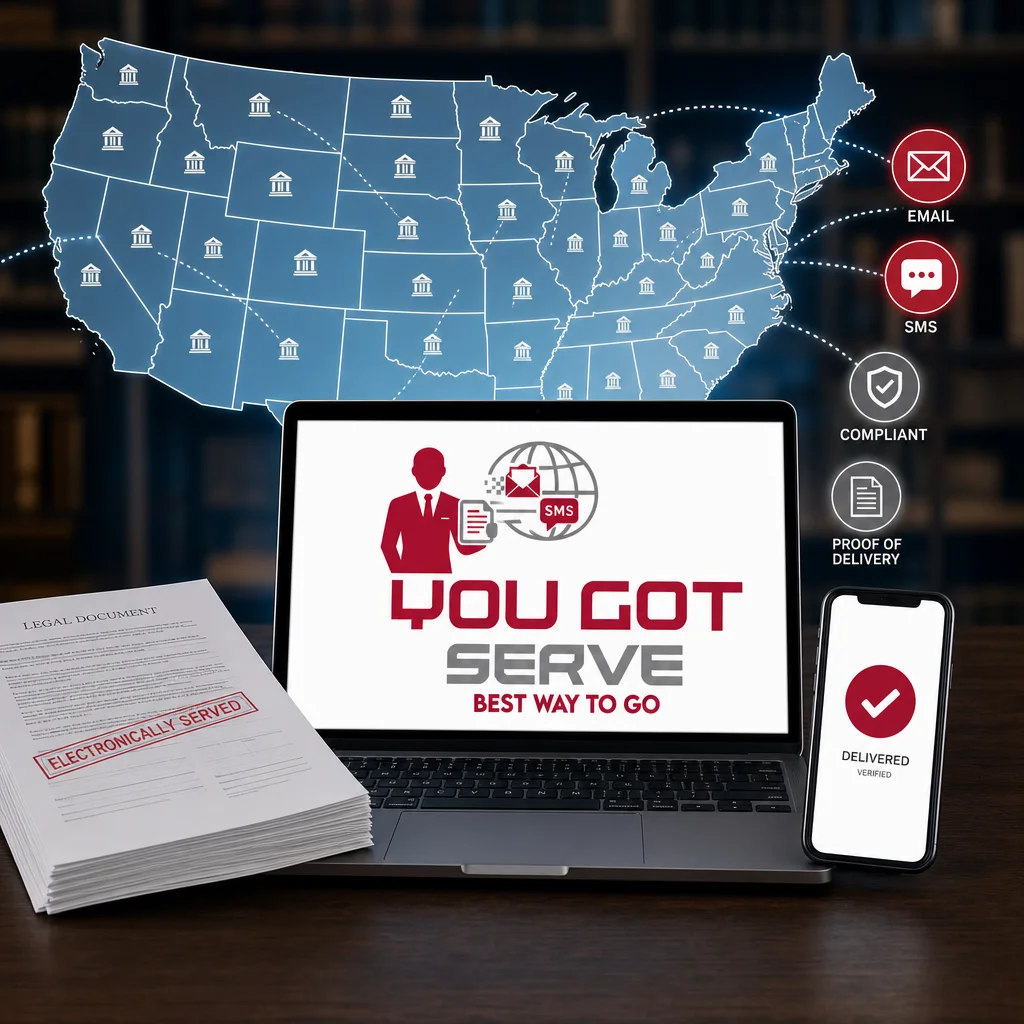
Service affidavit or declaration: You certify, under penalty of perjury, that you served the defendant using electronic methods and describe those methods.
Activity report from our platform: This export shows every notification sent, every recipient address used, all timestamps, access activity, and geolocation or verification data captured.
Copy of the documents served: Include what was sent so the court can confirm completeness.
Court order or consent agreement (if applicable): If service was authorized by court order or prior written consent, attach that document.
Certificate of service: A standard form certifying service on all required parties.
Courts receive hundreds of proof-of-service filings; a complete, organized submission signals professionalism and reduces scrutiny. When your record is thorough and timestamped, judges approve service quickly and move the case forward.
Getting Started: Selecting Your Service Plan and Timeline
Our platform offers two straightforward service plans:
60-day service: $350. Best for time-sensitive cases, when you need service completed quickly and the recipient is reasonably likely to be reached within two months.
90-day service: $500. Ideal when you want maximum persistence or when state rules require longer notice periods. The extended timeline strengthens your proof of diligence.
Eligible organizations receive a 10% discount on either plan.
To get started:
- Gather the defendant’s or respondent’s contact information (emails and phone numbers).
- Upload the documents you need to serve.
- Select your plan and confirm your service timeline.
- Monitor your account for delivery status and access activity.
- Once service is complete, download your proof-of-service report and file it with the court.
The entire process is straightforward. No hidden fees, no surprise billing. You control the timeline and can track progress daily from your account.
YouGotServe: The Unified Solution for Compliant Electronic Service
Serving documents across state lines shouldn’t require a maze of vendors, methods, and uncertainty. We’ve consolidated what you need into one platform: persistent multi-channel notification, secure document access, recipient verification, detailed activity logs, and proof-of-service documentation that courts recognize.
Our combination of email, SMS, and WhatsApp delivery—with up to three contact points per recipient—dramatically improves the odds that notice reaches the intended person. Extended 60- or 90-day notification cycles demonstrate reasonable, persistent effort aligned with state court expectations. Timestamped logs, geolocation data, and access confirmations build proof of service that withstands judicial scrutiny.
We also connect you with investigative services when you need current contact information, eliminating one of the biggest barriers to electronic service: finding the defendant in the first place.
Whether you’re a solo litigant handling a small claim, a collection agency managing hundreds of cases, or a law firm seeking a modern alternative to newspaper publication, we’ve designed our platform to fit your needs. Learn how YouGotServe works and start building your compliant service record today.
You Got Serve — The Smarter Way to Serve.