
The Challenge: Why Traditional Service Fails in 2026
Serving court documents remains one of the most time-consuming and expensive parts of litigation. Traditional personal service requires a process server to locate and hand-deliver papers to the defendant, which can take weeks or months when recipients are hard to find, out of state, or deliberately evading service.
When personal service stalls, many legal professionals resort to newspaper publication. This method is costly, slow, and leaves significant gaps in accountability. You post an ad in print media, wait for publication timelines, and hope the defendant eventually sees it. There’s no confirmation that anyone actually read the notice, and the entire process can drain case budgets without moving litigation forward.
Electronic service of process has become essential. Courts increasingly authorize digital delivery as a practical, documented alternative when traditional methods fail. Attorneys and self-represented litigants who embrace electronic service reduce delays, lower costs, and maintain clear proof that the defendant received notice.
Action item: Review your local court rules to determine which service methods your jurisdiction permits. Many courts now allow electronic service under certain conditions, even if traditional personal service is the default.
How We Solve Service Problems With Digital Alternatives
We designed You Got Serve to handle the moments when traditional service breaks down. Our platform serves documents electronically via SMS and email, giving you a faster, more affordable alternative to newspaper publication and repeated failed service attempts.
Here’s what makes our approach different:
- Faster delivery: Documents reach recipients within hours, not weeks.
- Cost efficiency: Electronic service costs a fraction of newspaper publication.
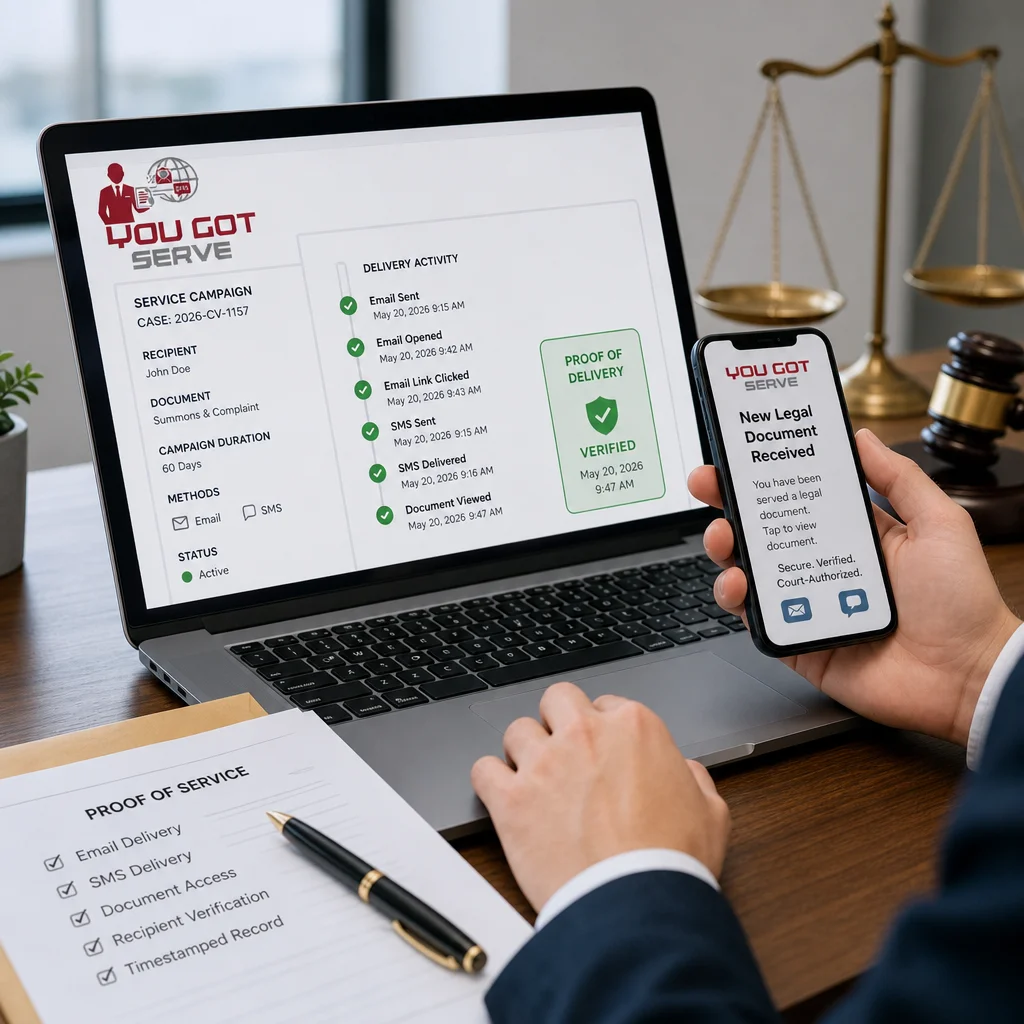
- Documented proof: Every send, delivery, and open is timestamped and recorded.
- Compliance-focused: Our platform includes features designed to support compliance with court rules where electronic service is permitted.
Whether you’re a busy solo practitioner, a litigation team managing multiple cases, or a self-represented litigant navigating the court system alone, we provide the infrastructure to serve documents electronically with confidence. Our system handles the technical and administrative burden so you can focus on your case.
What to do next: Identify one active case where service has stalled or personal service hasn’t yet been attempted. Consider whether electronic service might accelerate your timeline and reduce costs.
Our Dual Delivery System: Email and SMS at Scale
We deliver court documents through two channels simultaneously: email and SMS. This dual approach dramatically increases the likelihood that your recipient will receive and access the notice, regardless of which communication method they check more frequently.
Email delivery works best for recipients who maintain active inboxes and have reliable internet access. SMS reaches people through their phones, where open rates are typically higher than email. By sending both, you eliminate guesswork about which channel the defendant prefers.
Our system manages delivery logistics automatically:
- Messages are sent to all provided contact numbers and addresses at scheduled intervals.
- Each message includes a secure link to access the full court documents.
- Delivery status updates in real time so you can track progress instantly.
- Failed attempts trigger automatic retries within configurable parameters.
You can also customize delivery timing. Some cases benefit from multiple touches over a defined period; others require a single, concentrated notification window. Our platform accommodates both approaches, giving you control over how and when documents reach the recipient.
Actionable insight: Collect multiple contact methods for each recipient before initiating service. The more phone numbers and email addresses you provide, the higher your likelihood of confirmed delivery.
Verified Proof of Delivery: What Sets Us Apart
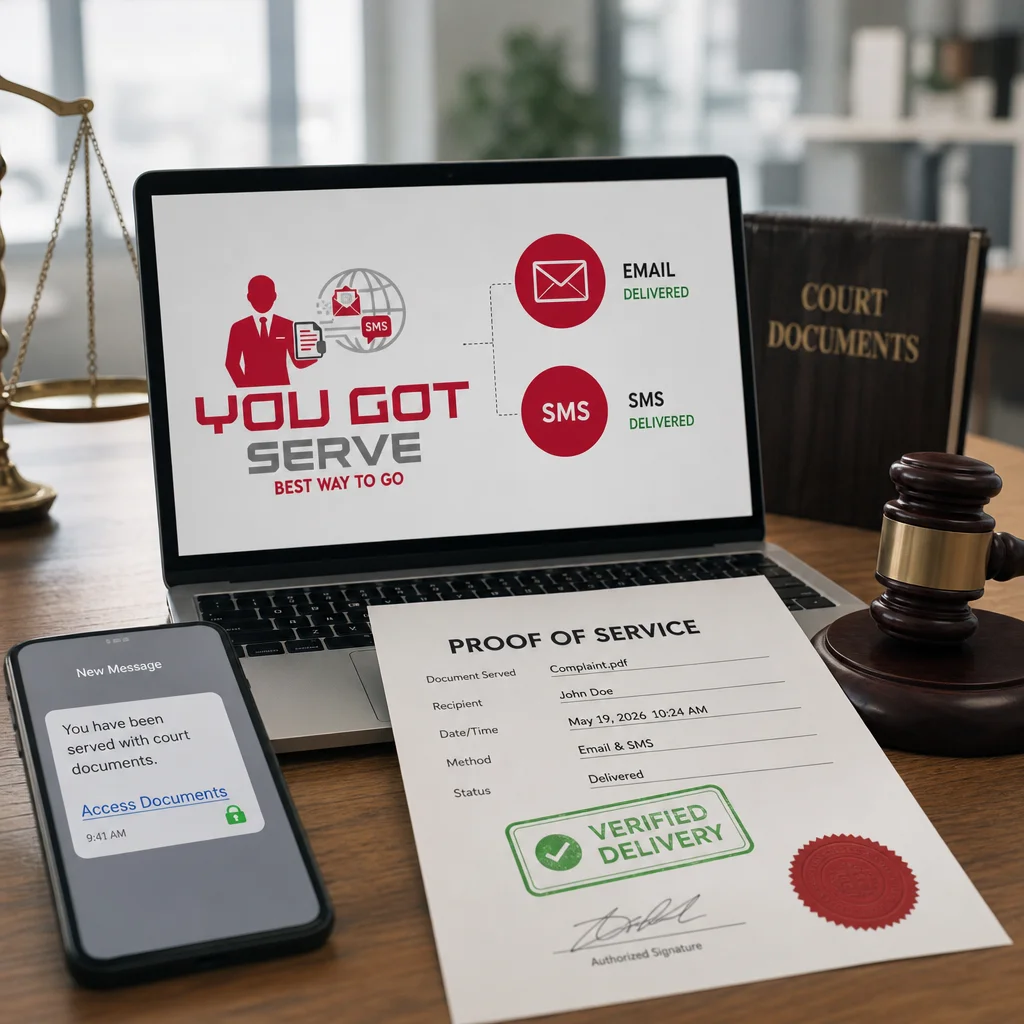
Digital proof of service is the foundation of our platform. Unlike newspaper publication, which offers no verification mechanism, we provide timestamped, documented evidence that the defendant received notice. This proof satisfies court requirements in jurisdictions that authorize electronic service.
Every transaction generates a detailed delivery report showing:
- Date and time each SMS and email was sent.
- Delivery confirmation for messages that reached the recipient’s inbox.
- Open timestamps when recipients access the secure document portal.
- IP address and device information logged during document access.
- A complete audit trail you can present to the court.
This level of accountability makes our digital proof of service substantially more defensible than traditional methods. If the defendant later claims they never received notice, you have timestamped evidence to contradict that assertion. Courts value this documented trail, especially when ruling on whether service was proper.
We secure every document behind a code-protected access portal, ensuring that only the intended recipient can view sensitive court filings. Verification happens automatically when recipients enter their access code, creating an additional layer of confirmation that the right person accessed the documents.
Key takeaway: Keep your delivery reports organized and accessible. If service is questioned, you’ll need to present these records to the court quickly.
Extended Service Campaigns: 60 and 90-Day Options
Many cases require persistent notification efforts, not just a single attempt. We offer configurable 60 and 90-day service campaigns that send recurring notifications to recipients over an extended timeframe.
This extended approach serves multiple strategic purposes:
- Increased likelihood of receipt: Repeated touches reach recipients who might miss the first attempt.
- Compliance with court orders: Some jurisdictions require notification efforts to span a specific period before alternative service is deemed proper.
- Clear documentation of due diligence: The extended campaign record demonstrates you made reasonable efforts to serve the defendant.
During a 60 or 90-day campaign, you can configure how frequently messages go out (weekly, biweekly, or monthly), ensuring steady pressure without harassment. Each cycle is individually documented, so you have proof that notifications continued throughout the entire service period.
If the recipient responds or confirms receipt during the campaign, we can pause or adjust future sends. This flexibility allows you to adapt your service strategy based on real-time feedback and case developments.
Practical guidance: Use extended campaigns when pursuing defendants in other states or when court rules suggest notification over time increases the likelihood of proper service.
Secure Document Access and Recipient Verification
Every document transmitted through our platform lives behind end-to-end encryption and code-protected access controls. Recipients cannot view documents until they enter a unique access code provided in the initial SMS or email notification.
This verification mechanism serves two critical purposes:
- Security: Sensitive court filings remain protected throughout transmission and storage.
- Proof of receipt: When someone enters the correct access code, we have confirmation they accessed the documents with knowledge and intent.
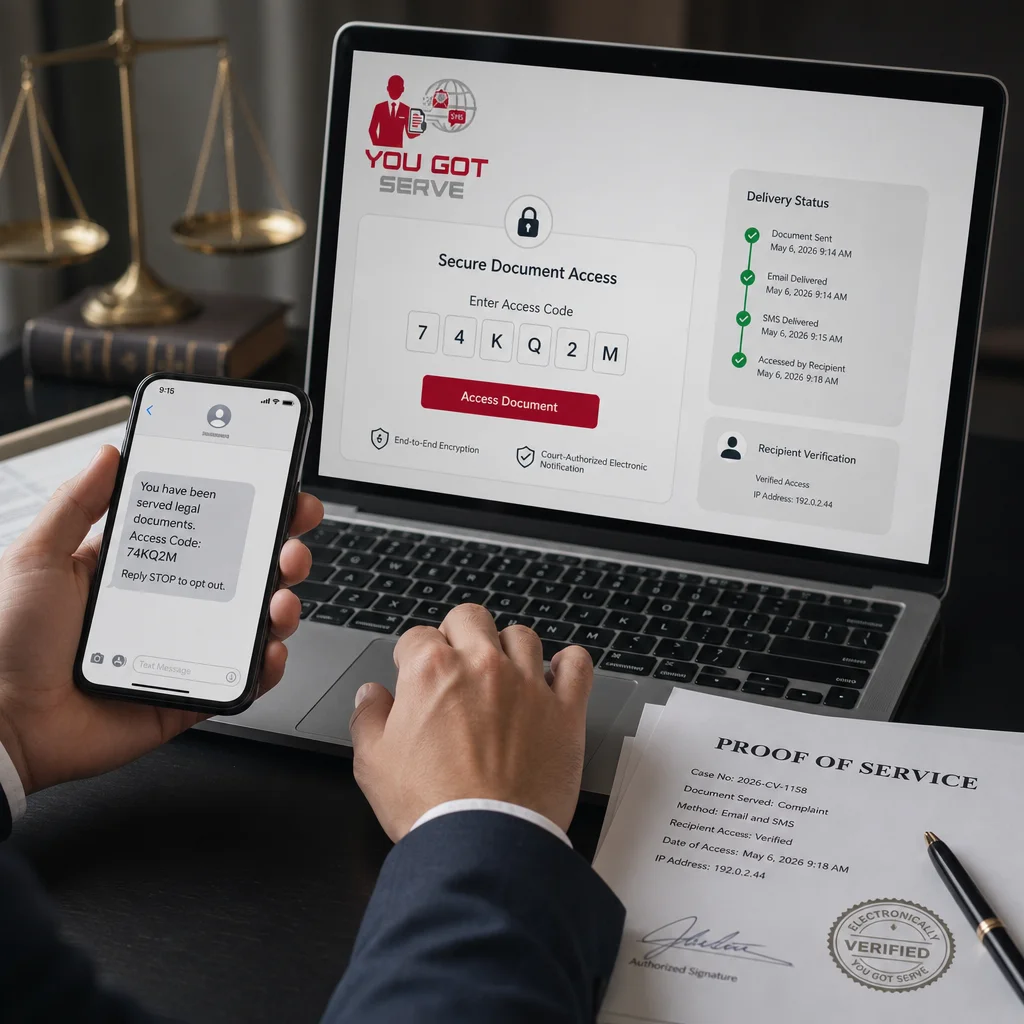
We timestamp every access event, recording exactly when the recipient opened the portal and viewing activity. This creates an irrefutable record that someone with knowledge of the case accessed the documents, strengthening your proof of service argument in court.
The process is transparent and straightforward for recipients. They receive a message with simple instructions, enter their code, and immediately access the full document package. No plugins, no complicated downloads. The portal works on any device with internet access.
Compliance note: Check local court rules to understand whether your jurisdiction requires actual proof of reading versus proof of delivery. Our system provides both, giving you flexibility to meet varied requirements.
Investigative Skip Tracing When Contact Information Gaps Exist
Finding current contact information remains one of the biggest obstacles in service of process. Defendants move, change phone numbers, and sometimes deliberately obscure their location to avoid litigation.
We integrate investigative skip tracing into our platform. When you lack current contact details, our team conducts targeted research to locate valid phone numbers and email addresses. This research combines public records databases, social media verification, and investigative techniques to build a current contact profile.
Skip tracing is especially valuable when:
- Previous service attempts used outdated information.
- The defendant has changed locations since the case began.
- You’re serving a business that’s relocated or changed ownership structure.
- Standard court records contain incomplete contact details.
Once we locate updated contact information, we add those details to your service campaign and initiate delivery through our verified channels. You’ll receive a report documenting the investigative work and sources consulted, which demonstrates due diligence to the court if service is later challenged.
Next step: Compile all available defendant information before requesting skip tracing. Even incomplete or outdated details give our investigators a starting point for research.
Compliance Support and Court Rule Navigation
We understand that electronic service rules vary significantly by jurisdiction. Your ability to serve documents electronically depends on local court rules, state statutes, and sometimes specific judicial orders. We’re designed to support compliance, not replace it.
Our platform includes resources that help you navigate these requirements:
- Jurisdiction-specific guidance on when electronic service is permitted.
- Checklists to confirm you’ve met local procedural requirements before service.
- Documentation templates that satisfy proof-of-service standards across common jurisdictions.
- Clear records of your compliance efforts if service is ever questioned.
Acceptance varies by jurisdiction. Some courts embrace electronic service broadly; others limit it to specific circumstances or require advance court approval. Before relying on electronic service, check your local court rules carefully. If you’re unsure whether electronic service is permitted in your case, consult local court clerk guidance or a licensed attorney familiar with your jurisdiction.
We maintain current information on court rule changes, but local rules evolve frequently. Our system flags potential compliance concerns and encourages you to verify requirements independently, ensuring you make informed decisions about your service strategy.
Important reminder: You remain responsible for confirming that electronic service meets your court’s requirements. We provide tools and documentation; you verify compliance.
Real-World Applications Across Legal Practice Areas
Electronic service of process applies across litigation types. Here are common scenarios where our platform delivers immediate value:
Debt collection and consumer litigation: When debtors relocate or ignore traditional notices, SMS and email delivery with verified receipt tracking confirms notice and protects your case timeline.
Family law and divorce proceedings: Locate and serve spouses who’ve moved out of state or disappeared. Extended service campaigns demonstrate diligent effort to notify all parties.
Business disputes and contract litigation: Serve corporate defendants at multiple contact points (registered agents, business phone numbers, corporate email addresses) to ensure notice reaches decision makers.
Small claims and self-represented litigants: Court publication fees consume small case budgets. Electronic service costs far less and produces better proof of delivery.
Probate and estate administration: Notify distant heirs and creditors quickly without expensive certified mail or publication delays.
In each scenario, electronic service compresses timelines, reduces costs, and generates superior documentation compared to traditional alternatives.
Application exercise: Consider your current caseload. Identify one pending case where electronic service might have accelerated progress or reduced costs.
Pricing and Account Benefits
We structure pricing to reflect the scope of your service needs. Whether you handle a single case or manage dozens simultaneously, our account options scale with your practice.
Basic accounts cover essential functionality: dual SMS and email delivery, verified receipt tracking, secure code-protected document access, and timestamped proof of service documentation. This covers most standard service scenarios.
Enhanced accounts add skip tracing services, extended 60 and 90-day campaigns, priority support, and batch processing capabilities. Practices managing high-volume service requirements benefit from these expanded features.
All accounts include comprehensive delivery reporting, real-time status tracking, and audit-ready documentation suitable for court presentation. There are no hidden fees for delivery attempts, failed retries, or proof generation. Pricing is transparent and predictable.
What to know: Contact us directly for a quote tailored to your practice size and anticipated volume. We offer trial access so you can evaluate the platform before committing to a paid plan.
Getting Started With Electronic Service Today
Starting with You Got Serve takes just a few steps. First, review how our system works to understand the delivery process and what documentation you’ll receive. Next, verify that electronic service is permitted in your jurisdiction and case type by consulting local court rules. Finally, create an account and load your first case with defendant contact information.
Our platform walks you through document upload, recipient configuration, and delivery preferences. If you lack current contact details, initiate skip tracing and let our team research updated information. Once everything is set, delivery begins automatically.
We provide onboarding support to ensure your first cases run smoothly. Our team is available to answer questions about compliance, explain delivery reports, or troubleshoot any issues that arise.
Electronic service of process transforms how modern legal professionals manage a traditionally slow, expensive process. We’re here to make serving court documents faster, more reliable, and better documented. Start today and experience how verified electronic service accelerates your cases while reducing costs.