

A detailed digital delivery record can show what a platform logged without proving that service was legally sufficient. That distinction matters when traditional attempts have stalled and you’re comparing electronic process serving solutions. A technology-based workflow may keep outreach going, but the rules for using it depend on the jurisdiction, case type, and any required court authorization.
If you’re weighing digital delivery against field-service workflows, look beyond speed and tracking. Compare what each option documents, how recipients access documents, what security controls are used, and whether electronic service is permitted for your case. This guide explains how those workflows differ and what to ask before choosing a provider.
You’ll also learn how a platform such as YouGotServe uses recurring email and SMS notifications, secure recipient access, and activity records, and what those records can and can’t establish. Requirements vary, so confirm the applicable rules and authorization with qualified counsel or the relevant court. Technology can support a service workflow, but it isn’t legal advice or a substitute for required procedure.
Key Takeaways
- Compare electronic process serving solutions by checking authorization needs, recipient access, notification cadence, activity records, and reporting.
- Confirm the case type, jurisdiction, and any required court authorization before using electronic delivery for legal documents.
- Check whether a provider’s records clearly show platform activity, while recognizing that documentation alone does not establish legal sufficiency.
- Verify recipient contact information and discuss the permitted delivery method with qualified legal counsel or the relevant court.
- When traditional service has encountered difficulty, consider whether a technology-based workflow fits your matter and its applicable requirements.
What Are Electronic Process Serving Solutions, and When Are They Considered?
Electronic process serving solutions use technology to send legal documents through channels such as email or SMS and record related platform activity. They can organize notifications and create a digital record, but they don’t guarantee that service is legally sufficient. A record of an email or recipient activity is not, by itself, proof that the method satisfies the rules for a particular case.
Sending a document electronically is different from making an in-person service attempt, and both are different from having legal authority to use an alternative method. Service of process refers to formally notifying a party of legal proceedings. Whether electronic delivery may be used, and what additional steps are required, depends on the jurisdiction and case type. Court authorization or other legal requirements may apply.
For a separate perspective on process-server apps and getting started, watch this video:
How electronic delivery differs from traditional process serving
A traditional process-serving workflow generally involves attempts to deliver documents in person. An electronic workflow sends notifications through digital channels and may record timestamps or recipient activity. These approaches create different kinds of records and are not interchangeable by default. A delivery platform can document what occurred within its system, but it doesn’t decide whether the method meets legal requirements. Physical attempts may still be necessary or required.
When a digital option may enter the discussion
A defendant who is difficult to reach, a tenant who is rarely available at a property, or a person involved in a collection matter may prompt a law firm, property manager, collection agency, or individual to explore other workflows. Difficulty reaching someone is a practical reason to ask about options, not proof that electronic service is authorized. Confirm the applicable rules and any required court approval with qualified legal guidance before proceeding.
If traditional attempts have stalled, document those efforts and ask what lawful next steps may apply. This overview of lawful next steps when someone is dodging service offers related context. Electronic delivery may be one technology-based option when permitted or authorized, but it doesn’t replace traditional service in every matter.
How Electronic Process Serving Solutions Work From Notification to Service Records
A responsible digital workflow starts with a legal check, not a message. Before using electronic process serving solutions, confirm that the method is permitted for the case and jurisdiction and that any required court authorization is in place. A platform can manage delivery activity, but it cannot grant that authorization.
Once the method is cleared, the workflow generally moves through these steps:
- Prepare recipient details and documents. Confirm the contact information and the documents to be delivered.
- Send notifications. The platform sends email and SMS notifications through the selected workflow.
- Provide secure access. The recipient uses a unique access code to access the documents, rather than receiving an unrestricted document link.
- Review the activity record. Check available notification history, timestamps, recipient activity, and reporting.
These steps describe a technology workflow, not a universal legal procedure. For example, the Federal Rules of Civil Procedure address electronic service of certain papers in federal cases, subject to the rule’s requirements. That framework should not be assumed to authorize electronic delivery of every initial summons or document. Check the rules that apply to the specific matter.
What a digital notification workflow records
Notification history and timestamps can show when the platform recorded an email or SMS notification. If a recipient uses the access-code workflow, the system may also record related activity. IP address and geolocation information may be recorded when available, but neither is guaranteed. These details describe activity observed by the platform. They don’t necessarily establish that the recipient personally received, read, or acknowledged the documents.
A platform record documents recorded activity; it does not, by itself, prove that service was legally sufficient. Keep that distinction clear when reviewing reports or deciding what documentation to present.
How recurring campaigns and reporting fit together
YouGotServe offers a 60-Day Digital Service Campaign and a 90-Day Digital Service Campaign. These campaigns include automated daily email and SMS notifications, creating recurring outreach rather than a single notification. Repeated notifications still don’t guarantee that a recipient opens or accepts documents.
Downloadable service reporting can organize notification history, timestamps, and other recorded activity. Treat it as documentation of platform events, not as a promised court outcome or a determination of legal sufficiency. For broader background, see electronic service of process fundamentals.
If electronic delivery is permitted or authorized and traditional attempts have reached a roadblock, you can review YouGotServe’s electronic document delivery platform as one technology-based workflow option.
How to Compare Electronic Process Serving Solutions Without Overlooking Legal Limits
A useful comparison separates what a platform can do from what the law permits in a particular matter. No platform feature alone determines whether electronic service is allowed. Confirm the requirements for the case and jurisdiction before weighing convenience, notification options, or reporting.
Use this framework to compare providers and workflows. Ask each provider to explain its features, then verify legal requirements separately with qualified counsel or the relevant court.
| What to compare | Questions to ask | What remains case-specific |
|---|---|---|
| Authorization | Does the workflow let you document the method being used? | Whether electronic service is allowed and whether court authorization or other steps are required. |
| Recipient access | How does the recipient access documents? Are unique codes or other access controls used? | Whether the proposed method meets the applicable rules. |
| Notification cadence | Are email and SMS notifications recurring? Can you review the workflow and timing? | Whether that channel and approach are permitted for the matter. |
| Activity records | Are notification history, timestamps, and recipient activity recorded? Which details may be unavailable? | What evidence is required and what legal significance the record may have. |
| Reporting | Can you download a report that organizes the recorded activity? | Whether the report meets procedural requirements or establishes legally sufficient service. |
Which workflow features should legal teams evaluate?
Look for clear descriptions of recipient access, recurring email and SMS notifications, activity monitoring, and downloadable reporting. Ask exactly what an activity entry means and whether IP or geolocation details are captured only when available. A precise record helps teams review platform events without treating them as proof that a person read or acknowledged documents.
Also consider what the workflow needs to accomplish. A physical service provider’s model centers on in-person attempts; a digital platform centers on electronic notifications and system records. These approaches have different use cases. The National Association of Professional Process Servers is one resource for learning about the process-serving industry and its professional community.
When digital delivery may not be the right fit
If authorization or applicable rules have not been confirmed, pause before sending documents electronically. A platform doesn’t replace legal counsel, court direction, or physical service when required. For practical considerations specific to text messages, review steps and legal checks for serving papers via text.
When traditional service has reached a roadblock and electronic delivery is permitted or authorized, review YouGotServe’s electronic delivery workflow as one option for recurring notifications and documented activity.
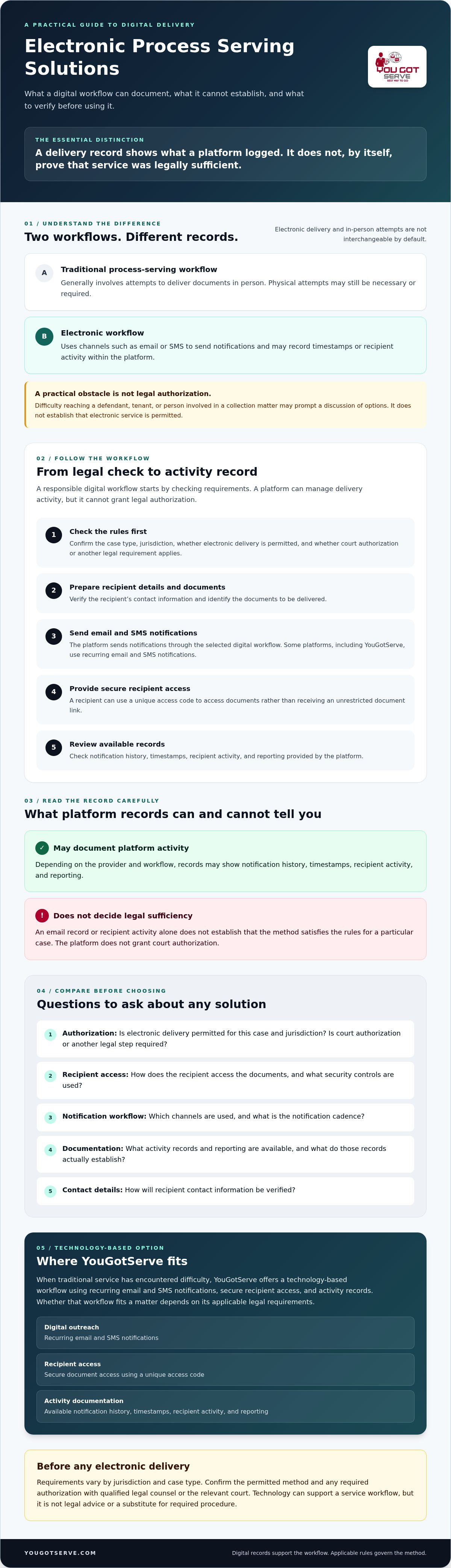
What to Check Before Choosing an Electronic Process Serving Solution
Start with the legal fit, then evaluate the technology. An electronic workflow can organize outreach and documentation, but it cannot determine whether the method is permitted for a particular case. Use this checklist before selecting among electronic process serving solutions:
- Identify the case type and jurisdiction. Requirements may differ depending on the matter and where it is being heard.
- Confirm authorization. Ask qualified legal counsel or the relevant court whether electronic delivery is permitted and whether a court order or other requirements apply.
- Verify recipient contact information. Check that the email address or phone number is current and appropriately associated with the intended recipient.
- Review access and security. Ask how documents are protected, how a recipient accesses them, and what controls are used, such as a unique access code.
- Understand the records. Check whether notification history, timestamps, recipient activity, and downloadable reports are available, and what those records do and don’t establish.
- Plan for review and retention. Identify who will assess the method and supporting records, and how the report will fit into the organization’s case-management process.
Confirm legal and operational fit before enrollment
Before starting a campaign, determine which rules apply and whether authorization or other procedural steps are required. Assign responsibility for confirming the permitted method and reviewing the supporting documentation. Consider how electronic outreach relates to earlier or continuing service efforts. It may complement other efforts or be considered after them, depending on the applicable rules and case circumstances. Don’t treat enrollment or a platform’s features as legal approval.
Match the campaign workflow to your organization
Recurring notifications may suit teams that need an ongoing, documented outreach sequence. YouGotServe offers 60-Day and 90-Day Digital Service Campaigns with automated daily email and SMS notifications. Consider whether those durations, the unique-code recipient access workflow, and downloadable reporting align with how your team assigns cases, reviews activity, and stores records. Organizations with recurring document needs should also consider how campaign workflows fit their internal processes. Campaign activity doesn’t guarantee recipient receipt, acknowledgment, or legal sufficiency.
The 60-Day Digital Service Campaign is $350 per campaign, and the 90-Day Digital Service Campaign is $500 per campaign. Organization Accounts receive a 10% discount on each service/document campaign. Optional background and contact investigation is a separate service provided through CII Services Corp for $150 per investigation.
Once you’ve assessed the case requirements, contact details, access controls, and reporting needs, review YouGotServe’s digital delivery approach as a technology-based option when traditional service has encountered difficulty and electronic delivery is permitted or authorized.
How YouGotServe Fits as a Technology-Based Option
When traditional service has encountered difficulty, YouGotServe LLC offers a technology-based approach for matters where electronic delivery is permitted or authorized. Its platform delivers legal documents through email and SMS, with recurring notifications and records of platform activity. YouGotServe is not a physical process-serving company or a legal representative, and it doesn’t grant court authorization automatically.
What the YouGotServe workflow includes
Within a digital campaign, recipients access documents through a unique access-code workflow. Automated daily email and SMS notifications can continue through the selected campaign, while the platform records notification history, timestamps, and recipient activity. IP and geolocation information may also be recorded when available. Downloadable service reporting brings recorded activity together for review.
These records document events captured by the platform. They don’t guarantee that a recipient received, read, or acknowledged the documents, or that a court will find service legally sufficient. The workflow is patent-pending, which does not mean that a patent has been granted or that legal requirements are satisfied.
The available campaign durations are the 60-Day Digital Service Campaign and the 90-Day Digital Service Campaign. Optional background and contact investigation is separate from those campaigns and is provided through CII Services Corp.
Practical next steps for evaluating the platform
Before using any electronic process serving solution, establish whether the method may be used for your case. Requirements vary by jurisdiction and case type, and court authorization or other legal steps may apply. Ask qualified counsel or the relevant court to clarify the rules before starting electronic delivery.
Then compare the documentation you need with the platform’s reporting features. Identify who will review the records, what activity information is available, and how the report fits your organization’s case files. If the matter still requires physical service, or electronic delivery hasn’t been authorized where necessary, a digital platform doesn’t replace that requirement.
If the method is appropriate for your matter, review YouGotServe’s digital delivery workflow to see how recurring notifications, secure recipient access, tracking, and downloadable reporting are organized. Confirm applicable rules and authorization before proceeding.
Choose a Workflow That Fits Your Case
The right electronic process serving solutions support a clear workflow, but technology and legal sufficiency are separate questions. Compare how providers handle recurring notifications, secure recipient access, activity tracking, and reporting. Then confirm whether electronic delivery is permitted for your case and jurisdiction, and whether court authorization or other requirements apply.
YouGotServe offers a technology-based option when traditional service has encountered difficulty and electronic delivery is permitted or authorized. Its workflow includes recurring email and SMS notifications, unique recipient access, notification history, timestamps, activity tracking, and downloadable reporting. These records document platform activity, but they don’t guarantee recipient receipt, acknowledgment, or legal sufficiency.
Before taking the next step, confirm the applicable rules with qualified counsel or the relevant court and identify what documentation your matter requires. If this approach fits your needs, review YouGotServe’s digital delivery approach to evaluate the workflow. This information is general and is not legal advice.
Frequently Asked Questions
What are electronic process serving solutions?
Electronic process serving solutions use technology to deliver legal documents through channels such as email or SMS and record related platform activity. Depending on the platform, a workflow may include recurring notifications, secure document access through a unique code, timestamps, activity tracking, and downloadable reporting. These features can help organize digital outreach, but a platform record alone doesn’t establish that the recipient received the documents or that service meets legal requirements.
Are electronic process serving solutions legally valid in every case?
No. Whether electronic delivery may be used depends on the jurisdiction, case type, and applicable rules. Court authorization or other legal requirements may apply, particularly for formal service of initial documents. A platform cannot provide automatic judicial authorization, and its records don’t determine legal sufficiency. Before using digital delivery, confirm the requirements for the specific matter with qualified counsel or the relevant court. This information is general and isn’t legal advice.
Can electronic process serving replace a traditional process server?
Not in every situation. Traditional or physical service may still be required by the rules governing a case, while electronic delivery may be an option only when permitted or authorized. A digital platform can provide a different workflow when traditional attempts encounter difficulty, but it doesn’t replace required physical service. YouGotServe provides electronic document delivery through email and SMS, not physical process serving or legal representation.
How do electronic service platforms document delivery attempts?
Platforms may record notification history, timestamps, and recipient activity associated with email or SMS outreach and secure document access. Some information, such as IP or geolocation details, may be captured when available. Downloadable reports can organize the activity recorded by the system. These records show platform events, not necessarily that a recipient personally received, read, or acknowledged the documents, and they don’t alone prove legally sufficient service.
Can legal documents be served by email or text message?
Sometimes, but the answer depends on the document, case type, jurisdiction, and any required authorization. Rules may treat initial service of a case differently from later documents, so don’t assume that permission to use email or text in one context applies to another. Confirm the permitted method with qualified counsel or the relevant court before sending legal documents electronically. Having a recipient’s email address or phone number doesn’t by itself establish authorization.
What should I compare when choosing an electronic process serving solution?
Compare authorization separately from platform features. Review how recipients access documents, what security controls are described, whether notifications recur, and which timestamps and activity details are recorded. Ask what information may be unavailable and whether downloadable reports fit your case-management needs. Also confirm contact details and whether physical service remains necessary. Choose based on the workflow and documentation your matter requires, not on a feature alone or a promise of legal sufficiency.


