

What if a text reaches a hard-to-find defendant but doesn’t count as legal service? If you’re trying to serve lawsuit papers via text after traditional attempts have failed, the first question isn’t whether a message was sent. It’s whether the rules for your case allow that method and whether court authorization or another legal requirement applies.
It’s understandable to look for another way to reach someone who hasn’t been found through standard methods. But sending a summons and complaint by SMS alone generally doesn’t complete initial service. Electronic-service requirements vary by jurisdiction and case type, so confirm the rules before treating a text as formal service.
This article explains what to check before sending documents, how to organize a record of failed service attempts and electronic outreach, and what delivery logs can and can’t establish. You’ll also learn when to seek qualified legal guidance or continue with another service method. When electronic delivery is permitted or authorized, platforms such as YouGotServe can record email and SMS notification activity. Those records don’t by themselves prove receipt or legal sufficiency.
Key Takeaways
- Before you serve lawsuit papers via text, identify the rules for your jurisdiction and case type, then confirm whether court authorization or another requirement applies.
- Use a pre-send checklist to verify whether electronic delivery is available for your situation and what conditions apply.
- Compare SMS, email, and personal service by delivery channel, available documentation, and authorization requirements.
- Keep records of outreach and delivery activity, but don’t assume a text or delivery log establishes legal service.
- When traditional attempts have stalled and electronic delivery is authorized, You Got Serve can support recurring notifications, secure document access, and activity reporting.
Can You Serve Lawsuit Papers via Text? Start With the Legal Question
Sending lawsuit papers by SMS and completing formal service aren’t automatically the same. A text may notify someone about a legal matter or provide a way to access documents. Whether that method satisfies service requirements depends on the jurisdiction, case type, and any required court authorization.
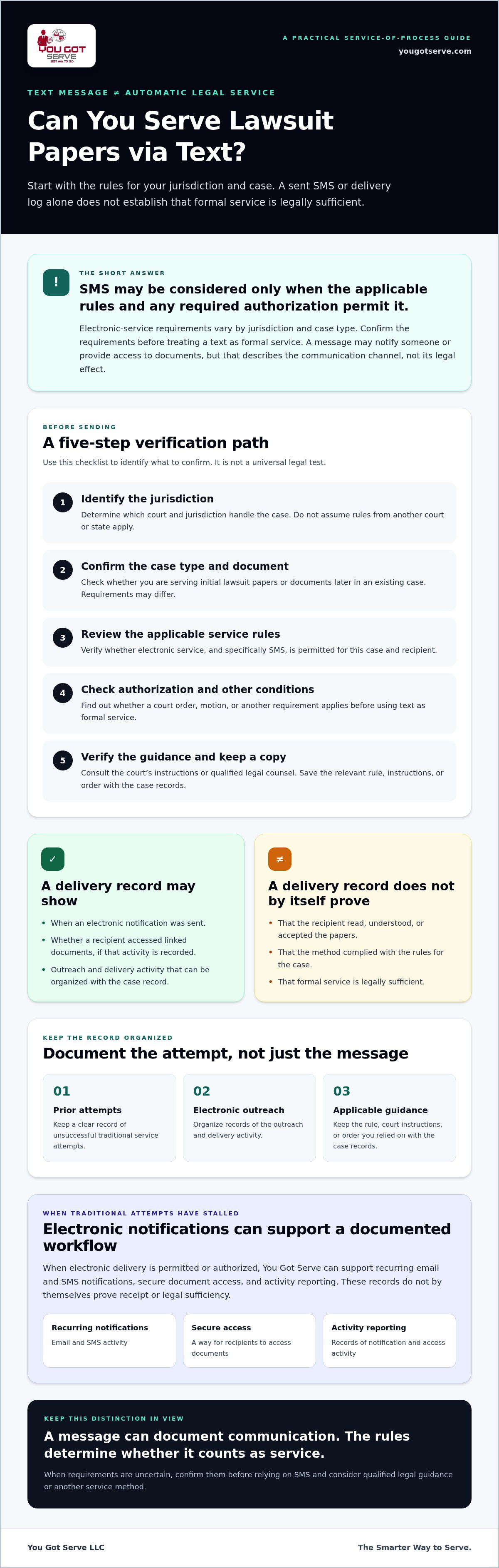
Short answer: You may be able to serve lawsuit papers via text only when the applicable rules and any required court order permit it. A sent message or delivery record alone doesn’t establish that formal service is legally sufficient.
For a high-level overview of the purpose of service of process, see this general reference. For a specific case, check the rules and orders that apply to that matter.
This video offers additional context on serving court papers:
What does serving lawsuit papers via text mean?
Text-based delivery uses SMS to notify someone about a legal matter or direct them to documents, sometimes through a secure access process. That describes the communication channel, not its legal effect. Electronic service means delivering legal documents electronically in a way allowed by applicable rules or an order. Requirements differ, so don’t assume a text is an approved substitute for another method.
A delivery record may show when a notification was sent or whether a recipient accessed linked documents. This can help document system activity, but it doesn’t necessarily prove the recipient read, understood, or accepted the papers. It also doesn’t establish on its own that service complied with the applicable rules.
When might text-based service be considered?
Text may be considered when traditional attempts have encountered difficulties, but it isn’t a shortcut around required procedures. Before using SMS as formal service, check the rules for the court and case, and confirm whether a judge’s authorization or another requirement applies.
For example, a defendant may be difficult to reach at known addresses but appear to use a particular phone number. That information could be relevant when assessing an electronic option, but it doesn’t guarantee permission or make SMS legally sufficient. Keep a clear record of prior attempts and seek qualified legal guidance about the next step.
Check Rules and Authorization Before Sending Lawsuit Papers by Text
Before treating a text as a service method, work through this pre-send checklist. It helps identify what to verify, but it isn’t a universal legal test. Electronic-service requirements vary by jurisdiction and case type. A court order or another legal requirement may apply.
- Identify the governing jurisdiction. Determine which court and jurisdiction handle the case. Don’t assume rules from another state, court, or case apply.
- Confirm the case type and document. Check whether you’re serving the initial lawsuit papers or documents later in an existing case. Different documents and proceedings may have different service requirements.
- Review the applicable service rules. Look for instructions about electronic service and whether SMS is permitted for this case and recipient. Service requirements support the notice and fairness principles discussed in procedural due process clauses, but the rules for your case determine the required method.
- Check what authorization is required. Find out whether you need a court order, must file a motion, or need to meet another condition before using text. Don’t treat a text as formal service until you’ve confirmed the requirements.
- Verify the source of guidance. Consult the court’s instructions for your case or ask qualified legal counsel to clarify uncertainties. Keep a copy of the relevant rule, instructions, or order with your case records.
Which requirements should you verify first?
Start with the court, case type, and specific papers involved. Then confirm whether electronic service is allowed in that situation and whether the recipient must meet any conditions. Check the case file for an order or instructions about alternative service. A general online example may help you identify questions to ask, but it isn’t authority for your case.
What should you do if authorization is unclear?
Pause before sending. An SMS may create a record of outreach, but that doesn’t resolve whether you followed the required service method. Ask qualified counsel or consult the court’s applicable instructions before proceeding. For a broader overview of electronic methods and their legal considerations, read this electronic service of process guide.
This checklist is educational, not legal advice. If text delivery is permitted or authorized and you need to organize digital notifications, you can review electronic document delivery options from You Got Serve.
Compare Text-Based Delivery With Other Service Options
SMS and email provide digital ways to notify someone or offer access to documents. Traditional personal service involves in-person delivery under the applicable procedure. The methods differ in how they reach a recipient and what activity can be documented, but none is suitable in every situation. The rules, case circumstances, and any required authorization determine which option may be used.
| Method | Delivery channel | Documentation that may be available | Authorization to check |
|---|---|---|---|
| SMS | Text message, potentially linking to secure document access | Sent notifications, timestamps, and recipient activity if the system records it | Check whether electronic service by text is permitted and whether a court order or other authorization is required |
| Email message, potentially linking to secure document access | Notification history, timestamps, and recipient activity if tracked | Check the rules for the case and whether consent, an order, or another requirement applies | |
| Traditional personal service | In-person delivery under the applicable procedure | Records or proof associated with the service attempt, depending on the process used | Confirm the rules for the case, including who may serve and what documentation is required |
Rules can differ even among electronic methods. For example, the Illinois Supreme Court rules described a process allowing text, email, or social media service of a summons by special court order. That example is specific to its jurisdiction and circumstances, not a rule for other courts or cases. Verify the requirements that apply to your matter before choosing a method.
What can SMS records document?
A digital delivery platform may keep notification history, timestamps, and recorded recipient activity, such as access to linked documents. IP or geolocation details may be available when the system captures them. These records can help show what activity was logged, but they don’t guarantee that the recipient received, read, or acknowledged the papers, or that service was sufficient under the applicable rules.
When should traditional service remain part of the plan?
Digital delivery doesn’t replace traditional service in every situation. If the rules require personal service, electronic delivery may not satisfy that requirement. Even when an electronic method is authorized, case-specific instructions may require other steps or supporting documentation. Review the applicable requirements and consider what to do next if attempts to reach the defendant have stalled.
How to Prepare and Document a Text-Based Legal Delivery Attempt
If electronic delivery is permitted or authorized, a careful workflow can help keep the documents, contact details, and activity records organized. Use the steps below as preparation guidance, not as a substitute for the rules or order that apply to your case.
How should you prepare before sending?
- Verify authority. Confirm that text delivery is permitted for this case and that any required court order or other authorization is in place. Keep the relevant instructions or order with your case records.
- Confirm the contact details. Check that the phone number is associated with the intended recipient using information available to you. A mistyped or outdated number can make it harder to interpret the delivery record.
- Review the documents. Confirm that you have the correct, complete papers for the case. Check names, attachments, and document-access settings before sending.
- Protect sensitive information. Use secure document access where available, and handle legal materials in line with applicable privacy and security requirements. Avoid putting unnecessary sensitive details in the text notification.
- Send through the approved method. Follow the court’s instructions and any conditions in the authorization. Preserve a record of what was sent and when.
For example, if a court order authorizes electronic delivery to a particular number, retain the order and verify the number before preparing the message. Don’t assume authorization for one method, recipient, or document automatically applies to another.
What should a useful delivery record include?
Preserve the notification history and timestamps available from the platform, along with any recorded recipient activity, such as a document-access event. Keep the documents sent and relevant authorization with the report so the activity can be understood in context. Distinguish between a notification being sent and an interaction with the documents being recorded.
These records document system activity. They don’t, by themselves, prove that the recipient read or understood the papers, acknowledged them, or that service met legal requirements. For additional documentation considerations, see this court-ready proof of service checklist.
When electronic delivery is permitted or authorized, You Got Serve provides email and SMS notifications, secure recipient access using a unique code, activity tracking, and downloadable service reporting. The records can help organize delivery activity, but they don’t determine legal sufficiency. Explore electronic document delivery to see whether this technology-based option fits your authorized workflow.
Use You Got Serve for Text Notifications When Electronic Service Is Authorized
When traditional service has encountered difficulties, You Got Serve offers a technology-based option for electronic document delivery, subject to applicable rules and authorization for the specific matter. Its platform sends recurring email and SMS notifications and provides secure access to documents. A campaign supports a digital workflow; it doesn’t decide whether that workflow meets the legal requirements for service.
What happens during a You Got Serve digital campaign?
A recipient receives recurring daily email and SMS notifications directing them to access documents through a secure process using a unique access code. The platform records notification history, timestamps, and recipient activity. Users can also download service reporting to review and retain a record of that activity.
You Got Serve offers a 60-Day Digital Service Campaign for $350 and a 90-Day Digital Service Campaign for $500. These options describe the notification period, not a promise that a recipient will receive or acknowledge the documents. Platform records document system activity; they don’t guarantee actual receipt, prove that someone read the papers, or establish legal sufficiency or court acceptance.
Organization Accounts receive a 10% discount per service/document campaign. An optional Background / Contact Investigation through CII Services Corp is a separate service priced at $150 per investigation. It is not part of the digital campaign price.
What should you confirm before starting?
First, verify that electronic service is permitted or authorized for the specific jurisdiction, case type, recipient, and documents. If an order or other requirement applies, confirm that it’s in place and understand its conditions. Rules vary, so seek qualified legal guidance if the authorization or permitted workflow is unclear.
Next, consider whether the platform’s records fit the documentation needs of the matter. Review what activity is tracked and what the downloadable report includes, then keep those records with the applicable authorization and case materials. Don’t rely on a campaign report as a substitute for any proof or filing required by the court.
If electronic delivery is an appropriate, authorized option after traditional service has reached a roadblock, you can learn about You Got Serve and review its digital delivery workflow. This information is educational, not legal advice. The rules and authorization for your case remain controlling.
Make Your Next Service Step Deliberate
Before you serve lawsuit papers via text, confirm that the method is permitted for your jurisdiction and case, and obtain any required court authorization. A message or delivery log can document digital activity, but it doesn’t automatically establish that formal service is complete or legally sufficient.
If electronic delivery is authorized and traditional attempts have reached a roadblock, You Got Serve offers recurring email and SMS notifications, secure document access through a unique recipient access code, activity tracking, and downloadable reporting. These tools help organize the delivery record without guaranteeing receipt, acknowledgment, or court acceptance.
Review the applicable rules and seek qualified legal guidance if you’re unsure which method to use. When you’re ready to assess a digital workflow, review the You Got Serve digital delivery platform and its documentation features. Check that electronic delivery is permitted or authorized for your matter before starting.
Frequently Asked Questions
Can you serve lawsuit papers via text?
Not automatically. You may be able to serve lawsuit papers via text only if the rules for the jurisdiction and case type allow it and any required court authorization is obtained. SMS may notify someone or provide secure document access, but sending a message alone doesn’t establish formal service. Check the applicable rules and court instructions first. If requirements are unclear, consult qualified legal counsel. This is general information, not legal advice.
Is serving court papers by text legally valid in every state?
No. Don’t assume one rule applies nationwide. Requirements may depend on the jurisdiction, case type, circumstances, and whether court authorization or another legal step is required. Confirm the rules for the specific matter before relying on SMS delivery. A platform’s notification or activity records can document what its system recorded, but those records don’t by themselves establish that service was legally sufficient or that a court will accept it.
How do I get permission to serve lawsuit papers electronically?
First identify the jurisdiction, case type, and documents involved, then check whether the applicable rules require court authorization or another step before electronic service. The process varies, so a general online checklist may not answer what your case requires. Review the relevant court instructions or ask qualified legal counsel before using text or another electronic channel as formal service. A delivery platform cannot provide automatic judicial authorization.
What happens if a defendant does not respond to a text with lawsuit papers?
No response doesn’t show whether the recipient received or read the message, and it doesn’t establish that they legally accepted the documents. Preserve available notification and activity records, then check the requirements and next steps for your case with qualified counsel. Depending on the rules and circumstances, another service method or further authorization may be needed. Don’t treat silence or a delivery status as proof that service is complete.
Can I use text messages after traditional service attempts fail?
Possibly, but failed traditional attempts don’t automatically authorize text-based service. Check the requirements for your jurisdiction and case type, including whether a court order or other authorization is required. Keep a clear distinction between making an electronic notification attempt and completing legally sufficient service. Document your attempts and seek case-specific legal guidance before relying on SMS. If electronic service isn’t authorized, follow the applicable instructions for another method.
What information can a digital service report show?
Depending on the platform and data captured, a report may show notification history, timestamps, and recipient activity, such as document access. IP or geolocation information may be included when available and recorded by the system. These details document system activity, not guaranteed receipt, reading, or acknowledgment. They also don’t establish that a particular method met the case’s legal requirements or that a court will accept it.
Does You Got Serve replace a traditional process server?
No. You Got Serve provides electronic legal-document delivery by email and SMS. It may be a technology-based option when traditional service has encountered difficulties and electronic delivery is permitted or authorized, but it isn’t a universal substitute for traditional service. Requirements vary by jurisdiction and case type. Confirm what applies before starting a campaign, and consult qualified legal counsel or the relevant court instructions if you’re unsure which method to use.


