

A read receipt can show that an email was marked as opened, but it doesn’t automatically prove that court papers were legally served. If you need to verify email receipt for court, that distinction matters: delivery notices, read confirmations, and a legally sufficient method of service are not the same thing. Email systems can also provide incomplete signals, leaving you unsure whether a message reached the intended inbox, whether anyone accessed it, or what the record would establish later.
This guide explains practical ways to check delivery and recipient activity, preserve the original message and related timestamps, and organize records for a proceeding. It also explains the limits of read receipts and why you should check the applicable court rules, case type, and any required consent or authorization before relying on email to serve documents. By separating technical confirmation from legal sufficiency, you can create a clearer record and know when to consult court instructions or a qualified legal professional.
Key Takeaways
- To verify email receipt for court, distinguish delivery and recipient-activity signals from proof that service complied with applicable rules.
- Check the recipient address and attachments before sending, then retain the original message and any delivery notices or replies.
- Compare what delivery notices, read receipts, replies, and tracking logs may document, and note what each record cannot confirm.
- Organize messages and supporting records chronologically, preserving timestamps and enough context to identify the communication.
- When traditional service encounters difficulty, digital delivery records may help document notification efforts if electronic service is permitted or authorized.
What Does It Mean to Verify Email Receipt for Court?
Your first question may be simple: did the email reach the intended recipient? To verify email receipt for court means documenting the delivery or recipient-activity signals available to you. These signals can help build a record, but they describe different events: an email system accepting a message, someone or something opening it, a recipient accessing an attachment, and the recipient acknowledging the communication.
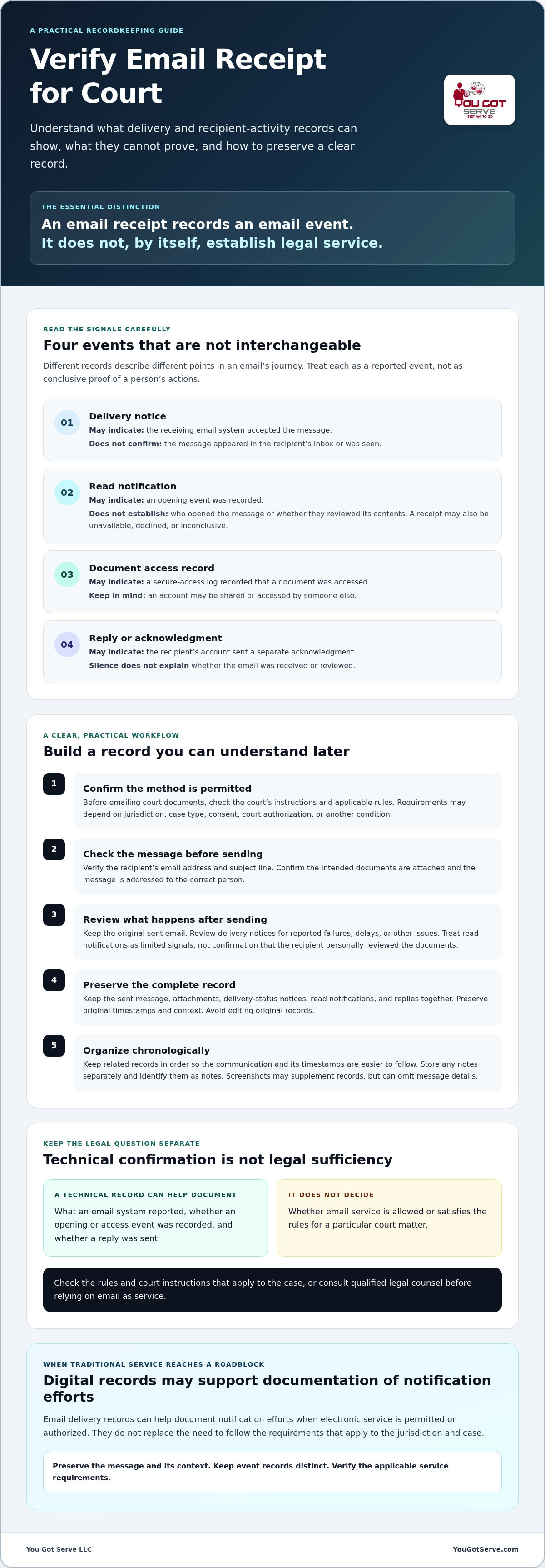
Keep those distinctions clear. A delivery notice may indicate that a receiving email system accepted the message, but it may not confirm that the message appeared in the recipient’s inbox or was seen. A read notification may record an opening event, but it doesn’t establish who opened the message or whether they reviewed its contents. An acknowledgment, such as a reply, is a separate communication from the recipient.
For background on how electronically stored information, including email, may be handled as potential evidence, see this overview of the electronic discovery process. Preserving the message and its context can help keep the record understandable.
For a brief overview of how messages may be used as evidence, watch this video:
Email delivery, opening, and acknowledgment are different events
Consider a law office emailing a notice with a document attached. A delivery status may record acceptance by the recipient’s mail system. A read receipt may suggest the message was opened, while a separate secure-access log may show that a document was accessed. A reply can show that the recipient’s account sent an acknowledgment, but silence doesn’t explain whether the message was received or reviewed.
Each record has limits. An email address may be shared, an account may be accessed by someone else, and automated settings can affect notifications. Preserve the original message and its full context rather than treating one signal as conclusive proof of a person’s actions.
Does an email receipt prove court service?
A receipt records an email event, not legal authorization. A receipt alone doesn’t establish that email service is sufficient for a particular court matter. Requirements can depend on jurisdiction, case type, applicable rules, and whether consent, court authorization, or another condition is required.
Before relying on an email record as proof of service, check the court’s instructions and the rules that apply to your case, or consult qualified legal counsel. A receipt can support documentation of what happened technically. Whether that event satisfies service requirements is a separate legal question.
How to Verify Email Receipt for Court: A Practical Step-by-Step Process
A consistent recordkeeping process can help you determine what happened after an email was sent. These steps document available information; they don’t guarantee that a person received a message or that service was legally sufficient. Before sending court documents by email, confirm that the method is allowed for your matter. Requirements vary, and court authorization or other conditions may apply.
Check the message and available email notifications
Before sending, verify the recipient’s email address, subject line, and names of the attached files. Make sure the intended documents are attached and that the message is addressed to the correct person. Keep the original sent email in your account rather than relying only on a copied summary or screenshot.
After sending, review any automated status notice for a delivery failure, delay, or other reported issue. A read receipt may be unavailable, declined, or inconclusive. Treat each notification as a record of a reported email event, not confirmation that the recipient personally reviewed the documents.
Preserve a clear record of what happened
Keep the sent message, attachments, delivery-status notices, read notifications, and any replies together. Preserve their original timestamps and context. Avoid editing the original records. If you need to make notes, store them separately and identify them as your notes. Screenshots can supplement records, but they may omit message details and shouldn’t be treated as conclusive proof of service.
Retain the message, timestamp, status, and response, if any. Together, these items help show what was sent and which email events or replies were recorded. They don’t establish by themselves that a person opened, understood, or legally received the documents.
Use a simple verification workflow
- 1. Confirm the method. Check the rules and instructions for your court and case before relying on email. For federal civil matters, consult the Federal Rules of Civil Procedure and any applicable court procedures.
- 2. Check the email details. Verify the recipient address, subject, and attached document names before sending.
- 3. Review notifications. Save any failure, delay, delivery, or read-status notice. Record what the notice reports without drawing conclusions beyond it.
- 4. Preserve the full exchange. Keep the original message and any response, with timestamps and context, in an organized location.
If traditional service has encountered difficulty and electronic delivery is permitted or authorized, YouGotServe offers a technology-based option with email and SMS notifications, activity tracking, timestamps, and downloadable reporting. These records document platform activity, but don’t determine whether service meets the requirements for a specific case. Learn more about electronic document delivery and confirm applicable requirements before using it.
What Email Receipts and Tracking Records Can Actually Show
Different records capture different stages of an email exchange. Comparing them helps you assess what the available evidence documents and what it leaves uncertain. No single status or activity log should be treated as a complete account of who received, viewed, or understood the documents.
| Record | What it may document | What remains unknown |
|---|---|---|
| Delivery notice | A mail system reported accepting or processing the message, or reported a delivery problem. | Whether the message reached the recipient’s inbox, was seen, or was accessed by the intended person. |
| Read receipt | An email system reported an opening event, if the feature was available and the receipt was generated. | Who opened the message, whether they reviewed its contents, or whether they understood it. |
| Recipient reply | The recipient’s account sent a response, which may acknowledge or discuss the communication. | Whether the reply satisfies any legal requirement for service or proves that attached documents were reviewed. |
| Platform activity log | A digital delivery system recorded notifications, timestamps, or recipient activity, such as document access. | Whether a particular court will find the method legally sufficient or the record conclusive. |
Delivery notice versus read receipt versus recipient reply
Email settings and system limitations affect which signals appear. A recipient may decline a read receipt, the email program may not support it, or a notice may report an event without identifying the person behind it. A reply is a separate action and can provide useful context, but it doesn’t by itself establish compliance with service rules. Interpret each record narrowly and preserve the original message alongside it.
What a digital service report may document
YouGotServe’s reporting can document notification history, timestamps, and recipient activity associated with its electronic delivery process. IP address and geolocation information may also be included when available, but these details aren’t guaranteed and shouldn’t be treated as definitive proof of a person’s identity or location. A downloadable report can help organize the activity record for review.
These records may provide more detail about a delivery effort than a basic email receipt, but tracking evidence does not itself establish legal sufficiency. Requirements depend on the jurisdiction, case type, and applicable rules or authorization. For additional recordkeeping considerations, review the court-ready proof of service checklist. If you need to verify email receipt for court, use each record to show only the event it actually documents, then confirm whether the method meets the requirements for your matter.
How to Keep Email Receipt Records Organized for a Court Matter
A useful email record should let someone reviewing the matter understand what was sent, when it was sent, and what happened afterward. Organization matters because an isolated notification or screenshot may lack the context needed to interpret it. Keep original records intact, arrange them in sequence, and distinguish documented events from assumptions about who saw or accessed a message.
Build a consistent email evidence file
Keep the original sent email and its attachments together with related system-generated notices and any replies. Preserve the subject line, recipient details, dates, times, and message context. If you add notes to explain an event, identify them as notes and keep them separate from the original records.
- Retain the original sent message and the attached documents in their original form.
- Save relevant delivery or failure notices, read notifications, and recipient replies.
- Arrange items chronologically, using clear labels that identify the date and communication.
- Record what a status notice actually reports. Don’t treat it as proof of personal access unless the record supports that conclusion.
For example, a property manager organizing an email about an eviction-related matter could keep the sent message, the document attachment, a delivery-status notice, and any response in sequence. That makes the communication easier to follow without suggesting that a delivery notice alone establishes legally sufficient service. For related documentation context, see this affidavit of electronic service guide.
Check the rules before relying on electronic delivery
Recordkeeping and legal sufficiency are separate questions. Before relying on email to serve a document, check the requirements for the relevant jurisdiction, case type, and document. Court authorization, recipient consent, or another legal requirement may apply. Don’t assume that an organized record makes an otherwise unauthorized method valid.
Review the court’s current instructions and applicable rules, or consult qualified legal counsel if the requirements are unclear. This court-compliant electronic delivery overview offers related context, but it doesn’t replace checking the rules for your matter.
If you need to verify email receipt for court, maintain a clear chronology and preserve the source records, then assess the delivery method separately under the applicable requirements. For matters where traditional service has encountered difficulty and electronic delivery is permitted or authorized, explore documented electronic delivery options.
When Digital Delivery Tracking May Help, and What to Do Next
Digital delivery tracking may be useful when traditional service attempts have encountered difficulty and you need an organized record of electronic notification efforts. For example, a law office trying to reach a difficult-to-contact party may value a chronological account of notifications and recorded recipient activity. That documentation can help explain what the delivery process recorded, but it does not replace the legal steps required for the case.
What a digital delivery platform can document
YouGotServe provides electronic document delivery by email and SMS. Its 60-day and 90-day campaigns can send automated daily notifications. Secure access uses a unique recipient access code, and the platform tracks notification history, timestamps, and recipient activity. Downloadable reporting can document recorded activity, with IP or geolocation information included when available.
These records describe system events, not necessarily a recipient’s personal review, understanding, or acknowledgment. A notification may be recorded without a response, and activity tracking cannot guarantee that a particular person received or opened the documents. Use the report as documentation of the delivery effort, not as a conclusion about what the recipient knew or whether service was legally sufficient.
Confirm authorization before selecting a service method
Before relying on electronic delivery, check the rules for the jurisdiction, case type, and documents involved. The requirements may call for court authorization, consent, or another step. If you’re uncertain, review the applicable court instructions and consult qualified legal counsel about your specific matter. A delivery platform records activity; it does not determine whether the method is authorized or meets the court’s requirements.
Once you’ve confirmed that electronic delivery is permitted or authorized, consider whether a recurring notification process and organized activity records fit your needs. This is a technology-based option when traditional service reaches a roadblock, not a universal substitute for other required service methods. If you’re looking to verify email receipt for court, keep the evidence of notification separate from the legal determination of valid service.
To review the platform’s electronic delivery and reporting features, learn about YouGotServe.
Make Your Email Record Clear and Keep the Rules in View
A useful email record shows what was sent and which delivery or recipient-activity events were recorded. It doesn’t turn a delivery notice, read receipt, or reply into proof that service was legally sufficient. To verify email receipt for court, preserve the original communication and related records, then check the requirements for the specific jurisdiction, case type, and document before relying on email.
When electronic delivery is permitted or authorized, YouGotServe can document recurring email and SMS notifications, timestamps, notification history, and recipient activity. Secure access codes and downloadable service reporting help organize that activity. IP and geolocation details may be included when available. These records describe recorded events, not a guaranteed recipient response or legal outcome.
When traditional service has reached a roadblock, a documented digital approach may be worth considering where applicable rules allow it. This article is general information, not legal advice. Learn how YouGotServe documents digital delivery activity, and confirm the service requirements for your matter.
Frequently Asked Questions
How can I verify that a court-related email was delivered?
To verify email receipt for court, check for delivery-status notices and keep the original sent message. Record the date, time, recipient address, subject, and names of any attachments. A notice may indicate that an email system accepted or failed to deliver the message, but it doesn’t necessarily show that the intended person opened or reviewed it. Delivery confirmation alone doesn’t establish legally sufficient service. Requirements depend on jurisdiction, case type, and applicable authorization.
Does a read receipt prove someone received court documents?
A read receipt may indicate an email-opening event, depending on the email system and the recipient’s settings. It doesn’t necessarily identify who viewed the message, confirm that the attached documents were opened, or show that the contents were understood. Keep the receipt with the original email, but don’t treat it as conclusive proof of service. Before relying on it in a court matter, check the applicable rules and authorization requirements.
Can I use an email read receipt as proof of service?
A read receipt documents a reported email event, but it shouldn’t be treated as universally sufficient proof of service. Electronic-service requirements can differ by jurisdiction and case type, and court authorization or other requirements may apply. The receipt itself doesn’t determine whether service was legally sufficient. Check the rules for your specific matter or consult qualified legal counsel before relying on email records as proof of service.
What should I save to document an email sent for a court matter?
Keep the original sent email, its attachments, the recipient address, and the message’s date and timestamp. Save delivery-status notices, read receipts if available, and any reply. Preserve these items together so the communication and its context are clear. Distinguish recorded events from assumptions about who accessed or understood the message. Requirements for submitting or relying on email records may vary, so check applicable court rules and seek legal guidance when needed.
What if I do not receive a delivery or read receipt?
A missing receipt doesn’t necessarily mean the email failed. Notifications depend on email systems and recipient settings, and a read receipt may be unavailable or declined. Check for a bounce or failure notice, confirm the address, and retain the sent message and any later response. Don’t infer successful legal service from silence or the absence of an error. Confirm the rules and authorization requirements for your matter before deciding what procedural step to take.
Can a digital delivery platform verify that a person read court documents?
A digital platform may record notifications, timestamps, and recipient activity, with IP or geolocation details when available. These records document activity reported by the system; they don’t guarantee that a particular person received, opened, or understood the documents. YouGotServe provides records of digital delivery activity, not a guarantee of recipient acknowledgment or legal sufficiency. Electronic-service requirements vary, and use remains subject to applicable rules and authorization.
Is email service of court documents allowed in every case?
No. Electronic-service requirements aren’t universal and may depend on the jurisdiction, case type, procedural rules, and court authorization. Sending an email or receiving a delivery notice or read receipt doesn’t independently establish that the method is legally sufficient. Check the requirements for your specific matter or consult qualified legal counsel before relying on email service. This information is educational and isn’t legal advice.


