

Email is a delivery channel, not automatic authorization to serve a subpoena. If you need to serve subpoena by email, sending the document may be straightforward, but whether it counts as valid service depends on the rules for your case and any court order.
Email can reach someone quickly and leave a record of what was sent. But delivery and formal service are different. Federal Rule of Civil Procedure 45 requires delivery of a copy to the named person and does not expressly establish email as a standard method. State rules, local procedures, and case-specific court orders may set different requirements.
This guide explains what to review before sending a subpoena electronically, how to distinguish email delivery from legally effective service, and what records to retain if email is permitted. It also explains when consent or court authorization may matter. A timestamp or activity log documents platform events, but does not establish legal sufficiency by itself. When electronic delivery is permitted or authorized, YouGotServe provides secure email and SMS delivery with recipient verification, tracking, and downloadable service records.
Key Takeaways
- Before you serve subpoena by email, identify the governing rules and review any case-specific court orders.
- Separate sending a subpoena electronically from completing service in the manner the applicable procedure requires.
- Compare email with personal service and other permitted methods based on authorization, required steps, and the records each method provides.
- Before permitted email delivery, verify the recipient’s address and preserve relevant case records.
- Access codes, notification history, timestamps, and activity reports can document platform events, but do not establish legal sufficiency by themselves.
What does it mean to serve a subpoena by email?
Serving a subpoena by email means using email to deliver the subpoena as a method of service. Email is a delivery channel, not automatic permission to use that channel. Sending a file to an address and completing legally effective service are separate questions. The governing rules and any court order determine whether email is permitted and which steps must be followed.
A subpoena may require someone to testify, produce records, or do both. For a basic overview of its purpose and common types, see What is a subpoena? For a specific matter, the document’s label alone does not identify the service procedure. The court, case type, recipient, and applicable rules all matter.
That distinction is especially important when someone needs to serve subpoena by email. A sent-message record can show that an email left an account, but it does not establish that email was an authorized method, that the correct person was served, or that the required procedures were followed. This overview is educational, not legal advice. Review the rules governing the matter and consult qualified counsel for guidance about a specific subpoena.
Does emailing a subpoena count as formal service?
It can in some circumstances, but transmission alone does not answer the legal question. Separate evidence of delivery activity from evidence of compliance. An email record may show the address used, the time sent, and the attached file. The applicable procedure determines whether that method and any related steps satisfy service requirements. Check the governing rules and orders rather than assuming email is sufficient.
Who may be involved in subpoena service?
The applicable procedure may specify who can serve a subpoena, how it must be served, and who must receive it. Before choosing email, identify the subpoena type and intended recipient. For example, a law firm seeking records from a third-party business should distinguish that records request from a subpoena directed to a witness, then confirm the requirements for the particular recipient and case.
A useful first review separates three questions:
- What is being requested? Identify whether the subpoena seeks testimony, records, or both.
- Who is the named recipient? Confirm the individual or organization named in the subpoena, not just a convenient email contact.
- What authorizes the method? Locate the controlling rule or case-specific order before treating email as formal service.
This review helps prevent a common procedural mix-up: a message can reach an inbox without meeting the applicable service requirements. An electronic record can help document what happened when email is authorized, but the record cannot create that authorization. Keep the subpoena, relevant orders, and communications together so the service history can be compared with the procedure that applies.
When may a subpoena be served by email under applicable rules?
Whether email is an available method depends on the rules for the specific subpoena and any order entered in the case. No single U.S. rule makes email service valid for every subpoena. Federal procedure, state procedure, local court requirements, and case-specific directions may lead to different results.
Electronic delivery must be permitted by the applicable rules or authorization. A court may authorize an alternative method in some circumstances, but permission is not automatic. Before deciding to serve a subpoena by email, identify which court’s requirements apply and whether they allow email for this subpoena, recipient, and stage of the case.
Which rules and orders should readers review?
Start with the court and case type, then identify the subpoena’s purpose and recipient. Determine whether it seeks testimony, documents, or both, and whether the case is in federal or state court. These details point you toward the relevant procedure rather than a rule for a different court or document.
Review the current official rules for that court, applicable local procedures, and any case-specific order addressing service. Confirm that the materials are current and apply to the subpoena at hand. For example, a general rule allowing electronic service of some case filings should not be assumed to govern subpoena service. If the applicable text is unclear, seek guidance from qualified counsel or consult the court’s official resources. Check the jurisdiction and current wording of any legal citation before relying on it.
What if traditional service has been difficult?
Unsuccessful attempts may be relevant when seeking permission for an alternative method, but difficulty alone does not authorize email service. Depending on the rules, a party may need to ask the court for approval and explain why the proposed method is appropriate. The court may grant or deny the request, and prior efforts do not guarantee approval.
Keep accurate records of unsuccessful attempts and any order authorizing a different method. The order may specify the email address, delivery steps, or other conditions. Follow its terms rather than treating permission as open-ended. For a broader look at options courts may consider, see alternative service of process methods.
When the rules or an order permit electronic delivery, a secure platform can help organize the delivery workflow and its records. YouGotServe provides email and SMS document delivery with recipient verification, secure access controls, and documented activity. These tools support recordkeeping, but they do not determine whether service is legally sufficient. Learn about secure electronic document delivery as a technology-based option to use subject to applicable rules and authorization.
Email, personal service, and other electronic methods: what is different?
Different methods produce different kinds of records. An in-person attempt is documented through details of the encounter. Email can leave a sent-message and address record, while texts and social platforms may retain channel-specific message or account activity. The information available depends on the method and system used.
The distinction matters in practice as well as procedure. An email thread may preserve the attached file and follow-up correspondence. A text record may show a short exchange, while social media activity is tied to a particular account or platform. Personal-service documentation describes an encounter rather than an electronic transmission. Keep records in a form that allows someone reviewing the case to understand which method was used and what occurred.
How does email differ from personal service?
Email moves a document through an electronic account; personal service involves an in-person attempt. Their records reflect that difference. Email materials may include message headers and attachments, while a personal-service record describes the encounter. The governing procedure determines which method applies. Substitute service of process is a distinct concept, not another term for electronic delivery.
Is email the same as text-message or social-media service?
No. Each channel uses different contact information and produces different records. An email address, phone number, and social media account are not interchangeable identifiers, and an instruction naming one channel does not necessarily cover another. For example, a message sent to a phone number may be documented differently from an email with an attached subpoena. Alternative service by text message involves considerations specific to that channel.
When email is permitted, YouGotServe’s secure electronic delivery workflow provides recipient access controls and records platform activity, giving teams a centralized record of the digital steps taken.
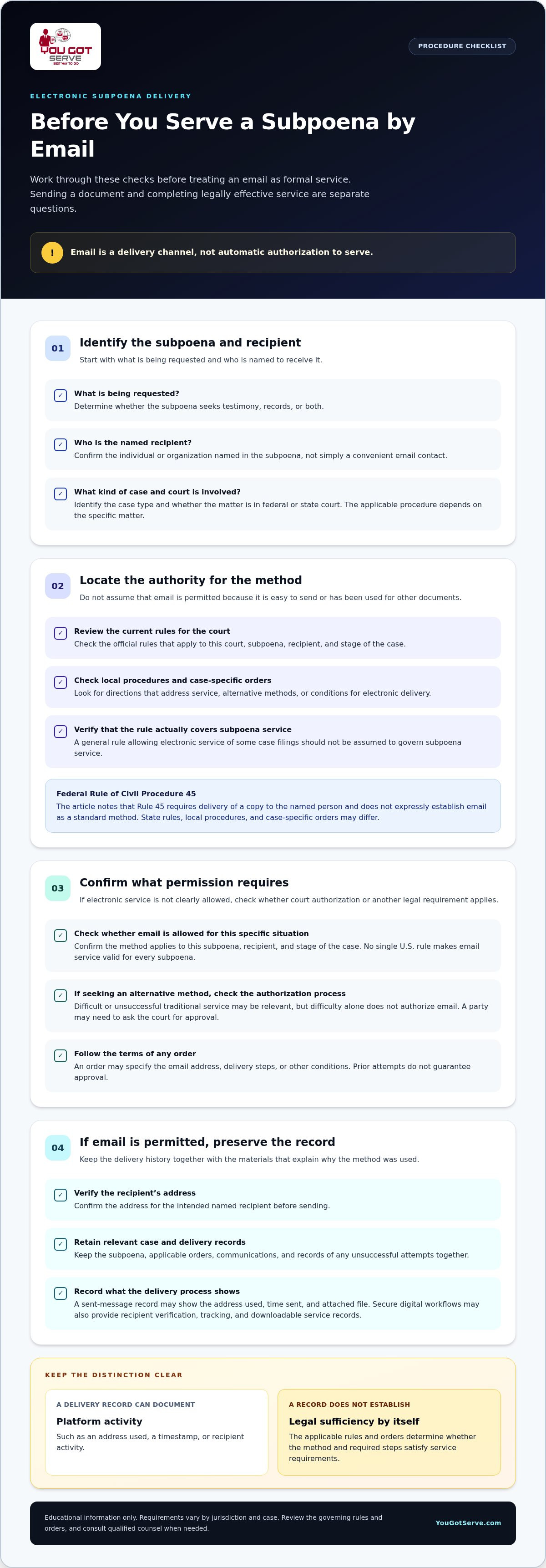
What should you check before attempting email subpoena service?
Before preparing an email, build a short checklist for the specific case. This can prevent avoidable errors, such as relying on an outdated order, sending to the wrong address, or failing to keep the materials that explain the steps taken.
- Identify the controlling court materials. Note the court, case type, subpoena purpose, and named recipient. Find the current official rules and any order that applies to the matter.
- Map the required steps. Record what the rule or order says about the authorized method, recipient, timing, and any follow-up or filing. If the directions specify an email address or procedure, copy those details accurately.
- Verify the recipient information. Compare the intended address with reliable case records or other authorized sources. Check spelling and domains carefully, especially if an organization uses separate addresses for legal notices, records requests, or general inquiries.
- Prepare a case record. Keep the source materials, checklist, final document, and delivery records together under the correct case identifier.
How can readers verify the correct procedure?
Use official court materials for the court handling the matter, and confirm that the rule or order is current and applies to this subpoena. Do not rely on a procedure from another court or case type as a substitute. If the directions conflict or leave a material question unresolved, consult qualified counsel before sending. General information about electronic service can explain digital-delivery concepts, but the case’s controlling materials remain essential.
What records are useful to preserve?
Retain the subpoena and attachments, the relevant order or rule, the address selected, and the sent communication in a format that preserves its contents and timing. Save replies, delivery notices, and follow-up correspondence with the same case file. If a delivery platform generates an activity report, keep it with those materials and note which workflow produced it. This creates an organized chronology for later review without assuming that a particular form or filing applies in every court.
When the governing procedure permits electronic delivery, YouGotServe’s documented digital delivery can help organize notification activity and related records.
How can secure digital delivery support a permitted email-service workflow?
Once electronic delivery is authorized, carry out the method in line with the governing instructions. Treat the court order or applicable rule as the workflow’s reference point. Before starting, identify the approved recipient and channel, the document version to deliver, and any timing or follow-up conditions. This gives everyone handling the matter a clear record to work from.
YouGotServe provides a technology-based option for secure document delivery when applicable rules and authorization permit it. Use the platform to manage the authorized delivery process and keep its supporting materials together, not as a substitute for procedural review.
What does a documented digital delivery workflow record?
A useful record makes the sequence of platform activity easier to review alongside the case file. YouGotServe reporting can include notification history, timestamps, and recipient interactions. IP or geolocation information may be available. Keep the report connected to the subpoena, the authorization relied on, and the final recipient details. This helps a reviewer understand how the digital workflow relates to the instructions for the matter, without treating system events as a ruling on legal sufficiency.
When could YouGotServe be relevant?
YouGotServe is a technology-driven option when traditional service has encountered difficulties and electronic delivery is permitted or authorized. Its 60-day and 90-day campaigns provide different durations for recurring digital notifications, but neither duration grants permission to serve electronically. The key decision remains whether the applicable rules and any court order allow the proposed method for the case.
For teams managing a permitted digital workflow, a consistent process can reduce confusion about which document was sent and which case materials support the delivery record. Learn how YouGotServe supports documented digital delivery. It is an option for situations where the rules allow electronic delivery, aligned with the brand line: “The Smarter Way to Serve.”
Make the Next Service Decision Deliberately
Make authorization the decision point, not the convenience of an available email address. This helps teams create a consistent process for reviewing orders, assigning responsibility, and retaining a clear account of each permitted attempt. For law firms and organizations handling multiple matters, recording the basis for the chosen method alongside the case file can make later review more straightforward.
If you are considering whether to serve subpoena by email, apply the requirements for that specific matter and seek qualified legal guidance when they are unclear. A digital workflow can support organized delivery records, but it cannot replace legal authorization or determine whether service meets the rules.
When electronic delivery is permitted, YouGotServe provides secure document delivery with recurring notifications and records of platform activity. These records can help keep the process organized, but they do not guarantee receipt or legal sufficiency. Visit YouGotServe.com to learn more about documented digital delivery.
Frequently Asked Questions
Can you serve a subpoena by email in the United States?
Sometimes, but no single rule makes email service valid for every U.S. subpoena. The answer can depend on the court, case type, subpoena, and recipient. For example, a federal civil subpoena is governed by federal procedure, while a state-court subpoena may be subject to that state’s rules and local requirements. Check current official rules and any case order before sending it electronically.
Does emailing a subpoena count as proof of service?
An email record can help show what was transmitted, when it was sent, and which address was used. It does not establish by itself that the required service procedure was followed. A message, for example, may be logged as sent even if the method was not authorized for that subpoena. Keep transmission records with the applicable rule or order, and determine what additional proof the governing procedure requires.
Do I need a court order to serve a subpoena by email?
Not in every matter, but an order may be required depending on the governing rules and circumstances. Some procedures may allow an electronic method under specified conditions; others may require the court’s permission. Before relying on email, review the subpoena’s procedural context and any order already entered. If the rule is unclear or silent, consult qualified counsel about whether requesting authorization is appropriate.
Can a subpoena be served by email if traditional service fails?
Failed or difficult in-person attempts do not automatically authorize email service. They may be relevant if the rules allow a request for an alternative method, but the court may need to approve that request first. Preserve factual details of prior attempts, such as dates and outcomes, so counsel or the court can assess them. Do not treat an electronic attempt as a substitute unless the applicable procedure permits it.
Is email service of a subpoena the same as serving it by text message?
No. Email and text message are different communication channels, and authorization for one should not be assumed to cover the other. An order might identify a specific address, number, or method, so its exact wording matters. A text notification may also differ from sending the subpoena itself by email. Review the controlling procedure and any order for the channel and delivery steps allowed in the case.
What should I save after sending a subpoena by email?
Retain the sent message, the document transmitted, the email address used, and available time or delivery records. Save any reply, delivery failure notice, or related court order with the case materials. If a platform records recipient activity, preserve that report as a record of platform events. These materials can help explain what occurred, but they do not independently show that the recipient read the document or that service was legally sufficient.
Can a digital delivery platform guarantee that a subpoena was legally served?
No. A platform can record actions within its delivery workflow, but it cannot guarantee that a recipient received or acknowledged a subpoena, or that a court will find service legally sufficient. A timestamp may document a notification event, while the court’s rules determine whether the method was authorized. Use digital records as supporting documentation and assess them alongside the applicable requirements and any order.


