

What if a defendant's refusal to answer the door no longer had the power to stall your litigation for months? For years, legal professionals have relied on physical process servers and certified mail, but these methods are becoming increasingly inefficient and expensive. With rising mailing fees and operational costs, the price of failed attempts is higher than ever. You likely recognize the frustration of having a judge reject a simple read receipt as insufficient evidence of notice. To bridge this gap, modern practice now demands a court admissible delivery confirmation that combines forensic tracking with legal compliance.
In this guide, you'll learn how to secure legally-defensible proof of delivery that satisfies judicial requirements even when traditional serving methods fail. We'll explore the technical standards behind court-ready affidavits of service, including the use of SHA-256 cryptographic hashes and RFC 3161 timestamps. By understanding the intersection of alternative service standards and Federal Rules of Evidence 902(13), you can reduce the time spent chasing difficult defendants using platforms like YouGotServe. We'll break down how to maintain 100% compliance with alternative service orders through advanced digital verification.
Key Takeaways
- Learn why simple email screenshots fail in court and how to replace them with a robust court admissible delivery confirmation that tracks IP addresses and device fingerprints.
- Understand the essential technical components of a forensic audit trail, including RFC 3161 timestamps that prove document integrity and receipt.
- Discover how to bypass the delays of physical mail by using real-time digital delivery to serve documents in minutes rather than days.
- See how automated reminders and multi-channel tracking help you reach evasive defendants who successfully dodge traditional process servers.
- Master the process of converting technical tracking data into a Court-Ready Proof of Service that satisfies judicial requirements for alternative service.
Why Standard 'Sent' Receipts Fail the Court Admissibility Test
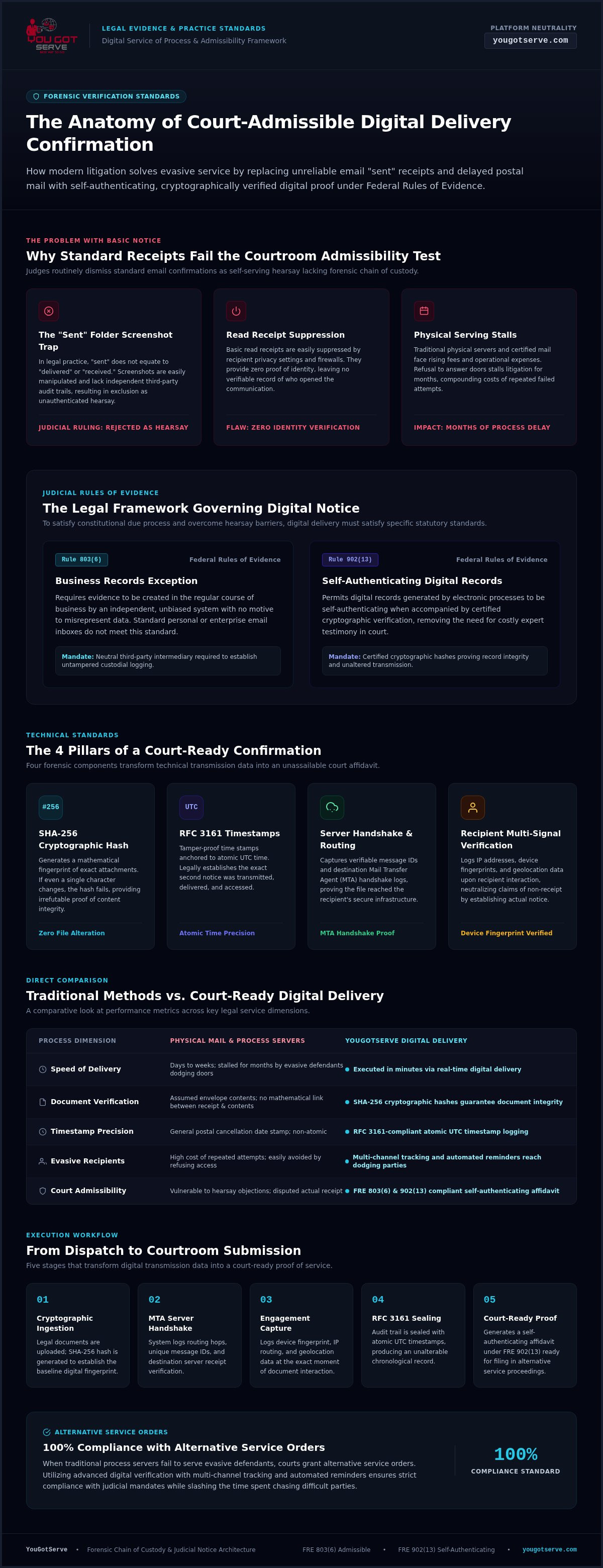
Many legal professionals rely on the "sent" status in their email client as evidence of notice. However, in a courtroom, "sent" does not equate to "delivered" or "received." A screenshot of a sent folder is easily manipulated and lacks the forensic depth required to satisfy constitutional service of process requirements. Judges often view these images as self-serving hearsay because they don't provide an independent audit trail from a neutral third party. Without a verifiable handshake between servers, there is no proof the document ever reached the recipient's environment.
To better understand how delivery confirmation and proof of service function as admissible evidence, watch this practical legal explanation:
To overcome the hearsay challenge, digital evidence must fall under the Business Records Exception (Federal Rule of Evidence 803(6)). This requires the record to be created in the regular course of business by a system with no motive to misrepresent the data. A standard email client isn't designed for this purpose. If you don't use a specialized platform to generate a court admissible delivery confirmation, you risk a judge dismissing your evidence as unauthenticated. In 2026, courts increasingly demand self-authenticating records under FRE 902(13) that include cryptographic hashes to ensure the data hasn't been altered.
The Metadata Gap in Basic Email
Metadata serves as the digital chain of custody. While every email contains headers, standard ISP logs are notoriously difficult to authenticate without expensive expert testimony. These headers contain IP routing information and message IDs that prove the document's origin. A specialized delivery platform captures this data in real-time, creating a forensic record that links the sender's server to the recipient's mail transfer agent. This level of detail is essential to prove the document wasn't just sent into a void but was actually accepted by the destination server.
Identity vs. Delivery: The Recipient Verification Problem
Proving that a document reached an active inbox is only half the battle. You must also demonstrate that the intended recipient was the one who accessed it. Simple read receipts are easily suppressed by privacy settings and provide no identity verification. To build a strong case for actual notice, you need multi-factor signals. This includes capturing the recipient's IP address, device fingerprints, and geolocation data at the moment of engagement. These details create a unique profile that makes it difficult for a defendant to claim they never received the documents.
The Anatomy of a Court-Ready Delivery Confirmation
A court admissible delivery confirmation serves as a forensic record that documents the exact path and receipt of a legal document. It's much more than a simple receipt; it provides a comprehensive map of the digital transaction from the sender's server to the recipient's screen. For evidence to hold weight in a legal proceeding, it must include precise technical details such as RFC 3161-compliant timestamps and unique message IDs. These elements ensure that the record is tamper-proof and tied to a specific point in atomic UTC time.
One critical requirement for judicial acceptance is the verification of content. It isn't enough to prove that an email was sent. You must prove exactly what was inside the attachment. By using SHA-256 cryptographic hashes, a digital fingerprint is created for the specific file. If even a single character in the document changes, the hash won't match, providing irrefutable proof of document integrity. This process relies on a neutral third-party intermediary to provide unbiased evidence. A platform like YouGotServe acts as this neutral observer, ensuring the data remains objective and credible for judicial review.
Forensic Audit Trails and Chain of Custody
A forensic audit trail is a chronological record of digital evidence. This trail logs every interaction, including the initial transmission, the Message Transfer Agent (MTA) handshake, and the moment the recipient opens the link. This step-by-step logging creates a chain of custody that is difficult to challenge. By utilizing non-repudiation technology, the system ensures that once a document is delivered and accessed, the defendant cannot legally deny receipt. This technical certainty transforms a digital interaction into a valid legal event.
Recipient Authentication Protocols
To establish "Actual Notice," modern platforms use unique access links to track individual recipient behavior. This goes beyond knowing a message reached an inbox; it confirms that the intended person interacted with the file. Integrating SMS-based verification adds another layer of certainty, as text messages often see higher engagement rates than email. This method aligns with the service standards discussed in Federal Rule of Civil Procedure 4, which outlines the necessity of filing valid proof of service to establish jurisdiction. By combining this tracking with skip trace data, you ensure the digital address used is currently associated with the defendant, further strengthening the validity of the service.
Comparing Methods: Traditional Mail vs. Digital Document Delivery
Traditional service of process often hits a wall when defendants become evasive. While physical mail has been the legal standard for decades, its limitations are increasingly apparent. Physical mail typically takes three to five days to arrive, whereas digital delivery happens in real-time. This speed isn't just about convenience; it's about preventing a defendant from claiming they weren't notified before a crucial deadline. By eliminating printing, postage, and physical server fees, digital platforms offer a more cost-effective way to secure a court admissible delivery confirmation.
Success rates also differ significantly between these methods. Physical delivery relies on the recipient being at a specific location, but digital methods bypass physical gatekeepers like doorbells and locked office buildings. Reliability is another factor. Traditional methods provide a single data point-a signature-while digital tracking captures dozens of telemetry signals. This data-heavy approach provides a more complete picture of the delivery event, making it harder for a recipient to dispute the facts in court.
Certified Mail vs. Secure Digital Delivery
One of the biggest flaws in traditional mail is the "refusal to sign" loophole. If a defendant sees a certified letter, they can simply refuse to accept it, leaving you with an empty return receipt. Digital delivery closes this gap. Instead of relying on a physical signature, digital methods capture multiple data points that prove receipt even without a manual sign-off. According to USPS Return Receipt guidelines, a physical green card only provides the date of delivery and the recipient's signature. In contrast, a digital forensic receipt provides IP addresses, device fingerprints, and exact timestamps of when the file was viewed. This depth of data makes digital delivery the preferred choice for "Alternative Service" orders when traditional methods fail.
Digital Process Service vs. Traditional Servers
Physical process servers are essential, but they have limits. They can't follow a defendant into a locked office building or past a gated community without permission. When a defendant is actively dodging service, it's time to pivot to a platform like YouGotServe. Digital servers aren't stopped by physical gatekeepers. They reach the defendant directly through their most personal devices. This method is particularly effective in high-conflict cases where a physical encounter might escalate. Using digital delivery also provides an automated "Proof of Diligence." Every reminder sent and every delivery attempt logged creates a persistent record. This record is vital when you need to move the court for a motion for substituted service, as it demonstrates that you've exhausted all reasonable means to provide notice.
Overcoming Evasive Defendants with Multi-Channel Tracking
Evasive defendants often view a locked gate or an unanswered doorbell as a successful defense against litigation. However, modern process service leverages the one device most individuals never leave behind: their smartphone. By employing SMS delivery alongside secure email, legal professionals create a multi-channel audit trail that is difficult to dispute. This dual-pronged approach establishes a preponderance of evidence, demonstrating that the recipient had multiple opportunities to receive notice across different digital touchpoints. If a defendant ignores an email but interacts with a text message, the discrepancy provides a clear map of their active engagement.
Using automated delivery reminders further strengthens this record. Instead of a single attempt that might be overlooked, you build a persistent history of outreach. Each reminder serves as an additional data point, showing the court that you've made every reasonable effort to provide notice. When these attempts culminate in a court admissible delivery confirmation, the recipient's claim of "no notice" becomes legally untenable. This methodical approach transforms the service process from a game of hide-and-seek into a documented forensic event.
SMS and Multichannel Delivery Strategies
Serving court documents via text message requires strict adherence to state-specific rules for alternative service. A primary advantage of this method is the ability to track "link clicks" as high-intent signals. Unlike a simple read status, a click indicates the recipient actively engaged with the secure delivery link. SMS delivery provides immediate, timestamped confirmation of a recipient's active device. This telemetry is vital for proving that the defendant was in possession of the device at the exact moment the documents were accessed. In 2026, judicial trends show an increasing acceptance of SMS as a primary channel for alternative service because of these verifiable interaction logs.
Skip Tracing for Verified Digital Contact
The effectiveness of digital delivery depends entirely on the accuracy of the contact information. You must prove to the court that the email address or phone number used actually belongs to the defendant. This is where skip tracing becomes essential. By leveraging professional investigative databases, you can identify the defendant's most active digital addresses. YouGotServe utilizes Licensed Private Investigator expertise to conduct these searches, ensuring the foundation for your service motion is built on verified data. This investigative layer is what separates a casual email from a legally defensible instrument. To ensure your next service attempt is backed by forensic-level tracking, start your skip trace and digital delivery process today.
From Confirmation to Courtroom: Implementing the Proof
Securing the data is only the initial step in the litigation process. To be effective, that telemetry must be translated into a format the court clerk will accept and the judge will trust. A court admissible delivery confirmation serves as the raw material, but the final product is a structured Affidavit of Service. This document must clearly state how the service was performed, the specific digital addresses used, and the forensic evidence collected during the transaction. When presenting this proof to a judge, clarity is your best defense. You should be prepared to explain the technical audit trail as a chronological chain of custody that meets the standards for self-authenticating electronic evidence.
Judicial acceptance often hinges on compliance with local court rules for alternative service of process. Before filing, ensure your digital proof matches the specific requirements of the jurisdiction, such as providing a sworn statement that traditional methods were attempted first. If a defendant challenges service, the forensic audit trail becomes your primary shield. It provides objective data points that a physical signature cannot match, such as the exact device fingerprint and the duration the document was viewed. This level of detail makes it nearly impossible for a defendant to plausibly claim a lack of notice.
Generating the Affidavit of Electronic Service
A valid digital proof of service document must include more than just a timestamp. It requires a third-party Declaration of Service to establish neutrality and prevent hearsay objections. This declaration should detail the delivery method, the recipient's verified IP address, and the cryptographic hash of the served documents. YouGotServe automates this process by generating court-compliant documentation immediately after a successful delivery event. This ensures that your firm isn't manually piecing together server logs, which reduces the risk of administrative errors that could lead to a motion to quash service. The platform ensures that every court admissible delivery confirmation is backed by a professional investigator's declaration, reinforcing the legitimacy of the service.
Streamlining Your Firm's Litigation Workflow
Integrating digital delivery into your firm's standard operating procedures is a strategic move for efficiency. By making electronic delivery the default follow-up for elusive defendants, you significantly reduce "Time to Service" metrics. This allows cases to move through the docket faster and prevents the 90-day dismissal window under federal rules from closing. When service is challenged, the depth of the forensic audit trail serves as your primary defense, providing objective proof that notice was reasonably calculated to reach the defendant. You can secure your court-ready proof of service today with YouGotServe to ensure your firm remains compliant with the modern standards of 2026.
Modernize Your Service of Process Strategy
The transition from physical attempts to digital verification represents the new baseline for legal efficiency. As judicial standards evolve, relying on standard email receipts or physical mail signatures often leaves your case vulnerable to hearsay objections. By adopting a court admissible delivery confirmation, your firm gains access to forensic-level tracking, including IP addresses and device fingerprints that traditional methods simply cannot provide. This data, verified by Licensed Private Investigators (#A1400196), ensures your service of process stands up to the strictest judicial scrutiny.
Adopting these modern tools allows you to bypass evasive defendants and move your docket forward with total confidence. You'll receive Court-Ready Forensic Affidavits that document Real-Time SMS & Email Tracking, providing a clear, chronological audit trail for any judge. Transitioning to a digital-first workflow isn't just about speed; it's about protecting the integrity of your legal notice. You don't have to let difficult defendants or rising postal costs stall your firm's progress any longer. It's time to embrace the reliability of modern technology to secure your litigation results.
Start Your Secure Digital Service Now
Frequently Asked Questions
Is an email read receipt considered court admissible delivery confirmation?
Standard email read receipts are generally insufficient for court admissible delivery confirmation because they lack forensic depth. Judges often reject them as they can be suppressed by recipient settings or easily forged. A valid legal record requires a neutral third party to document the server-to-server handshake and provide a tamper-proof audit trail. Without these technical markers, a read receipt is considered hearsay and fails to meet evidentiary standards.
What happens if a defendant claims they never received the digital service?
If a defendant denies receipt, the forensic audit trail serves as the primary evidence to rebut their claim. By capturing the recipient's IP address, device fingerprint, and specific timestamps of engagement, you create a unique digital signature of the event. This multi-factor verification makes it nearly impossible for a defendant to plausibly claim they were never notified, providing the court with objective proof of actual notice.
Can I serve legal papers via text message without a court order?
Serving initial legal papers via text message typically requires a court order for alternative service. Under Federal Rule of Civil Procedure 4, you must first demonstrate diligent attempts at traditional physical service. Once a judge grants a motion for substituted service, platforms like YouGotServe can deliver documents via SMS. However, interlocutory papers and subsequent notices under Rule 5 often allow for broader digital delivery methods without a new order.
How does YouGotServe verify the identity of the person opening the document?
YouGotServe verifies identity by capturing a suite of telemetry data at the moment a document is accessed. This includes the recipient's IP address, geolocation, and device user-agent string. By using unique, non-forwardable access links, the platform ensures that the interaction is tied to the specific digital address identified during the skip tracing phase. These forensic signals create a high-confidence link between the digital action and the intended defendant.
What is included in a forensic audit trail for legal delivery?
A forensic audit trail includes a chronological record of every digital interaction from the initial transmission to the final download. Essential components include RFC 3161-compliant timestamps, Message Transfer Agent (MTA) handshake logs, and SHA-256 cryptographic hashes of the files. It also records recipient metadata such as IP addresses and device types. This comprehensive data set establishes a clear chain of custody that is self-authenticating under modern rules of evidence.
Do all US courts accept digital proof of service?
While digital proof of service is increasingly accepted, it is not yet a universal default for initial process in all US courts. Most jurisdictions require a specific motion for alternative service if physical methods fail. However, the use of digital delivery for discovery demands and post-complaint notices is widely accepted. It is always necessary to verify local rules or secure a court order to ensure your digital confirmation meets specific jurisdictional requirements.
How does skip tracing help with court admissible delivery?
Skip tracing is the foundation of valid digital delivery because it identifies the defendant's current, active digital contact information. Using Licensed Private Investigator expertise, skip tracing locates verified email addresses and phone numbers through investigative databases. This ensures that the court admissible delivery confirmation is linked to a digital address the defendant actually uses. Proving this connection is vital for convincing a judge that the digital service was reasonably calculated to provide notice.
Is digital document delivery more secure than traditional mail?
Digital document delivery is generally more secure than traditional mail because it employs end-to-end encryption and real-time tracking. Physical mail can be lost, intercepted, or stolen from a mailbox without any record of the breach. In contrast, digital delivery platforms provide immediate notification of delivery failures and document every interaction. This level of transparency ensures that sensitive legal documents are protected by modern security protocols while providing a verifiable record of receipt.


