

What if a delivery report shows that a message was sent, but not whether legal service was completed? An electronic service audit trail can document events such as notifications, timestamps, and recipient activity. But a sent email, delivery status, or access record does not automatically prove that the recipient received legally sufficient notice or that service complied with the rules for a particular case.
Digital records can provide useful detail, especially when traditional service has been difficult. The key is to distinguish what the system recorded from what those records can establish. This article explains what an audit trail may capture, how to assess its completeness, and why an email receipt alone may not settle questions about legal service. This information is not legal advice.
YouGotServe’s platform can record notification and recipient activity, including timestamps and, when available, IP and geolocation information. Those details can help document what occurred, but they do not determine whether electronic service is permitted or legally sufficient. The sections below explain what an audit trail may show, where its limits are, and what to review with qualified counsel before relying on it. Requirements vary by jurisdiction and case type, and court authorization or other conditions may apply.
Key Takeaways
- Use an electronic service audit trail to review recorded system events, such as notifications, access activity, and timestamps. Distinguish these records from an e-signature certificate or an email receipt.
- Assess what each event actually shows. A sent notice, delivery status, access event, or acknowledgment does not, by itself, establish legally sufficient service.
- Before relying on digital delivery, identify the requirements for the case and jurisdiction, then confirm with qualified counsel whether court authorization or other conditions apply.
- Review the report for missing or unclear events. Preserve the original report and relevant supporting information under your organization’s procedures.
- When electronic service is permitted or authorized, YouGotServe can document email and SMS notifications, secure access, and recipient activity without guaranteeing receipt or acknowledgment.
What Is an Electronic Service Audit Trail for Legal Documents?
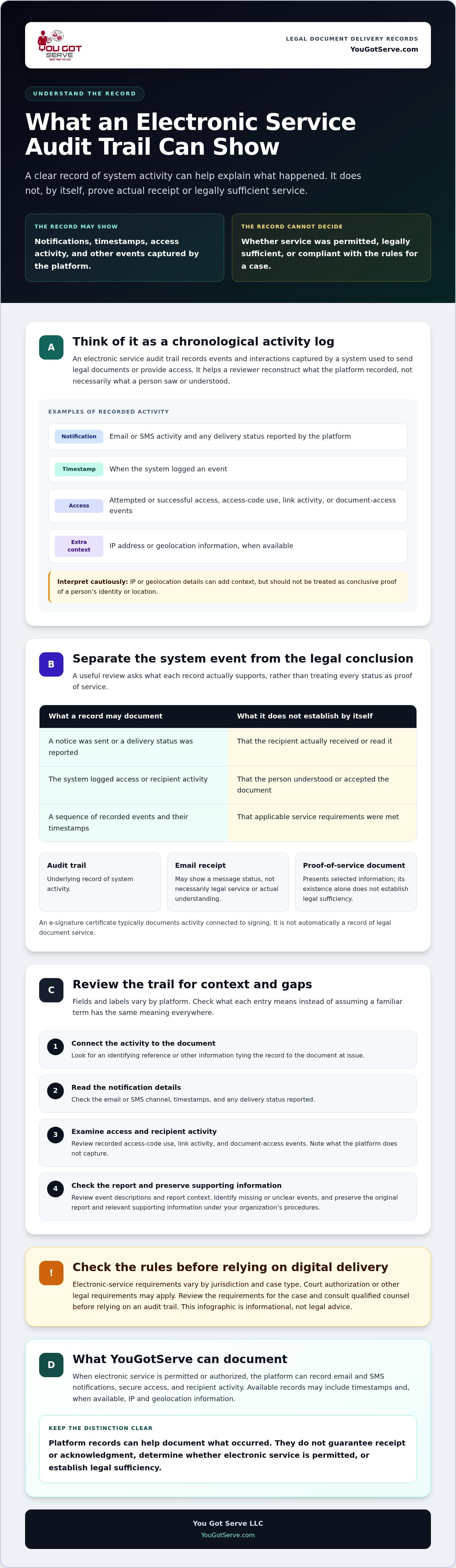
An electronic service audit trail is a chronological record of events and interactions captured by a system used to send legal documents or provide access to them. It can help a legal team reconstruct what the platform recorded, such as when a notification was sent or when a recipient used secure access. A basic audit trail overview describes the broader role of these records in documenting a sequence of system activity.
The distinction matters: a log documents system events, not necessarily what a person saw or understood. A standard email receipt may show a message’s status, while an e-signature certificate typically documents activity connected to signing. Neither is automatically a record of legal document service or proof that applicable service requirements were met.
For a brief overview of audit trails, watch this educational video:
What Events Can an Electronic Service Audit Trail Record?
Depending on the platform and the event, an electronic service audit trail may include notification timestamps, delivery status, attempted or successful access, and other recipient interactions. Reports may also include IP addresses or geolocation information when available. These details can provide context, but they should not be treated as conclusive proof of a person’s identity or location.
Timestamps mark events recorded by the system. They do not establish that a recipient read, understood, or accepted the document. Legal professionals can review the records to assess transmission attempts, access activity, and follow-up, while noting gaps or events the platform does not capture.
How Is an Audit Trail Different from Proof of Service?
An audit trail is the underlying activity record. A proof-of-service document is a report or formal document that presents selected information about service. The report may summarize events, but its existence alone does not establish that service was legally sufficient. Required forms, supporting details, and filing procedures depend on the applicable rules and circumstances of the case.
Review what the report includes and how its entries relate to the required method of service. For a practical discussion of documentation, see this guide to court-ready proof of service. Electronic-service requirements vary by jurisdiction and case type, and court authorization or other requirements may apply. Consult qualified counsel before relying on a report.
Which Details Make an Electronic Service Audit Trail Useful?
A useful electronic service audit trail gives reviewers enough context to understand which document-related events the system recorded and in what sequence. Fields vary by platform, so check the report’s labels and definitions rather than assuming a familiar term means the same thing across systems.
Consider the record in four categories:
- Document: An identifying reference or other information connecting the activity to the document at issue.
- Notification: The email or SMS channel, notification timestamps, and any delivery status reported by the platform.
- Access: Access-code use, link activity, and recorded document-access events.
- Reporting: The platform’s event descriptions, report-generation context, and available supporting details.
An audit trail records system activity; legal effect depends on the rules that apply. A timestamp can show when a platform logged an event. By itself, it cannot establish that a person read or understood a document, or that service was legally sufficient.
Document and Notification Records
Document references help connect a report to the relevant matter. Channel and status fields can show whether the system recorded an email or SMS notification and what happened during that attempt. If a platform sends recurring notifications, the report may show a sequence of attempts over time. That sequence can help a legal team review follow-up activity, but “sent,” “delivered,” or “opened” should not be treated as proof that the intended person personally received or read the notice.
Interpret status terms carefully. A delivery indicator describes what the system or delivery channel reported, not necessarily what happened on the recipient’s device or who viewed the content.
Recipient Activity and Report Context
A secure access code can help control entry to documents, and a report may record code use or other access events. These controls and logs provide useful context, but they do not conclusively establish who used the code. IP addresses and geolocation information, when available, are also conditional data points, not definitive proof of identity or physical location.
Preserve the report with its context: the platform that generated it, the meaning of its status labels, and the events each field represents. This helps counsel assess what the record supports and what remains uncertain. For example, a series of SMS notifications may document system attempts, while a code-entry event may indicate access activity. Neither alone resolves whether the applicable service requirements were met. Those requirements vary by jurisdiction and case type, and authorization may be required. The Federal Rules of Civil Procedure provide one reference for federal service rules. Consult qualified counsel about the rules governing a specific matter.
For teams evaluating digital delivery records, YouGotServe’s electronic delivery platform documents notification and recipient activity, including timestamps and, when available, IP and geolocation information.
Does an Electronic Service Audit Trail Prove Valid Service or Actual Receipt?
No. A detailed electronic service audit trail can document what a platform recorded, but it does not automatically establish that a person received or read a message, or that service complied with the rules for a specific case. A delivery record is evidence of recorded events, not a universal ruling on service validity.
These distinctions help put digital records in perspective:
| Record or event | What it may indicate | What it does not establish by itself |
|---|---|---|
| Sent notice | The system recorded an attempt to send a notification. | That it reached the intended person. |
| Delivery status | A delivery channel reported a particular status. | That the recipient personally received or read the message. |
| Access event | The platform recorded activity such as link use or document access. | The identity of the person who accessed it or whether they reviewed its contents. |
| Recipient acknowledgment | An acknowledgment was recorded, if the system captured one. | That all legal requirements for service were satisfied. |
| Legal sufficiency | Must be assessed under the applicable rules and case circumstances. | Cannot be decided by a platform log alone. |
Spam filtering, incorrect contact information, or an unopened message may affect the factual analysis. A claim that a notice went to a spam folder should be evaluated in context, alongside the available records and governing rules. Email status, SMS activity, IP information, or access logs do not automatically defeat a non-receipt challenge.
What Can a Delivery Record Show About Non-Receipt Claims?
A record may help show that a transmission was attempted and what the system reported afterward. That is different from proving that the intended recipient personally received or read the message. An unopened message may still raise questions about delivery and notice, but the answer depends on the evidence and applicable law. Counsel should assess those facts rather than treating one status field as conclusive.
What Do Federal Rules of Evidence 902(13) and 902(14) Address?
These provisions concern authentication of certain records generated by an electronic process or system, and data copied from an electronic device, storage medium, or file, subject to the rules’ requirements. Authentication is distinct from permission to serve electronically. Neither provision independently authorizes electronic service or guarantees that a record will be admissible or persuasive in a particular proceeding.
Before relying on either rule, ask qualified counsel to verify the current text, any applicable certification requirements, and whether the provisions are relevant to the case. Electronic-service requirements vary by jurisdiction and case type. Court authorization or other legal requirements may apply, so assess a platform report as evidence of activity, not as a determination of valid service.
How Should Legal Teams Review and Preserve an Electronic Service Audit Trail?
Use a consistent review process to connect the record to the requirements of the specific matter. Start by identifying the governing jurisdiction and case type. Then determine whether electronic service is permitted and whether court authorization or another prerequisite applies. Qualified counsel can help resolve questions about the applicable rules.
A Practical Audit-Trail Review Checklist
Work through the report systematically:
- Confirm the service framework. Identify the applicable rules and any required authorization before assessing the platform activity.
- Match the report to the matter. Check that it identifies the relevant document and delivery channels.
- Review the chronology. Compare timestamps and recorded events in sequence, using the platform’s descriptions to interpret each entry.
- Record limitations. Flag missing, inconclusive, or unavailable fields. Do not infer facts the report does not establish.
A short review note can help preserve the distinction between source data and interpretation. For example, describe an entry as “access activity recorded by the platform,” rather than drawing an unsupported conclusion about who accessed the document.
Preparing Records for Counsel or a Court Filing
Preserve the original report and related supporting information according to your organization’s recordkeeping procedures. Retain the platform’s event descriptions and relevant context so reviewers can understand the report’s terminology. If you prepare a working copy or summary, keep it distinct from the original record.
Present events in chronological order and describe them precisely. Ask counsel whether additional supporting records, certifications, or a particular filing format may be appropriate. A platform report is not a substitute for required legal process or legal advice.
For related background, see this electronic service of process guide. Requirements vary by jurisdiction and case type, so consult qualified counsel before relying on electronic delivery. To review a documented delivery workflow, explore YouGotServe’s electronic delivery options.
How Does YouGotServe Document Electronic Delivery Activity?
When traditional service encounters difficulties, YouGotServe offers a technology-based option for delivering legal documents by email and SMS, subject to applicable rules and authorization. The platform creates records of delivery activity for review. Those records do not decide whether service meets legal requirements.
This can give legal teams a structured way to manage digital notification efforts while keeping procedural decisions separate. Before starting, confirm with qualified counsel that the method is appropriate for the case.
What the YouGotServe Workflow Records
YouGotServe offers the 60-Day Digital Service Campaign and 90-Day Digital Service Campaign. The platform can send recurring daily email and SMS notifications, provide secure document access through a unique recipient access code, and record notification and recipient activity. Downloadable service reporting may include timestamps, IP, and geolocation information when available.
These records can help reviewers understand the sequence of platform activity. They do not guarantee that a recipient received, acknowledged, or read the documents, and the information available depends on what the system records.
When to Consider a Digital Delivery Platform
Attorneys, paralegals, property managers, and organizations with recurring legal-document needs may consider digital delivery when conventional efforts have reached a roadblock. The campaign options provide different durations for documented notification activity, but neither duration guarantees service or determines whether the method is valid for a particular case.
Electronic-service requirements vary by jurisdiction and case type. Court authorization or other legal requirements may apply, so consult qualified counsel before proceeding. To review the workflow and assess whether it fits your needs, learn about YouGotServe.
Use Digital Service Records With Confidence and Care
An electronic service audit trail helps legal teams understand what a delivery platform recorded, from notification activity to recipient access. Its value depends on careful interpretation: timestamps, delivery statuses, and access events document system activity, but they do not independently prove actual receipt or establish legally sufficient service.
Review the record alongside the requirements for the specific jurisdiction and case type. Confirm whether electronic service is permitted and whether court authorization or another prerequisite applies. Preserve the original report and consult qualified counsel before relying on it in a proceeding.
When traditional service encounters difficulties, YouGotServe offers electronic document delivery with recurring email and SMS notifications, secure access, and downloadable service reporting. Reports may include timestamps, IP, and geolocation information when available. These records document activity, not guaranteed receipt or court acceptance.
Learn how YouGotServe documents electronic delivery activity and assess whether its workflow fits your needs. With guidance from qualified counsel, digital records can support a clearer, more responsible service process.
Frequently Asked Questions
What is an electronic service audit trail?
An electronic service audit trail is a chronological record of events a delivery platform logs while handling legal documents. Depending on the platform, it may show notification attempts, timestamps, delivery status, secure-access activity, and recipient interactions. It records system activity, not necessarily whether a person received or read the document. Review the report’s field definitions and any gaps before drawing conclusions about what happened.
Will a judge accept an electronic service audit trail as valid legal proof?
There is no universal answer. A judge’s consideration of a report depends on the applicable rules, the case, the record’s relevance and reliability, and how it is presented. A detailed log may help document activity, but it does not automatically prove actual receipt or legally sufficient service. Ask qualified counsel to assess the report and any authentication or service requirements before relying on it in a proceeding.
How does an audit trail prove whether a defendant received legal documents?
An audit trail may document notification attempts, reported delivery status, and access events, but those entries do not necessarily prove that the defendant personally received or read the documents. For example, a system may log that a secure link was accessed without identifying who used it. Treat each entry as evidence of the event the platform recorded, then have counsel assess what it supports under the facts and applicable rules.
Can a defendant challenge service by saying an email went to a spam folder?
A recipient may raise a spam-folder claim, but its effect depends on the case facts and governing law. Relevant details could include the contact information used, the platform’s recorded events, and any other evidence about delivery or access. An email log or SMS record does not automatically defeat a non-receipt claim. Preserve the available records and ask qualified counsel to evaluate the challenge in context.
What is the difference between an email delivery receipt and a legal audit trail?
An email delivery receipt typically reflects a status reported by an email system or delivery channel. A legal-document audit trail may provide a broader, chronological record of platform events, such as email or SMS notifications, timestamps, access-code use, and document-access activity. Neither record automatically proves that a recipient personally read a document or that service was legally sufficient. Check what the fields in each report actually mean.
Are electronic service audit trails self-authenticating under the Federal Rules of Evidence?
Some electronic records may qualify for self-authentication under Federal Rules of Evidence 902(13) or 902(14) when the applicable requirements are met, including relevant certification requirements. These rules concern authentication of certain electronic-process records and copied data. They do not independently authorize electronic service or guarantee admissibility. Have counsel confirm the current rule text, whether the record qualifies, and what documentation is needed for the specific proceeding.
Does electronic service require court authorization?
Sometimes, but the requirement depends on the jurisdiction, case type, and applicable rules. Electronic service may require court authorization or may be subject to other prerequisites. It is not automatically permitted for every legal document or situation. Before choosing this method, identify the rules for the specific matter and consult qualified counsel. A platform’s ability to record delivery activity does not itself authorize electronic service.


