
The Growing Challenge of Locating and Serving Hard-to-Find Recipients
Finding a defendant who doesn’t want to be found remains one of the most frustrating obstacles in litigation. Moving targets, disconnected phone numbers, forwarded mail, and deliberate avoidance tactics consume time and deplete court-authorized service budgets. Traditional process servers often exhaust their resources before locating the recipient, leaving attorneys and self-represented litigants with limited options and mounting costs.
When standard methods fail, courts now recognize electronic service as a viable path forward. The shift reflects a practical reality: defendants with email addresses or cell phones can be notified far more efficiently than those pursued through postal mail or physical service attempts. Electronic service of process has evolved from a rare exception into a mainstream legal tool, supported by federal rules, state statutes, and judicial precedent across the country.
We understand this pressure firsthand. Our platform combines persistent, multi-channel notification with investigative skip-tracing assistance to help you reach recipients when traditional methods have stalled. By supporting up to three email addresses and three phone numbers per recipient, along with SMS, email, and WhatsApp notifications across 60- or 90-day campaigns, we create the documented history courts require while keeping service costs manageable.
Why Traditional Service Methods Fall Short in Modern Litigation
Newspaper publication remains a last-resort option in many jurisdictions, but it carries significant drawbacks. Publication is slow, expensive, and provides no meaningful evidence that the defendant actually saw the notice. Waiting for a newspaper advertisement to run for the required period extends litigation timelines and offers no verification that your message reached its intended recipient.
Personal service by a process server works when the defendant is locatable and willing to accept service. But when defendants evade, relocate frequently, or maintain false addresses, traditional process servers hit a dead end. The costs accumulate with each failed attempt, and courts grow impatient with delays caused by continued unsuccessful service efforts.
Electronic service addresses these limitations directly. Email and SMS delivery are nearly instantaneous, generate timestamped records of transmission, and provide recipient verification when coupled with access codes and activity logging. The cost per notification cycle runs substantially lower than repeated process server attempts or newspaper publication, and you receive documented proof within hours rather than weeks.
How Courts Across America Have Embraced Electronic Service
Over the past two decades, state courts and the federal judiciary have actively adopted electronic service rules. The Federal Rules of Civil Procedure now permit email service in many scenarios, and state courts have followed suit with their own electronic service provisions. This shift reflects judicial recognition that electronic communication is more reliable, traceable, and cost-effective than traditional alternatives.
Courts understand that defendants with email addresses and cell phones are more likely to receive electronic notifications than physical mail sent to outdated addresses. Judges also recognize the evidentiary value of timestamped delivery records, read receipts, and document access logs when disputes arise about whether service actually occurred.
State legislatures and court rule committees have responded by codifying electronic service. What began as experimental exceptions to traditional service rules has become standard practice. Most courts now assume that litigants will use electronic service when appropriate and allow it unless explicitly prohibited by specific court orders or case circumstances.
Federal Rules and State Statutes Authorizing Digital Notification
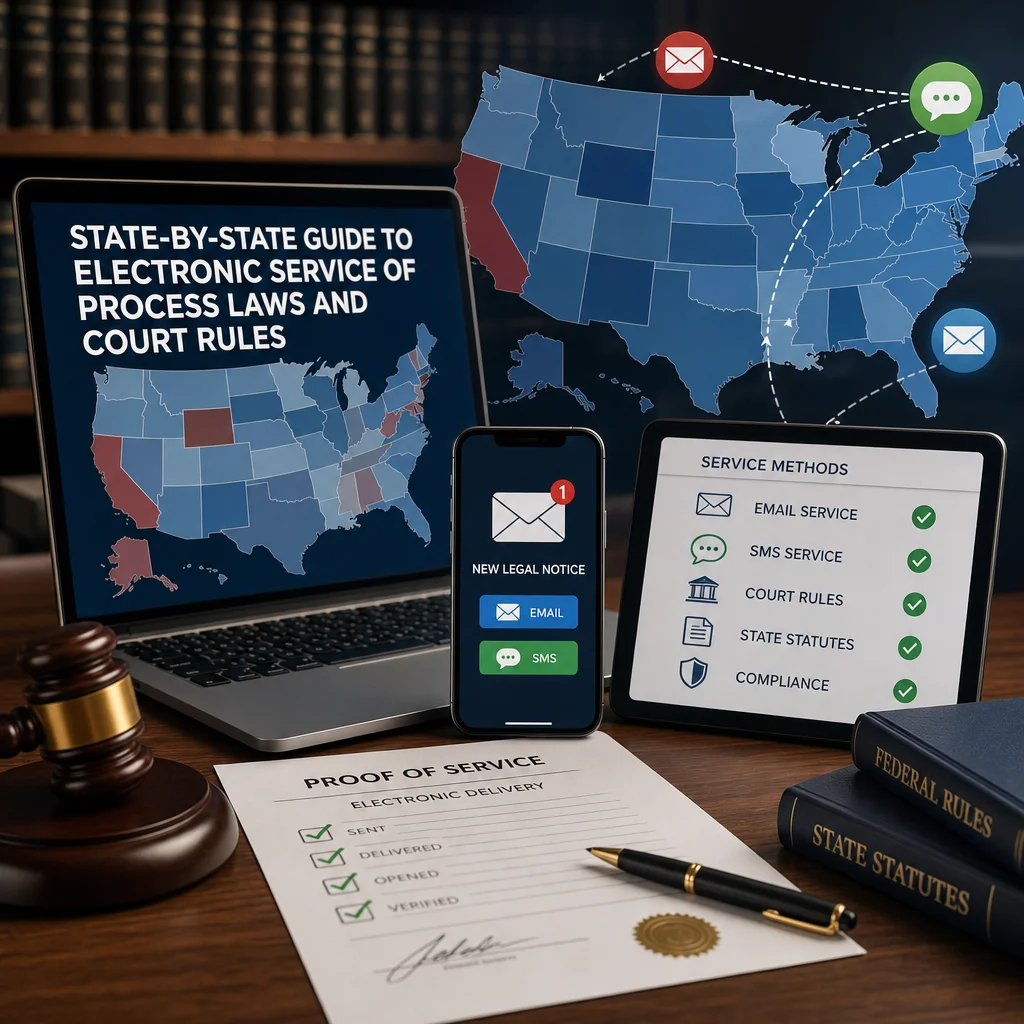
Federal Rule of Civil Procedure 5(b)(2)(E) allows service by email or other electronic means if the recipient has consented or court rules authorize it. This simple framework gives federal courts and state courts flexibility to adopt their own electronic service protocols without conflicting with national civil procedure standards.
State statutes vary widely. Some states, such as California, New York, and Florida, have comprehensive electronic service rules embedded in their codes of civil procedure. Others incorporate electronic service through their court rules or allow it by consent. The variation means you must verify your specific jurisdiction’s requirements before relying on any particular method.
Key authorizing mechanisms include:
- State civil procedure codes permitting email and SMS service
- Court rules explicitly authorizing electronic notification
- Consent-based service available in all jurisdictions
- Statutes governing specific case types (foreclosure, collections, family law)
- Electronic filing system integration allowing service through court portals
We recommend checking your state court rules or consulting local court staff to confirm which methods are authorized in your jurisdiction before launching a service campaign. Requirements differ based on case type, party status, and whether all parties have consented to electronic service.
Key State-by-State Precedent Supporting Email and SMS Service
Appellate courts across the country have validated electronic service when proper procedures are followed. Courts in California, New York, Illinois, Texas, and other major jurisdictions have issued decisions affirming that email and SMS service constitute valid, constitutionally sufficient notice when the defendant actually receives the notification.
Judges recognize that electronic delivery often provides stronger proof of actual receipt than traditional methods. A timestamped email delivery record combined with document access verification creates a clearer record than a process server’s affidavit claiming service on an unknown person at a defendant’s address.
State court decisions consistently emphasize two key requirements: (1) the method must provide a high probability that the defendant will actually receive the notice, and (2) documentation must support your claim that service occurred. When electronic service satisfies these standards, courts accept it as valid even in contested service disputes.
Judicial Recognition of Verified Electronic Delivery as Valid Proof
Courts have moved beyond simply accepting electronic service; they now treat verified delivery documentation as persuasive proof. When you can demonstrate timestamped transmission, recipient verification, and document access logs, judges view that evidence as more reliable than traditional affidavits of service alone.
Legal validity of electronic document delivery depends heavily on your ability to provide courts with documentation showing when the notification was sent, whether it was delivered, and whether the recipient accessed the documents. These records satisfy constitutional due process requirements in most jurisdictions because they establish actual notice rather than presumptive notice.
Features that strengthen your proof include:
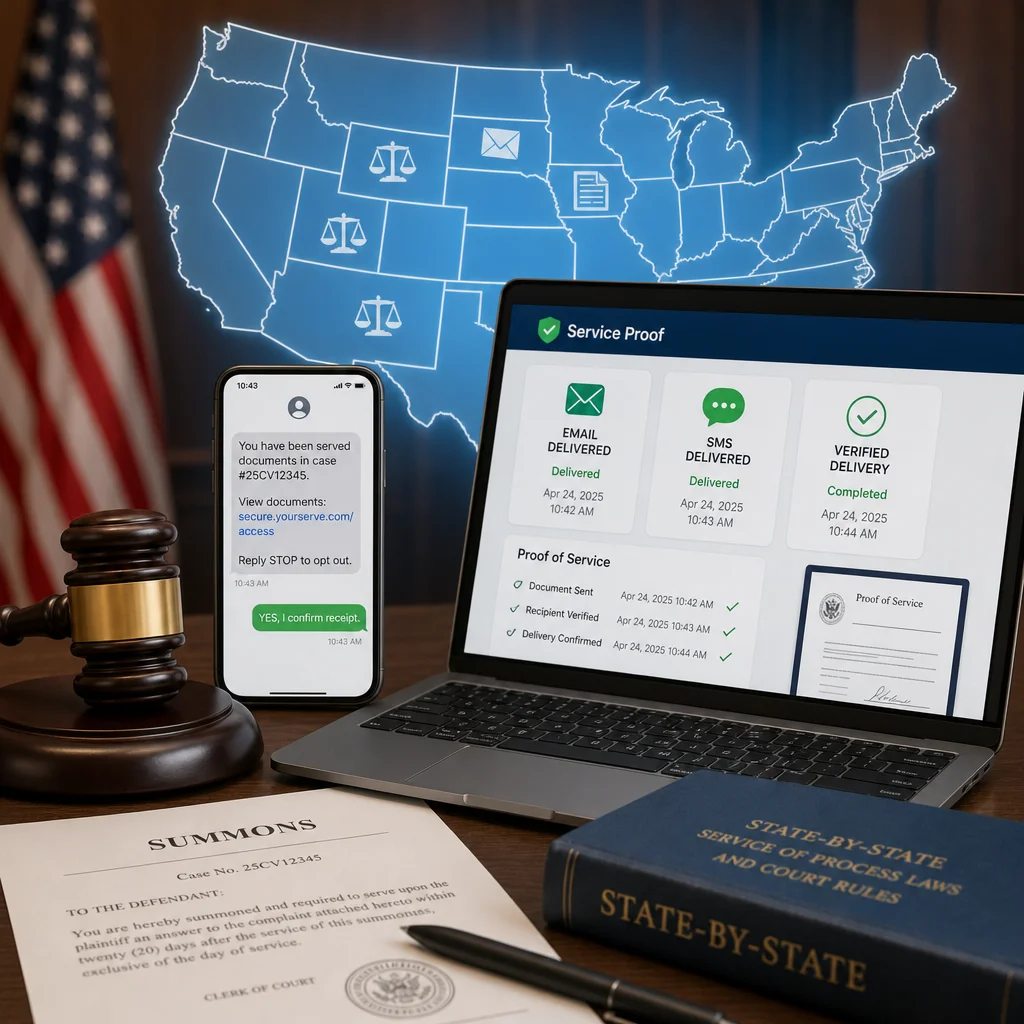
- Timestamped email and SMS delivery records
- Recipient access verification through unique codes
- Document viewing history and timestamps
- Geolocation data confirming recipient location
- Selfie capture or other identity verification methods
- Complete notification campaign history
Courts appreciate documentation that shows not just whether service was attempted, but whether it succeeded. This shift in judicial thinking favors electronic methods that generate verifiable records over traditional service methods that rely on affidavits alone.
What Makes Electronic Service Legally Compliant in Your Jurisdiction
Compliance depends on three factors: authorization, method, and documentation. First, confirm that your chosen jurisdiction authorizes the specific service method you plan to use. Second, ensure the method genuinely provides a high probability of actual receipt. Third, maintain detailed records that prove service occurred.
Authorization varies significantly. Some courts allow email service only with prior consent or court approval. Others permit SMS service for specific case types. A few jurisdictions still limit electronic service to narrow circumstances. You must verify your local court rules before proceeding.
Method requirements focus on realistic probability of receipt. Sending documents to an email address the defendant actively uses satisfies the standard. Sending to an old email found in public records does not. Courts expect you to exercise reasonable diligence in identifying contact information where the defendant will likely receive the notification.
Documentation is non-negotiable. Every service platform should provide timestamped records, transmission confirmation, and delivery evidence. When disputes arise about whether service occurred, these records become your most important asset in court.
How Our Platform Delivers the Documentation Courts Require
We designed our platform to generate the comprehensive documentation that courts expect from electronic service. Every notification campaign creates timestamped records of transmission, delivery confirmation, and recipient access activity. These records stand up to judicial scrutiny because they document not just our actions, but the recipient’s response.
Our multi-channel approach strengthens compliance by maximizing the probability of actual receipt. We send notifications across email, SMS, and WhatsApp where available, and we support multiple contact points for each recipient. Sending the same document to three verified email addresses and three phone numbers substantially increases the likelihood that at least one notification will reach the defendant.
The 60- or 90-day notification cycles we offer create a documented history of persistent service attempts. Rather than a single attempt on a particular date, courts see evidence of repeated contact over an extended period. This pattern becomes powerful documentation if the defendant later claims non-receipt or challenges whether service actually occurred.
Each recipient accesses documents through a secure code-protected portal, generating activity logs that show exactly when they accessed materials and which documents they viewed. These access records provide the strongest possible evidence of actual, personal notice.
Built-In Verification Features That Strengthen Your Service Record
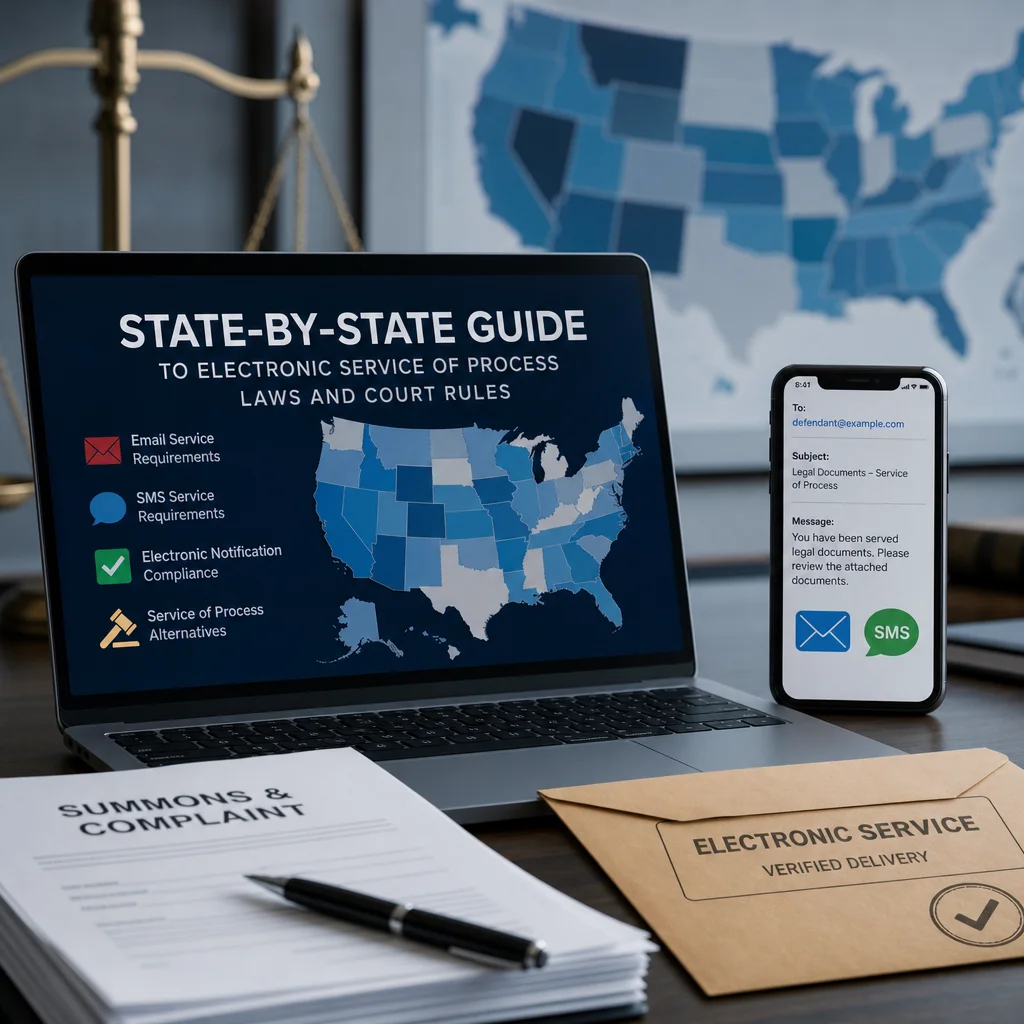
We incorporate multiple verification options that enhance the evidentiary value of your service record. Selfie capture technology confirms that the person accessing documents matches the identification you’ve gathered. Geolocation data documents the recipient’s location at the time of access. Timestamping on every action creates an unbreakable chronological record.
These features matter because they directly address judicial skepticism about electronic service. When a court sees that the defendant opened the document from a recognized location using a verified identity, any claim that service never occurred becomes difficult to sustain.
Document delivery tracking provides real-time visibility into campaign performance. You can monitor which notifications successfully delivered, which were opened, and when access occurred. This transparency helps you assess whether service is likely to be challenged and whether additional notification attempts would strengthen your record.
End-to-end encryption ensures that documents remain confidential while in transit and storage. Secure code-protected access means only authorized recipients can view the material. These security measures satisfy concerns about electronic service confidentiality and confirm that your platform treats litigation documents with appropriate care.
Ensuring Compliance While Maintaining Cost-Effective Service Campaigns
Compliance and cost efficiency work together when electronic service replaces more expensive alternatives. A single notification campaign through our platform costs substantially less than multiple process server attempts or newspaper publication, yet generates more reliable proof of service.
Cost containment doesn’t mean cutting corners on compliance. It means choosing methods that satisfy legal requirements efficiently. Electronic service does exactly that. You avoid wasted spending on failed physical service attempts while building a documentation record that courts accept without challenge.
Investigative skip-tracing assistance helps you locate accurate contact information before launching a service campaign. Serving documents to outdated addresses wastes money and generates no proof of service. We help verify that the email addresses and phone numbers you plan to use are current and likely to reach the intended recipient.
Planning multi-channel campaigns upfront ensures you’re not paying for repeated failed attempts. By identifying multiple contact points and scheduling coordinated notifications across those channels simultaneously, you maximize the probability of successful service on the first campaign without requiring escalation to more expensive alternatives.
Next Steps: Serving Documents with Confidence and Legal Support
Start by confirming which electronic service methods your local court rules authorize. Contact the court clerk’s office or consult a local attorney familiar with your jurisdiction’s electronic service requirements. Requirements differ significantly between states, case types, and court levels, so verification is essential before committing to any service strategy.
Once you’ve confirmed authorization, assess the contact information you have for the recipient. Do you have current email addresses and phone numbers? If not, skip-tracing assistance can help identify reliable contact points before you invest in a full service campaign.
We’re here to help you navigate this process. Our platform is designed to support compliance with local rules while delivering the documented proof courts require. Whether you need persistent multi-channel notification, investigative assistance locating a recipient, or comprehensive verification documentation, we provide the tools and guidance to serve documents with confidence.
Contact us today to discuss your specific service challenges and learn how electronic service can accelerate your litigation while keeping costs reasonable. We’ll help you verify compliance with your jurisdiction’s rules and design a service campaign that produces court-ready documentation.