
Why Legal Professionals Are Moving Away from One Legal
Legal professionals and self-represented litigants are increasingly seeking alternatives to legacy service platforms for one clear reason: speed and flexibility matter when documents need to reach defendants or respondents quickly and reliably.
Traditional platforms often lock users into rigid workflows that don’t match modern litigation timelines. Many attorneys find themselves waiting days or weeks for confirmation, managing multiple vendor relationships, or paying premium rates for expedited service. These friction points add up, especially in cases where time-sensitive notifications can influence settlement discussions or compliance deadlines.
We’ve seen this pattern consistently. Clients migrating to electronic service platforms report needing:
- Faster delivery confirmation and proof of service documentation
- More transparent tracking of when and how documents reach recipients
- Flexibility to combine SMS and email in a single workflow
- Lower per-document costs without sacrificing compliance support
- Integration with their existing case management systems
The shift reflects a broader movement in legal technology toward automation and transparency. When you can verify receipt within hours rather than waiting for affidavits and mailed confirmations, your entire case timeline accelerates.
The Limitations of Traditional Substituted Service Platforms
Newspaper publication and conventional substituted service remain legally necessary in some jurisdictions, but they carry substantial drawbacks that electronic alternatives can address.
Publishing a notice in print typically costs $500 to $2,000 per case, requires lead times of 7-14 days, and produces proof that’s difficult to verify digitally. You receive tear sheets and affidavits, but actual confirmation that the intended recipient ever saw the publication is largely assumed rather than demonstrated.
Electronic service platforms that focus only on email or only on SMS similarly miss opportunities. Email alone doesn’t guarantee mobile accessibility or immediate notification. SMS alone may not capture document details or provide the same archival proof. Combining both channels into a unified system addresses these gaps and increases the likelihood of successful contact.
Traditional platforms also struggle with scalability. Managing dozens of defendants across multiple cases means coordinating with different service vendors, tracking separate proof-of-service documents, and reconciling billing across platforms. That administrative burden diverts resources from actual case strategy.
Our approach consolidates these functions into one dashboard. You send documents via SMS and email from a single interface, receive timestamped delivery confirmations, and export proof of service that courts can review immediately.
How Electronic Service Delivers Speed and Compliance
Electronic service operates fundamentally differently from print-based alternatives. When you serve documents electronically, delivery happens in minutes rather than weeks, and proof of receipt becomes automatically documented and time-stamped.
The compliance advantage is equally important. We design our platform to support compliance with local court rules, but we also recognize that jurisdictional requirements vary significantly. Before relying on electronic service for any case, you must check local court rules and confirm that your target jurisdiction permits digital notification for the specific document type you’re serving.
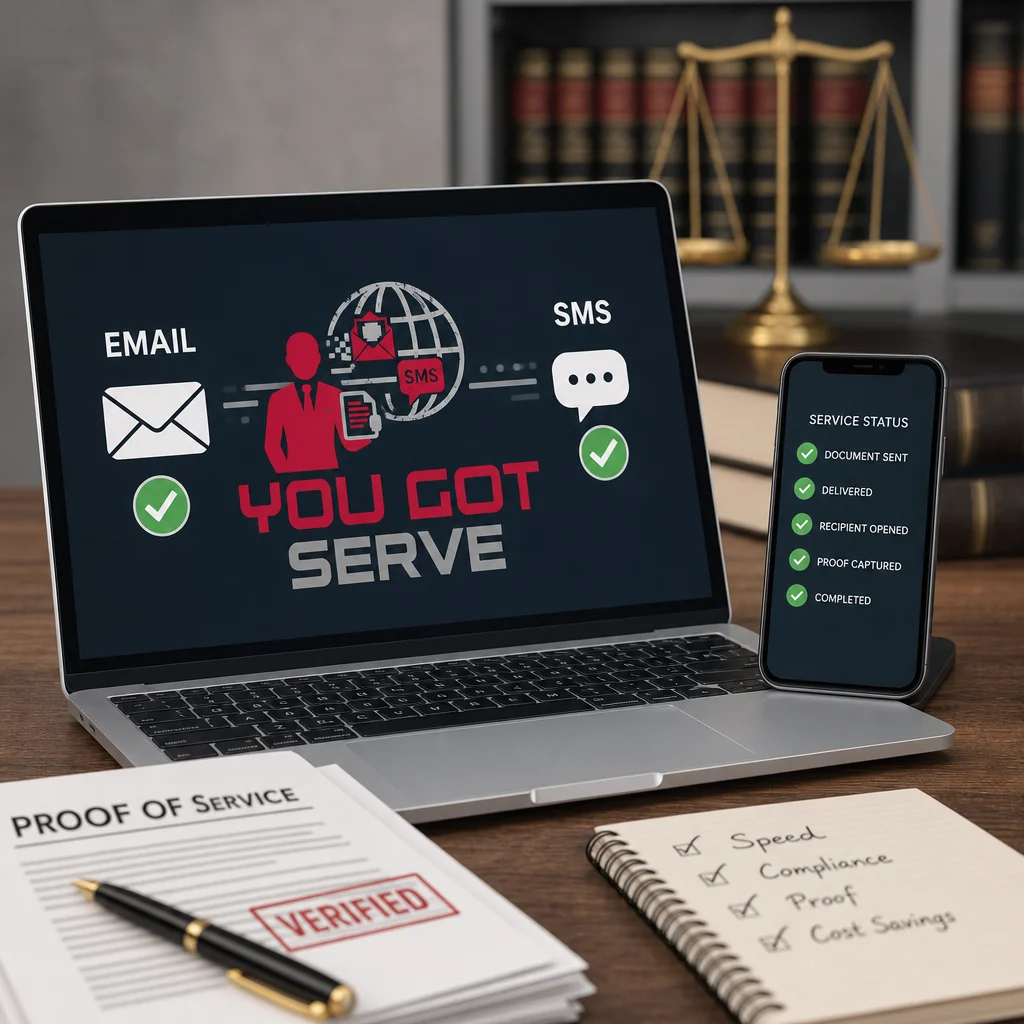
When electronic service is court-authorized or permitted under local rules, the benefits become substantial. Recipients receive immediate notification, can access secure documents without printing or mail delays, and timestamps create an objective record of delivery and receipt. That documentation significantly strengthens your proof of service if the defendant later disputes compliance.
Speed also enables better case management. If an initial SMS and email attempt fails, you can immediately follow up with a second notification cycle or escalate to alternative service methods without losing days to postal delays or publication schedules.
Our Dual Delivery Approach: Email and SMS Integration
We built our platform around the principle that different recipients respond to different channels. Some check email obsessively but rarely read text messages; others are the reverse. By combining email and SMS delivery into a single campaign, you maximize the likelihood of actual receipt and engagement.
Here’s how it works: when you upload a case file, we send both an SMS alert and an email notification simultaneously. The SMS includes a time-sensitive code that recipients use to access the secure document portal. The email provides a direct link and full document details. Both messages include timestamps and are logged automatically.
Recipients who respond via SMS get immediate access to documents through our code-protected portal. Those who prefer email follow the embedded link. Either way, we capture verification of their interaction with the notification and document access.
This dual approach also strengthens compliance documentation. If a defendant claims they never received service, you have timestamped records showing delivery via two channels plus access confirmations. That evidence is difficult to dispute in court.
Verified Receipt Tracking That Actually Holds Up in Court
Proof of service must be both thorough and defensible. We provide document receipt tracking that captures every step of the delivery and access process, creating a complete audit trail suitable for judicial review.
Each message includes encrypted timestamps showing exactly when we sent the notification and when the recipient opened it or accessed the document. If a recipient provided a valid email or phone number, we have confirmation of delivery. If they accessed the secure portal using their unique code, we have proof of receipt and engagement.
You can export this data directly into proof-of-service affidavits or court filings. Judges and opposing counsel reviewing these records see objective, time-stamped evidence rather than assumptions. That clarity reduces disputes and strengthens your legal position.
In cases where recipients don’t engage, our system documents those failed attempts as well. If you pursued a 60-day or 90-day notification cycle and the recipient consistently ignored communications, that documented history demonstrates your good-faith compliance efforts.
Cost Comparison: 60 and 90-Day Service Cycles vs. Alternatives
Newspaper publication costs $500 to $2,000 per notice. Traditional substituted service via process server runs $150 to $500 per service attempt. Electronic service through our platform costs significantly less while producing faster results and superior documentation.
Our 60-day notification cycle sends recurring reminders across your timeframe at a fraction of the cost of print alternatives. A 90-day cycle extends that window and increases the likelihood of reaching recipients who travel or have temporary communication gaps. Both options include SMS and email delivery with full proof-of-service documentation.
The cost-per-document drops further as your case volume increases. For a single defendant, you might spend $50 to $100 on electronic service versus $800 for newspaper publication. For multiple defendants across several cases, that savings compounds quickly.

Beyond direct cost, consider the administrative expense of coordinating separate vendors, processing affidavits, and managing proof documents. Consolidating all service activity into one platform eliminates that overhead and frees your team to focus on substantive case work.
Step-by-Step Migration Process to You Got Serve
Moving from a legacy platform to our system is straightforward and doesn’t require abandoning your current cases.
First, gather your existing case files and identify which defendants or respondents still need service. Review local court rules to confirm that electronic service is permitted for your document types and jurisdictions. Document any special requirements or notification preferences.
Next, create your account and build your first case profile in our platform. Upload defendant contact information, court documents, and any special instructions. Our interface walks you through each step and flags missing information before you proceed.
Review our verification and tracking features to ensure you understand how proof of service will be generated. This is especially important if you’re transitioning from systems that required manual affidavit preparation.
Send your first test notification to a known contact to see how our SMS and email delivery functions in practice. This hands-on experience clarifies how recipients will receive and access documents.
Finally, begin migrating active cases. You can run electronic service through our platform while maintaining existing service efforts through other vendors until you’re confident in the transition. This parallel approach eliminates risk and gives your team time to adapt to new workflows.
Maintaining Your Document Security During Transition
Document security becomes more critical when you’re changing systems. Our platform uses end-to-end encryption and secure code-protected document access to ensure that sensitive court documents remain confidential throughout the service process.
Every document you upload is encrypted immediately. Recipients access files only by providing the unique code sent via SMS or using credentials in the email notification. We never display document content on unsecured pages or send full files as email attachments.
During migration, ensure that your outgoing case files from your previous platform are handled according to your firm’s document retention policies. Don’t store unencrypted case data on personal devices or cloud accounts during the transfer process.
Our platform creates a clean audit trail showing exactly which users accessed which documents and when. This accountability makes it easier to demonstrate compliance if opposing counsel or courts question your service practices.
Recipient Verification Features That Strengthen Your Cases
Confirming that you’ve reached the correct individual is essential to valid service. Our skip tracing and investigative features help you locate accurate contact information and verify that the person receiving notification is actually the defendant or respondent you’re attempting to serve.

We cross-reference phone numbers and email addresses against multiple databases to identify the most current and reliable contact points. If an initial SMS or email bounces, our system flags the issue and suggests alternative contact methods.
Recipients must respond with verification information to confirm their identity before accessing sensitive documents. This added step protects against misdirected service and provides evidence that you contacted the correct person.
When you run a 60 or 90-day notification cycle, the repeated attempts and recipient responses create a comprehensive verification record. If a defendant later claims they were never properly served, your documented history of multiple contact attempts with identity verification becomes powerful evidence of compliance.
Getting Started with Your First Electronic Service Campaign
Beginning your first campaign requires minimal setup and produces immediate results. Start by identifying a straightforward case with clear contact information for the defendant or respondent. This first experience will familiarize your team with the platform without the complexity of multi-defendant filings.
Upload your court documents and recipient contact details. Select your notification cycle (60 days, 90 days, or another timeframe your jurisdiction permits). Choose whether to use SMS, email, or both delivery channels.
Review the proof-of-service preview to see exactly what the recipient will receive. Adjust any messaging or timing if needed to match your case requirements.
Send the notification and watch the dashboard update in real time as messages are delivered and recipients access documents. You’ll see exactly when the SMS arrived, when the email was opened, and what time the recipient accessed the secure portal.
Export your proof-of-service report and file it with the court or attach it to your case filing. The clear, timestamped documentation requires no additional affidavits or manual preparation.
Supporting Compliance Across Different Jurisdictions
Jurisdictional rules for electronic service vary dramatically. Some courts embrace digital notification enthusiastically; others restrict it to specific document types or require approval before service begins. We help you navigate these differences, but you retain responsibility for checking local court rules.
Before launching any campaign, consult your local civil procedure rules, local court website, or the specific judge’s standing orders. Confirm whether electronic service is permitted, what formats courts accept, and whether proof-of-service documentation requires specific formatting or additional affidavits.
Our platform allows you to customize your approach by jurisdiction. You can adjust notification cycles, delivery channels, and recipient verification requirements to match local preferences. This flexibility ensures that whether you’re serving in state or federal court, rural or urban jurisdictions, your service practices remain compliant.
If your jurisdiction requires newspaper publication alongside electronic service, we can document your electronic efforts while you coordinate print alternatives through other vendors. That parallel approach satisfies strict jurisdictional requirements while still gaining the speed and cost benefits of electronic notification.
Compliance documentation also helps you if a court initially rejects your electronic service. You can demonstrate that you attempted compliant digital notification, followed all platform procedures, and maintain full proof of your good-faith efforts.
Ready to migrate your cases? Contact our team to discuss your specific needs and build your first electronic service campaign today.