Category: Uncategorized

  • Electronic Service Affidavits and Proof-of-Service Templates for Legal Professionals

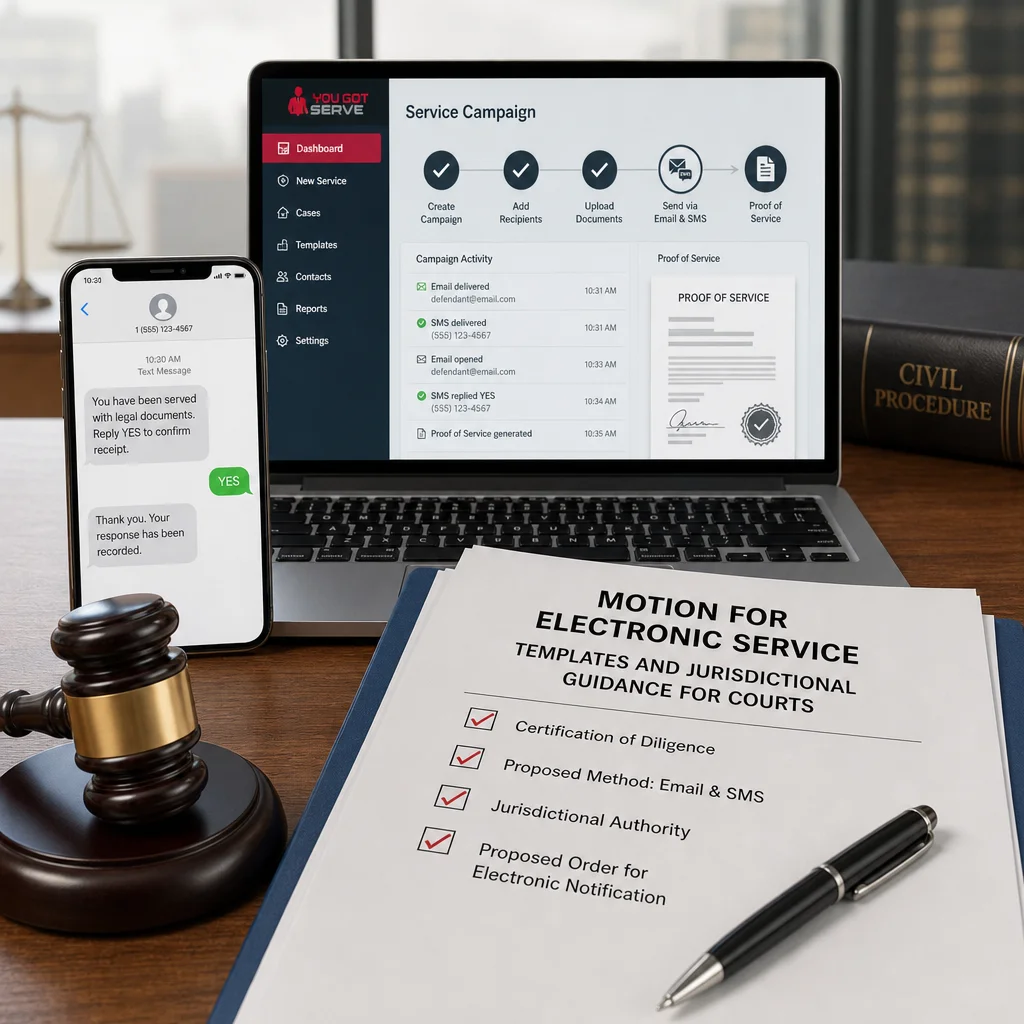
    Electronic Service Affidavits and Proof-of-Service Templates for Legal Professionals

    Why Traditional Proof-of-Service Documentation Falls Short in Modern Practice

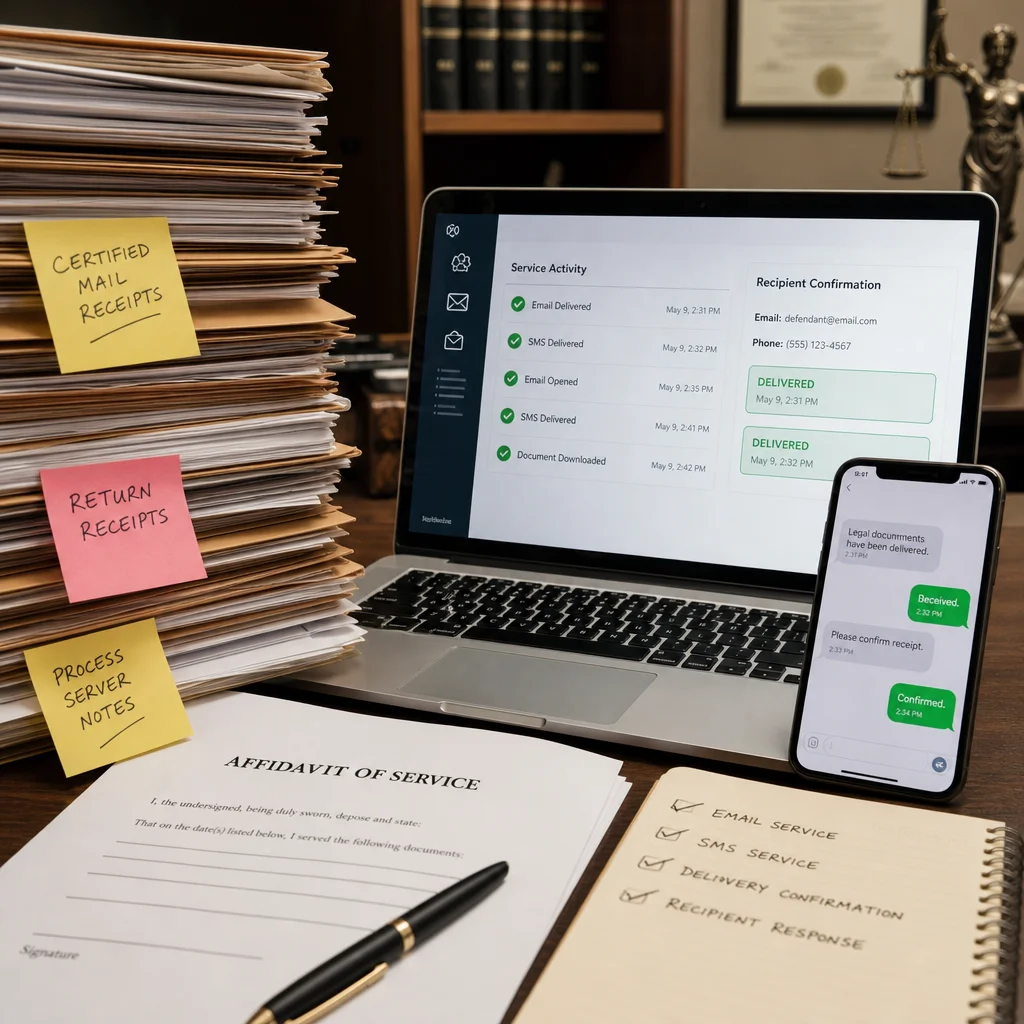
    Paper-based proof-of-service documentation remains the default in many jurisdictions, but it creates unnecessary delays and cost. When you rely on traditional personal service or certified mail alone, you’re limited to a single delivery attempt and a static record. If the recipient doesn’t answer the door or refuses the package, you have minimal documentation of that attempt.

    Modern litigation demands faster resolution. Courts increasingly expect electronic service as a standard option, yet many legal professionals still generate proof-of-service affidavits using templates designed for physical delivery. This mismatch creates gaps: no timestamped delivery logs, no verification of recipient access, no automated notification history.

    The real problem isn’t the affidavit form itself. It’s that traditional documentation methods don’t capture the persistent, multi-channel approach that electronic service enables. When you serve via SMS, email, and WhatsApp simultaneously across multiple contact points, a single paper receipt isn’t enough to demonstrate good-faith effort.

    Courts want to see evidence of diligence. Multiple notification attempts, verified timestamps, and documented proof of delivery tell a much stronger story than a single certified mail receipt.

    The Challenge of Documenting Electronic Service Across Multiple Channels

    Electronic service introduces complexity that paper-based proof hasn’t addressed: you’re now managing multiple communication channels, multiple recipient contact points, and varying delivery success rates across those channels.

    Suppose you send documents via three email addresses and two phone numbers over a 60-day period. One email bounces. Another is marked as read but the recipient claims they never opened the attachment. SMS messages are delivered but not acknowledged. How do you document all of this clearly and credibly in an affidavit?

    Without proper tracking, you’ll spend hours collecting email delivery reports, SMS logs, and bounce-back messages from different platforms. You’ll manually piece together a timeline that may contain gaps or lack the precision courts expect. If challenged, you won’t have unified proof that demonstrates your full notification campaign.

    The stakes are high: incomplete documentation can undermine your entire service effort, forcing you to re-serve the defendant or delaying the case while the court evaluates compliance. The solution is a single platform that captures all delivery activity, verification events, and recipient interaction automatically and chronologically.

    What Courts and Judges Expect from Electronic Service Records

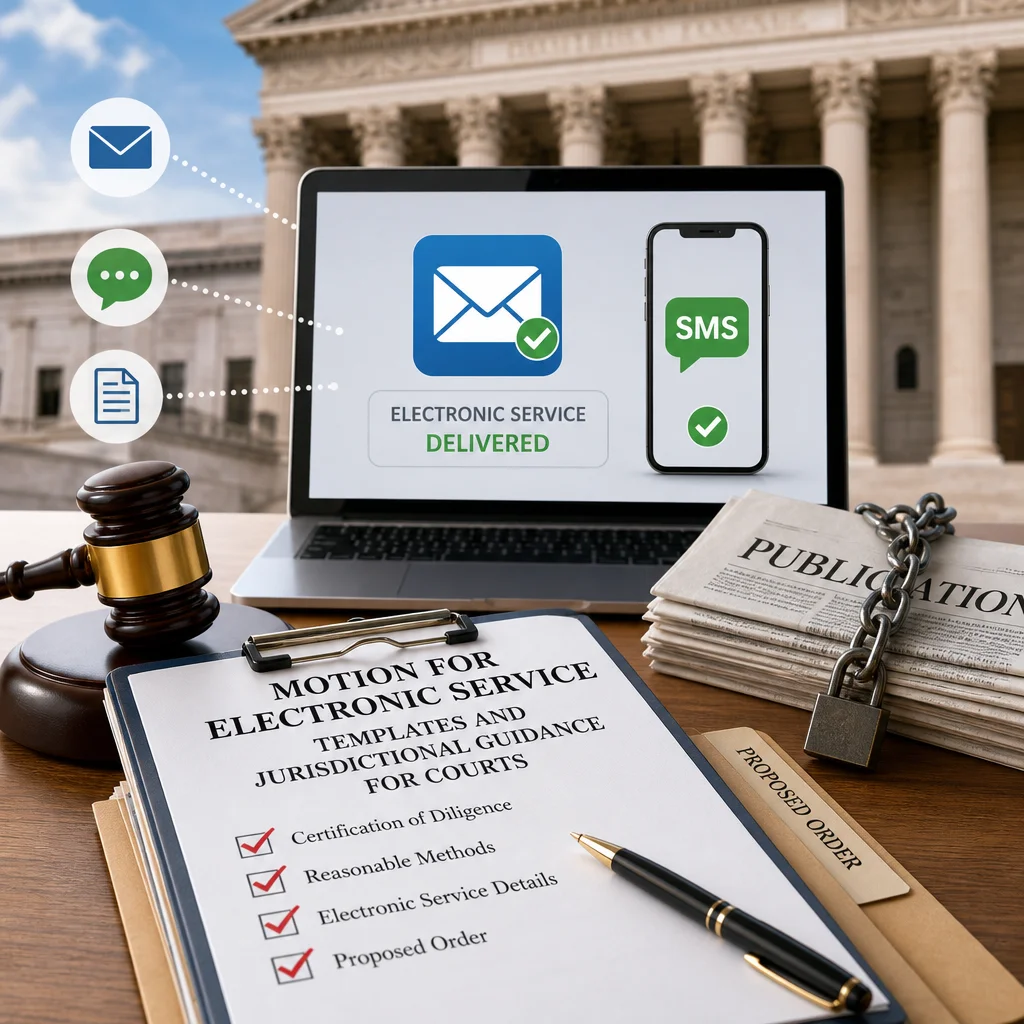
    Judges evaluating electronic service affidavits look for specific evidence: proof that you used a method authorized by court rules, that you made a genuine effort to reach the defendant, and that your documentation is complete and contemporaneous.

    Most courts now require these core elements in electronic service records:

    • Clear identification of the authorized service method (SMS, email, or court-approved platform)
    • Proof that notice was actually delivered to the defendant’s last known address or contact information
    • Timestamped evidence of each delivery attempt
    • Documentation of any recipient response or non-response
    • Certification that you complied with the relevant jurisdictional rules

    Courts also pay close attention to whether you attempted service across multiple channels or contact points. A single email to one address looks less diligent than coordinated attempts across email, SMS, and WhatsApp. Judges want to see that you acted reasonably to ensure actual notice.

    Finally, courts expect your affidavit language to match your documentation. If your affidavit says “defendant received notice on March 15,” but your platform records show only that the email was delivered, not opened, that discrepancy will be questioned. Precision and honesty strengthen credibility.

    Building Compliant Affidavits When Service Method Varies by Jurisdiction

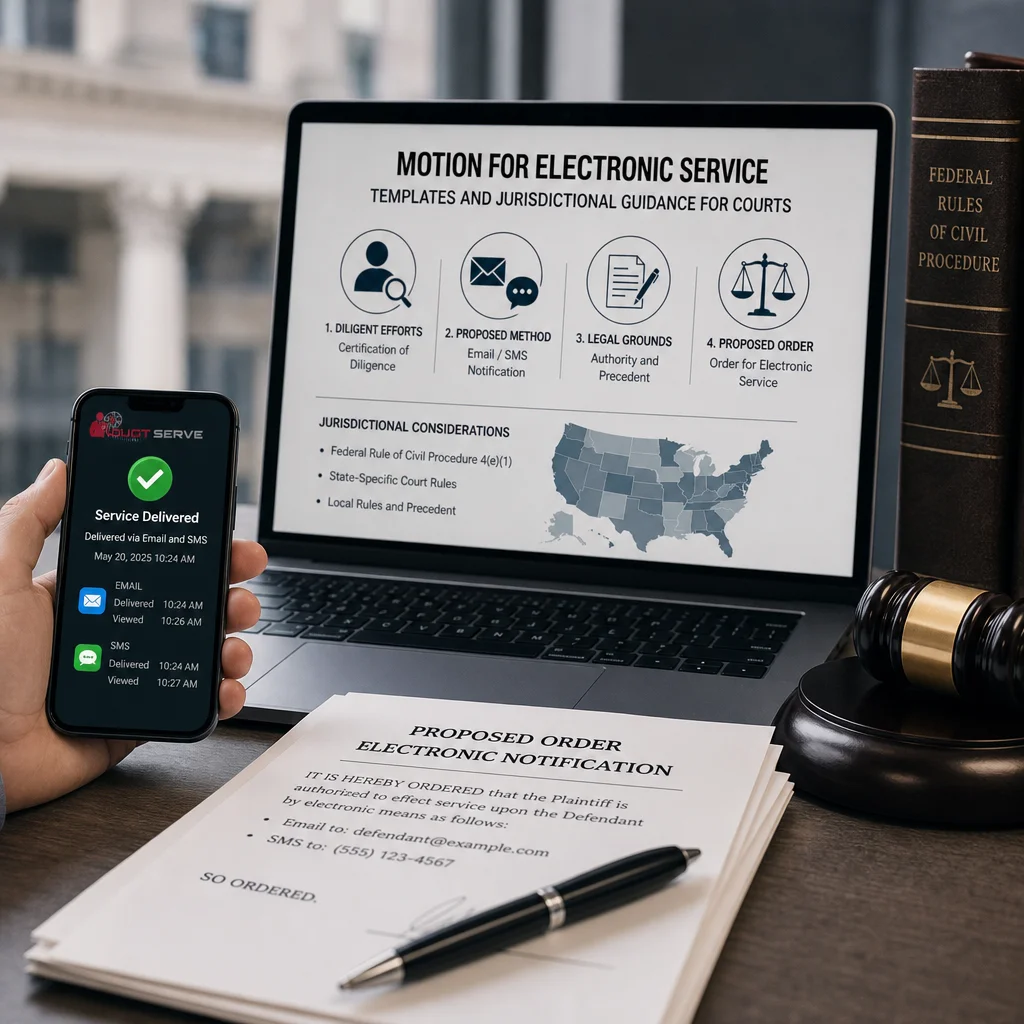
    Jurisdictional rules for electronic service differ significantly. Some states allow broad electronic service by court order. Others restrict it to specific circumstances: when traditional service has failed, when the defendant is out of state, or when the parties have agreed to it.
    Before drafting your affidavit, verify the applicable rules for your jurisdiction. Review local court rules, state statutes, and any standing orders from the assigned judge. Some courts require pre-approval before you serve electronically; others allow it as a fallback method if traditional service proves unsuccessful.

    Your affidavit should acknowledge the jurisdictional requirement explicitly. For example: “Pursuant to [Citation to Local Rule or Statute], I attempted electronic service after reasonable efforts to effect personal service were unsuccessful.” This language demonstrates that you understand and comply with the governing rule.

    If you’re serving across multiple jurisdictions, your affidavit may need separate certifications for each. Don’t assume that electronic service authorized in one state satisfies requirements in another. Each affidavit should reference the specific authority that permits electronic service in that jurisdiction.

    Structuring Your Affidavit to Include Verification and Recipient Confirmation

    A strong affidavit of electronic service includes not just delivery logs but also verification data that demonstrates the recipient actually received and accessed the documents.

    Start with foundational facts: identify yourself, your role, and your authority to serve. Then describe the service method: “I served [Defendant Name] via SMS and email to the following contact information: [List addresses/numbers].”

    Next, include your notification strategy. “I sent automated notifications daily for 60 days, with each notification containing a secure link and one-time access code for the defendant to retrieve court documents.” This language demonstrates persistence and intentionality.

    Then add verification evidence. If your platform captured a screenshot or selfie upon access, note it: “Recipient verification data collected on [Date] at [Time] includes geolocation information and device confirmation.” If the recipient opened the document, state the timestamp: “Document access occurred on [Date] at [Time] from IP address [Address].”

    Close with your certification: “Based on the records and documentation available to me, I certify that [Defendant] received notice of this action in compliance with [applicable rule].”

    How Our Platform Generates Court-Ready Documentation Automatically

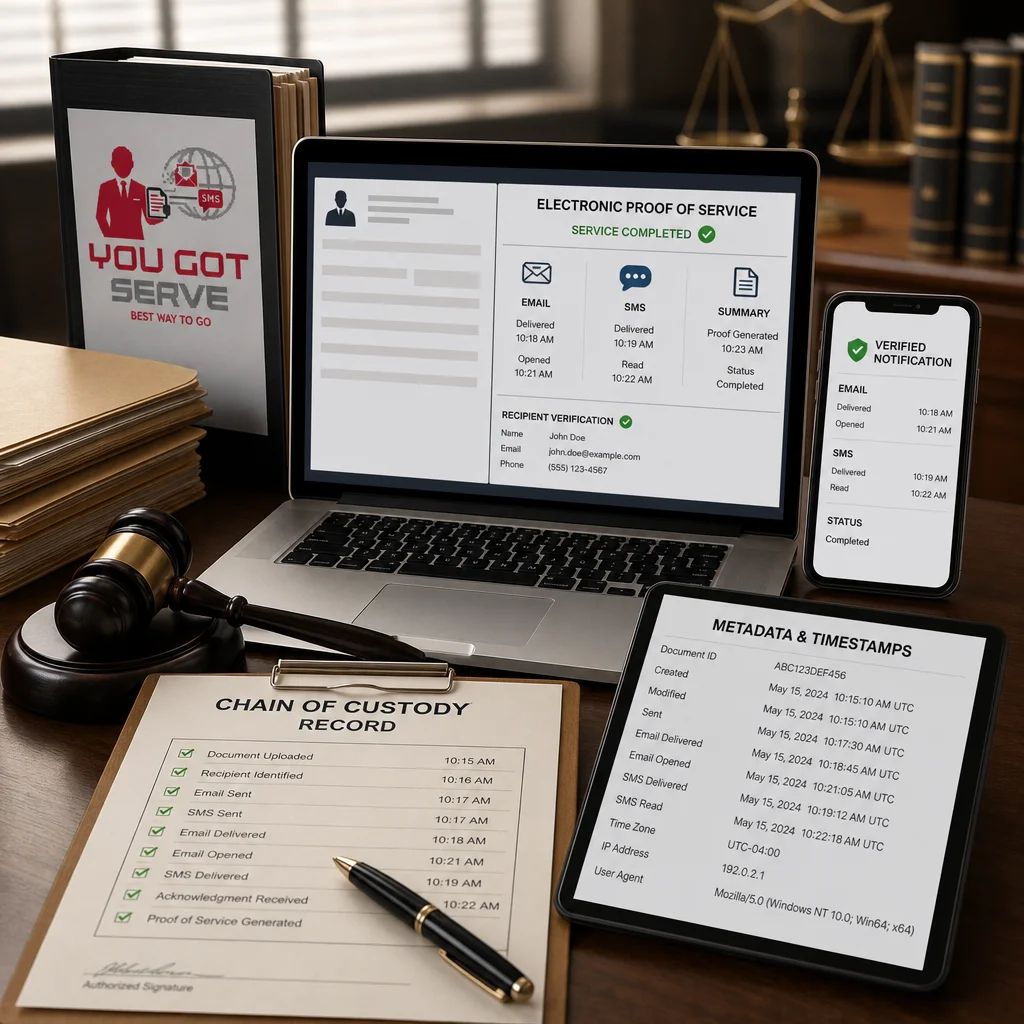
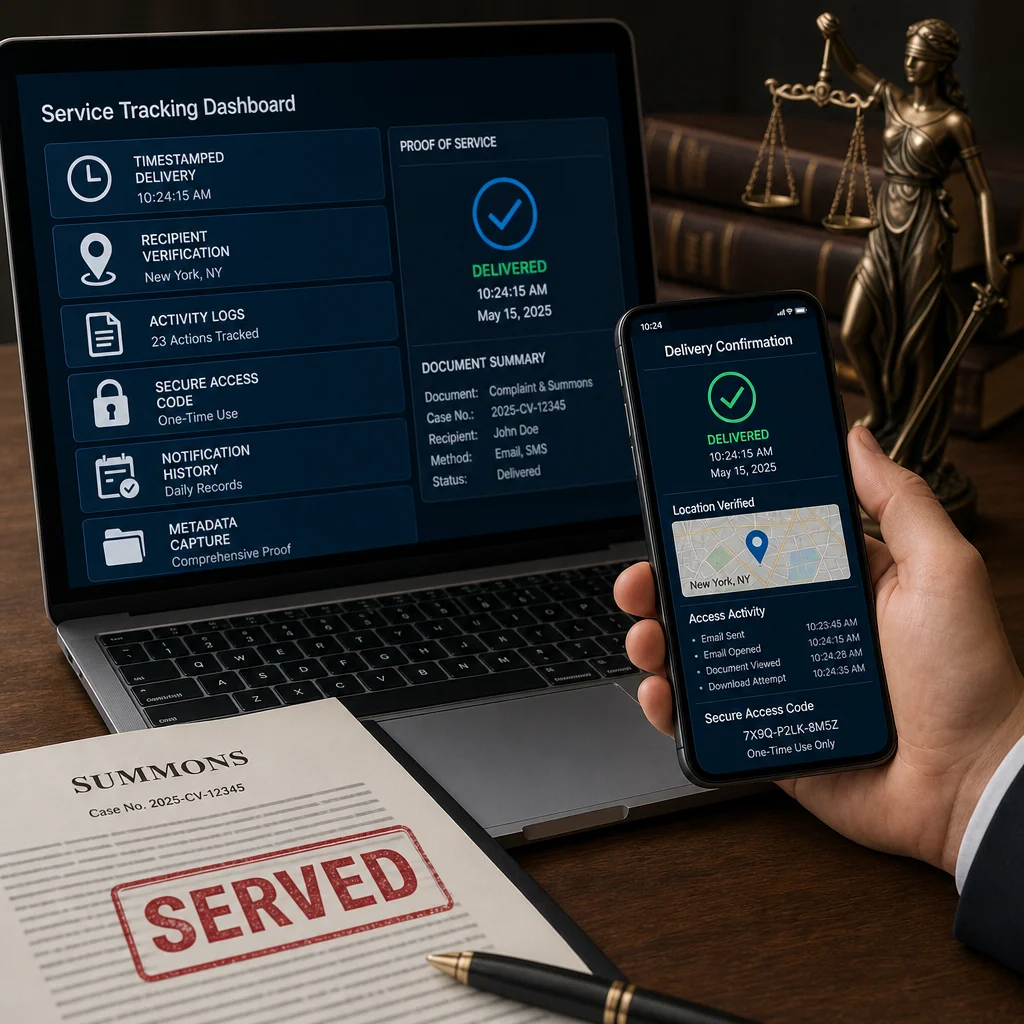
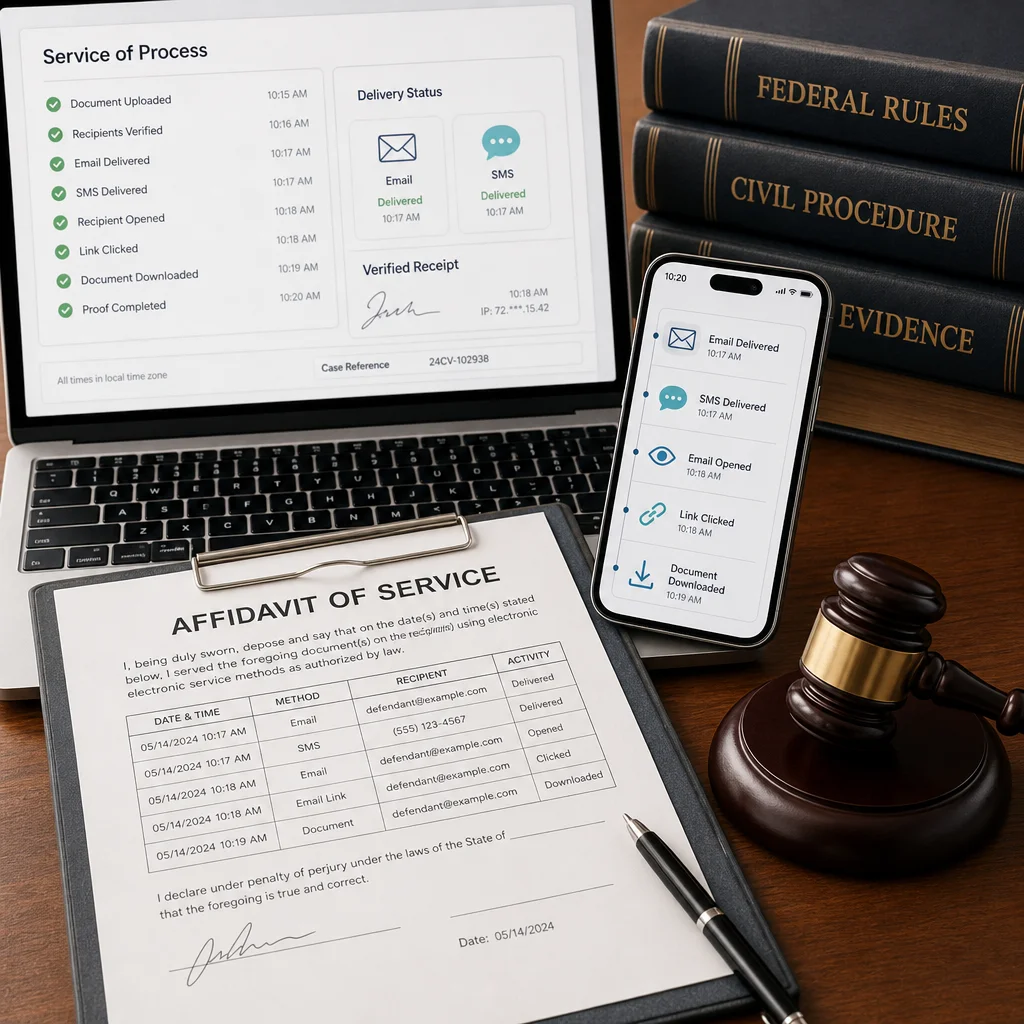
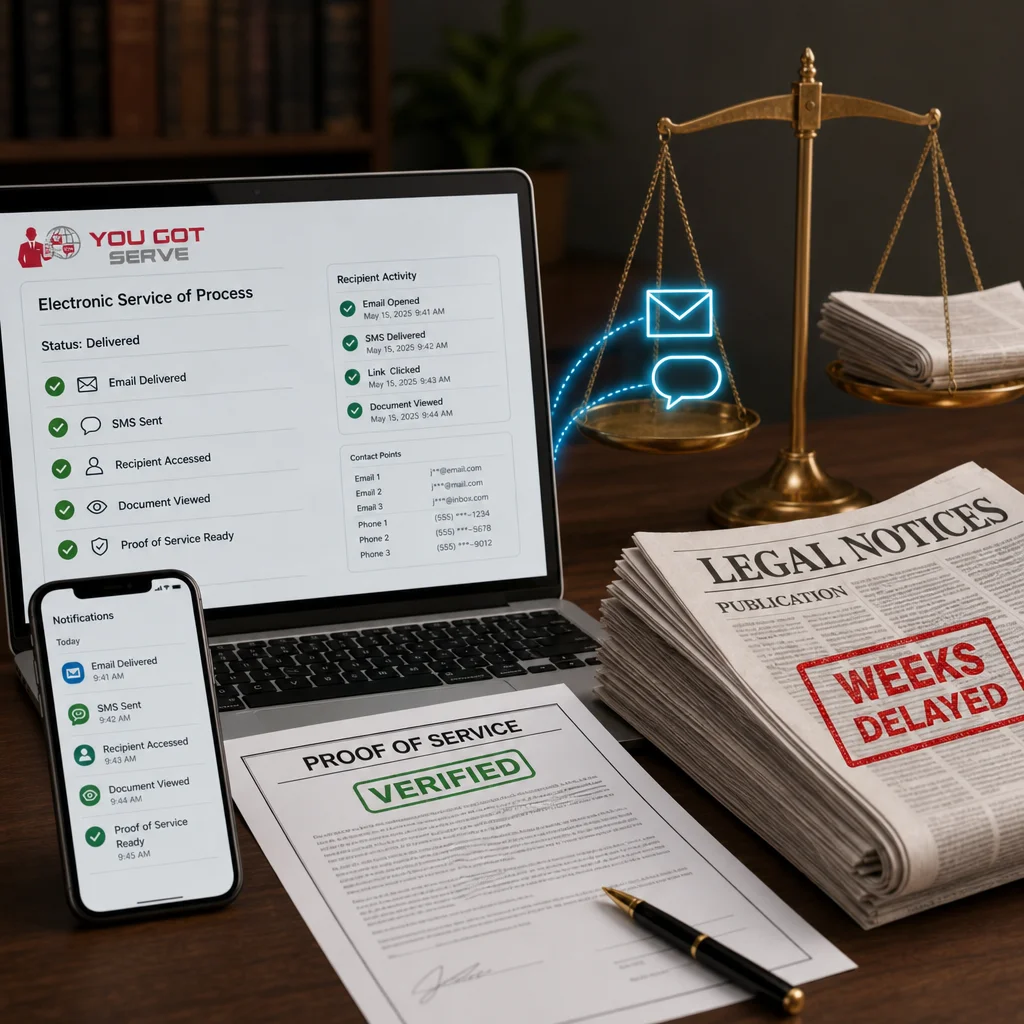
    We designed our platform to eliminate manual proof-of-service compilation. When you launch a notification campaign with You Got Serve, every interaction is timestamped, logged, and organized chronologically.

    Our system captures:

    • Delivery status for each SMS, email, and WhatsApp message
    • Precise timestamps for all notification attempts and access events
    • Recipient verification data (geolocation, device info, one-time code validation)
    • Complete activity history across all contact channels
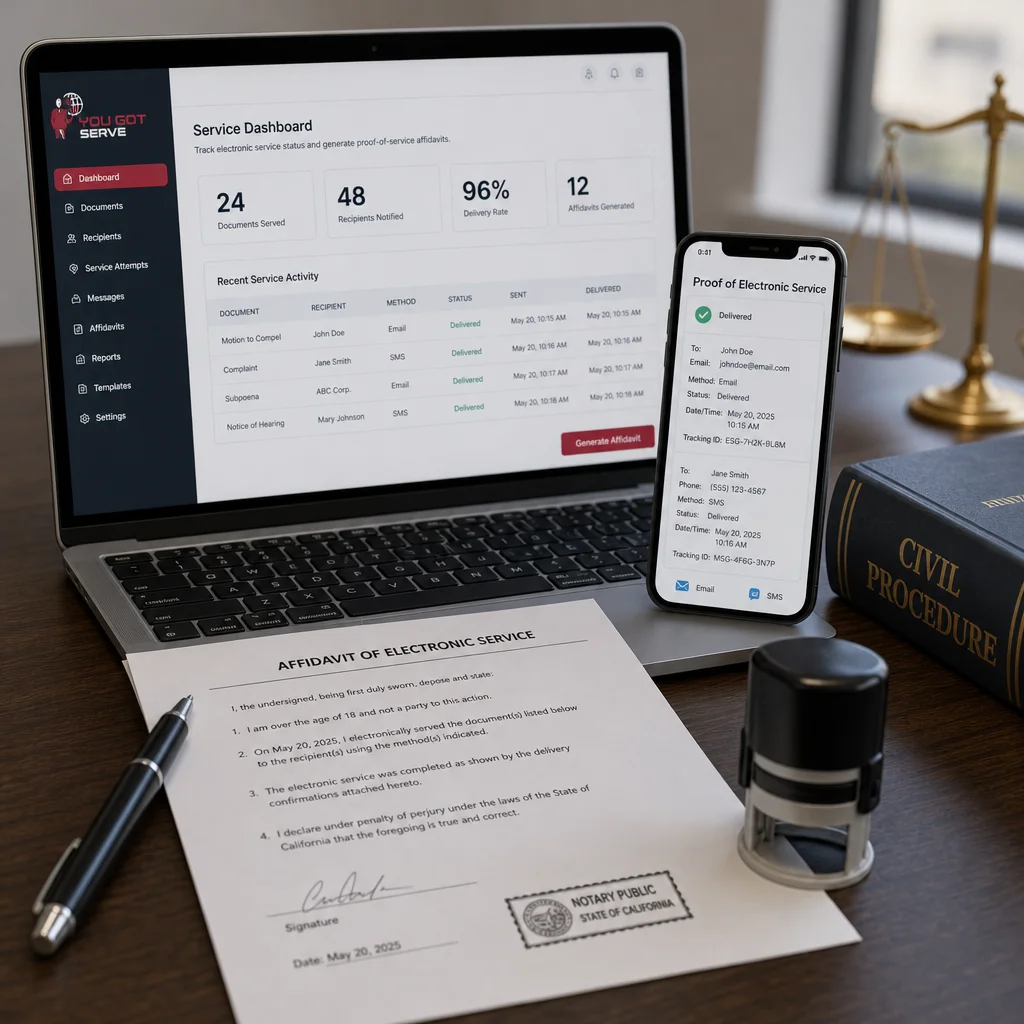
    • Automatic affidavit summaries that pull directly from your campaign data

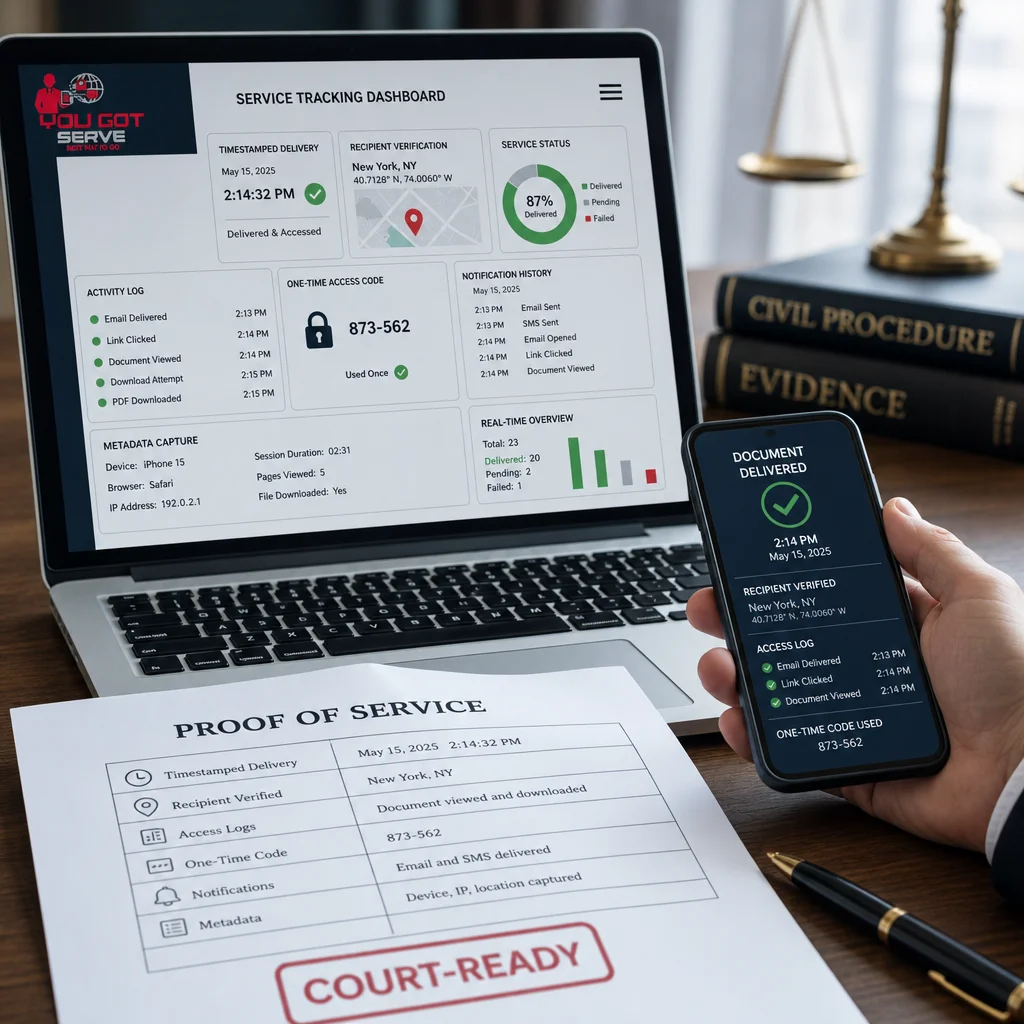
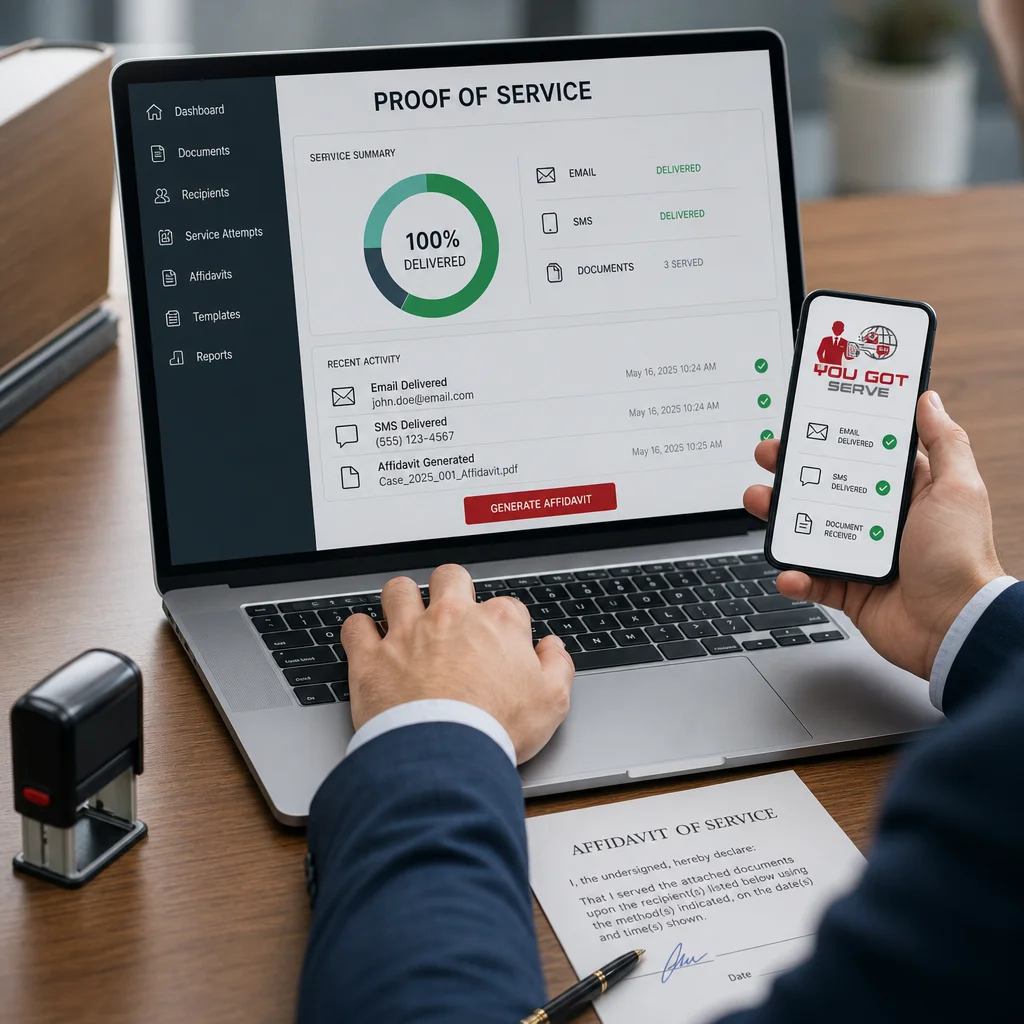
    You can track documents in real time and export a comprehensive service report at any point. Rather than hunting through multiple email providers and SMS logs, you have one unified record that courts will recognize as reliable and complete.

    Our platform generates pre-structured affidavit language based on your actual service activity. We pull the correct dates, times, contact methods, and verification details directly from your campaign. This reduces drafting errors and ensures your affidavit matches your documentation exactly.

    Addressing Common Rebuttal Arguments in Electronic Service Cases

    Opposing counsel may challenge your electronic service in several predictable ways. Anticipate and address them in your affidavit.

    Claim: “My client never received the email or SMS.” Response: Provide timestamped delivery confirmations from your platform and evidence of repeated attempts across multiple channels. Include geolocation or device verification if the defendant accessed the secure portal.
    Claim: “The contact information was outdated.” Response: Explain your source for the contact information and describe any skip-tracing efforts you undertook. If you sent notices to last known addresses and they bounced, document those bounces. This shows reasonable diligence.

    Claim: “Electronic service wasn’t authorized in this jurisdiction.” Response: Cite the specific rule, statute, or court order that authorizes electronic service. Reference your prior attempts at traditional service if applicable. Include language acknowledging that you complied with all prerequisites for electronic service.

    Claim: “The notification messages were sent to spam or blocked.” Response: Document your platform’s delivery verification. If the SMS was delivered by the carrier or the email reached the defendant’s inbox (even if not opened), this cuts against the argument that service failed.

    Key Elements Every Affidavit of Electronic Service Must Include

    Your affidavit of electronic service should contain these non-negotiable elements:

    1. Affiant identification and authority (who you are and why you can execute the affidavit)
    2. Citation to the rule or order authorizing electronic service
    3. Description of the service method (SMS, email, WhatsApp, combination)
    4. Complete recipient contact information (email addresses, phone numbers, or handle)
    5. Dates and times of each notification attempt
    6. Delivery status for each attempt (delivered, bounced, pending)
    7. Verification evidence (access logs, timestamps, recipient confirmation if available)
    8. Any skip-tracing or investigative efforts undertaken
    9. Statement of good faith and compliance with jurisdictional rules
    10. Oath or affirmation by the affiant under penalty of perjury

    Missing any of these elements weakens your affidavit and invites judicial scrutiny. Courts view incomplete proof-of-service documentation with suspicion; they want confidence that you exercised diligence and followed the rules.

    Sample Language for Multi-Channel Notification Campaigns

    Here’s practical language you can adapt for your affidavit when serving via multiple channels:

    “I served [Defendant Name] electronically via SMS and email commencing on [Date] and continuing through [Date], in compliance with [cite rule]. The defendant’s contact information is as follows: Email addresses: [list], Phone numbers: [list].

    I arranged for automated notification messages to be sent daily to all contact information on file. Each message contained a secure link and unique one-time access code enabling the defendant to retrieve and review the full court documents.

    Between [Start Date] and [End Date], a total of [X] notification attempts were made across email and SMS channels. [Y] messages were successfully delivered. [Z] messages bounced or were otherwise undelivered.

    Verification records show that the defendant accessed the secure document portal on [Date] at [Time] using a one-time access code. This access was initiated from [Geolocation/Device info if captured]. Timestamped records of all access attempts are attached as Exhibit A.”

    Adjust the numbers, dates, and verification details to match your actual campaign data. This specificity and documentation depth is what distinguishes credible affidavits from weak ones.

    Integrating Geolocation, Timestamps, and Activity Logs Into Your Affidavit

    Modern courts appreciate affidavits that include metadata proving actual access and engagement with the served documents.

    Geolocation data (when captured) demonstrates that the recipient was physically present at a location when accessing the documents. Timestamps prove the precise moment of access, down to the second. Activity logs show whether the defendant opened attachments, scrolled through pages, or simply retrieved the portal link.

    Include this data strategically. Rather than overwhelming the court with every data point, highlight the most compelling evidence:
    “On March 15, 2026, at 2:47 p.m., the defendant accessed the secure document portal from a location consistent with [City/Address]. Geolocation coordinates and device identification data are documented in the platform records attached to this affidavit.”

    This language conveys that the defendant had actual notice without claiming more than your data supports. You’re not asserting the defendant read every page; you’re proving they had access and opportunity.

    If your platform captured recipient verification (like a selfie or additional authentication), note it factually: “Prior to document access, the recipient completed identity verification including [geolocation capture / device confirmation / other verification method].” This adds credibility to the claim that the intended recipient, not a third party, accessed the materials.

    Best Practices for Filing Electronic Service Documentation With the Court

    Once your affidavit is complete and your documentation is organized, follow these filing practices to maximize credibility:

    1. File your affidavit and supporting documentation together as one exhibit package. Courts don’t want to hunt across multiple filings for proof of service.
    2. Include a cover page or index that lists all attachments. Clearly label your activity logs, verification records, and delivery reports.
    3. Redact sensitive information (like full phone numbers or geolocation coordinates) if local rules or privacy concerns warrant it, but ensure the court can still verify the essential facts.
    4. File early. Don’t submit your proof of service as a last-minute filing when the court is already questioning whether service occurred. Proactive filing signals confidence in your work.
    5. If possible, file your proof of service before the defendant’s response is due. This prevents challenges about whether service was actually timely.
    6. Check local court rules for any specific formatting, labeling, or certification requirements for electronic service affidavits. Some courts have standing orders or local forms.
    7. Serve a copy on all opposing counsel, even if rules don’t strictly require it. This transparency prevents later disputes about whether service was properly documented.

    Getting Started With Verified Proof of Service Through You Got Serve

    If you’re managing multiple cases involving hard-to-reach defendants or rely on electronic service as your primary method, our platform streamlines the entire process.

    With You Got Serve, you can upload defendants’ contact information, set your notification campaign for 60 or 90 days, and let our system handle persistent, multi-channel outreach via SMS, email, and WhatsApp. We capture every delivery attempt, timestamp, and verification event automatically.

    When you’re ready to file your proof of service, export your complete service report directly from our platform. The data is organized, timestamped, and court-ready. How it works shows the full process step by step.

    You’ll also have access to investigative skip-tracing support if you lack complete contact information for a defendant. Our team helps you locate current phone numbers and email addresses, increasing the likelihood that your electronic service actually reaches the intended recipient.

    Check your local court rules before relying on electronic service, but if it’s authorized, we’re here to make your proof of service documentation stronger, faster, and more reliable than traditional methods allow.
  • Best Practices for Authenticating Digital Evidence in Legal Service of Process

    Best Practices for Authenticating Digital Evidence in Legal Service of Process

    The Challenge of Proving Digital Service in Court

    When you serve documents electronically, the burden of proof shifts. Courts no longer accept a signed return of service from a process server as automatic proof. Instead, you must demonstrate that the recipient actually received the document and understood its contents. This requirement creates a significant challenge for legal professionals and self-represented litigants who lack the infrastructure to generate credible digital evidence.

    The stakes are high. Insufficient proof of service can result in case dismissal, default judgment reversal on appeal, or a costly re-service attempt. Courts scrutinize electronic delivery claims more carefully than traditional methods because digital communication leaves room for skepticism: Was the email actually opened? Did the SMS reach the right person? Could someone else have accessed the document? Without a systematic approach to documentation, your electronic service effort may fail the judicial review process.

    Modern litigation demands a modern solution. You need a platform that captures every touchpoint in the notification process and presents it as coherent, verifiable evidence.

    Why Traditional Authentication Methods Fall Short for Electronic Notifications

    Email read receipts and basic SMS delivery confirmations provide limited proof. Read receipts can be disabled by the recipient, and many email systems do not transmit them reliably. SMS delivery reports show only that a message reached a carrier network, not that a specific person opened it. Neither method confirms the recipient’s identity or understanding.

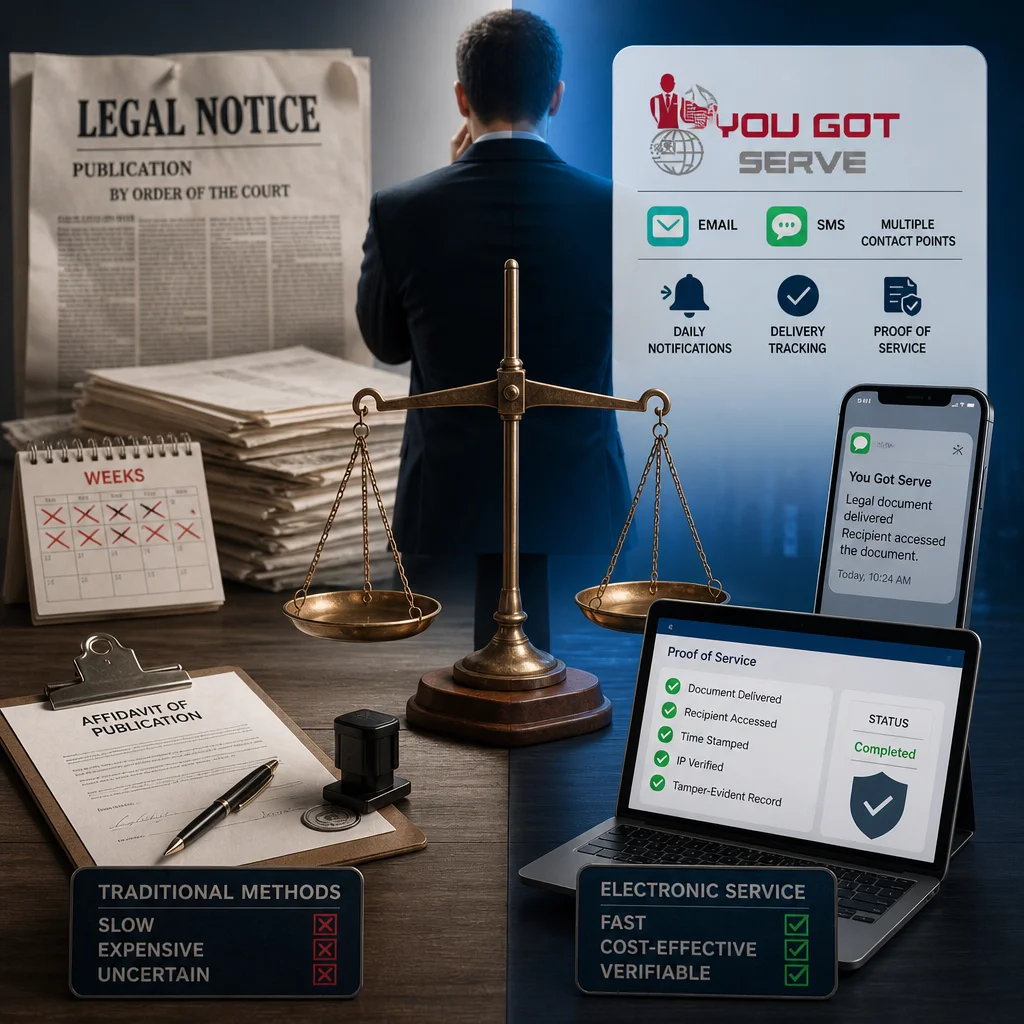
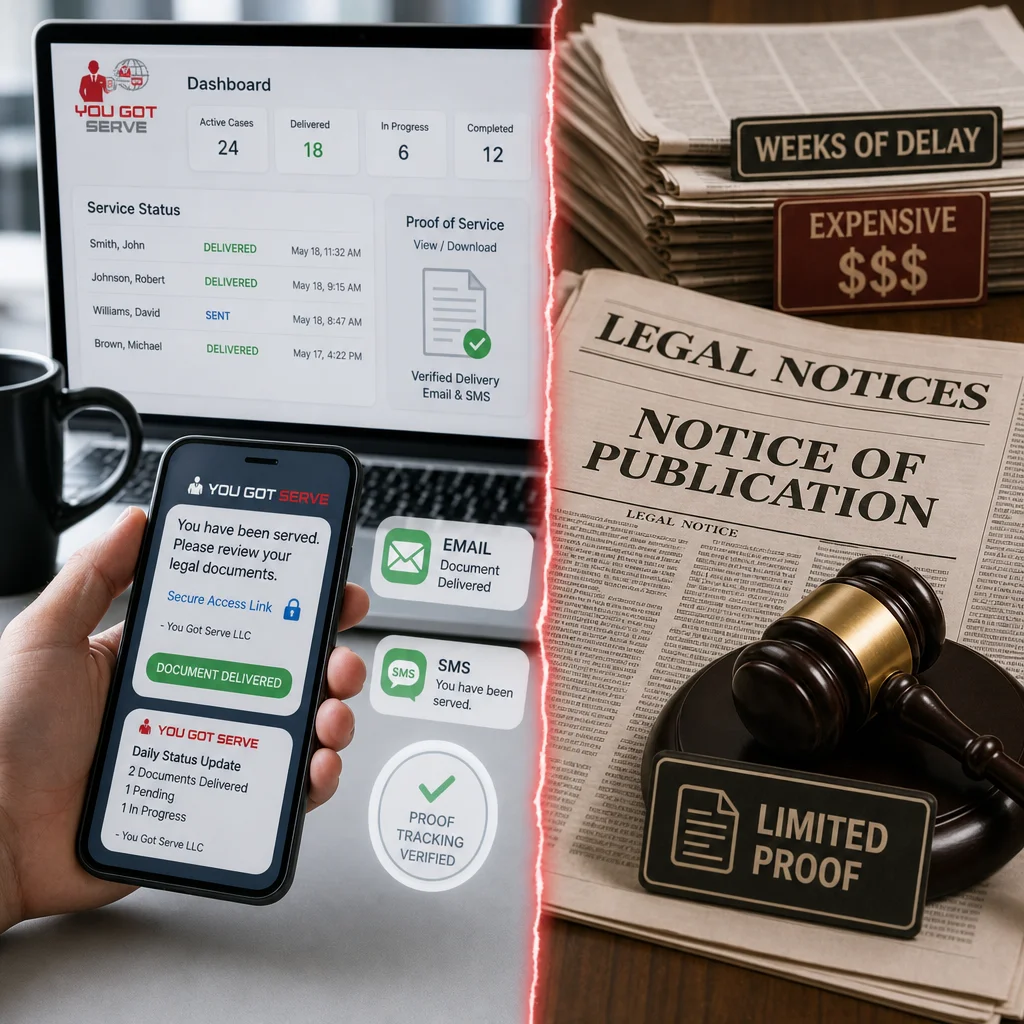
    Newspaper publication, once the default fallback for difficult-to-locate defendants, offers even weaker evidence in today’s context. Courts increasingly question whether publication actually reaches the intended party. Print archives are difficult to access, and no verification exists that the recipient ever saw the notice.

    Traditional process servers can provide detailed affidavits, but they often cannot document repeated contact attempts or engagement with digital communications. A single failed personal service attempt leaves no trail; electronic notifications, by contrast, can build a documented history of outreach efforts over days or weeks.

    What courts actually need is a complete chain of custody: proof of when the notification was sent, through which channels, to which contact points, whether it was delivered, and evidence of access and recipient identity. Legacy methods simply do not supply this level of documentation.

    Courts examine several key elements when evaluating digital service:

    • Proper party identification: You must verify you reached the correct recipient, not a third party or stale contact.
    • Multiple contact points: Relying on a single email or phone number creates reasonable doubt. Courts prefer evidence of efforts across several verified channels.
    • Timestamped delivery records: Each notification attempt must carry a precise timestamp. This creates an unbroken timeline of service efforts.
    • Recipient confirmation: Some form of verification that the intended party actually received and accessed the documents is critical.
    • Chain of custody documentation: You must demonstrate that documents remained secure and unaltered from creation through receipt.
    • Legal compliance design: Your process should align with applicable court rules and jurisdictional requirements for electronic service.

    Before selecting any service platform, check your local court rules. Electronic service acceptance varies by jurisdiction. Some courts authorize it only with prior consent; others require court approval. Your platform should be designed to support compliance with these rules and generate documentation suitable for judicial review.

    Chain of Custody: Building an Unbroken Record of Service

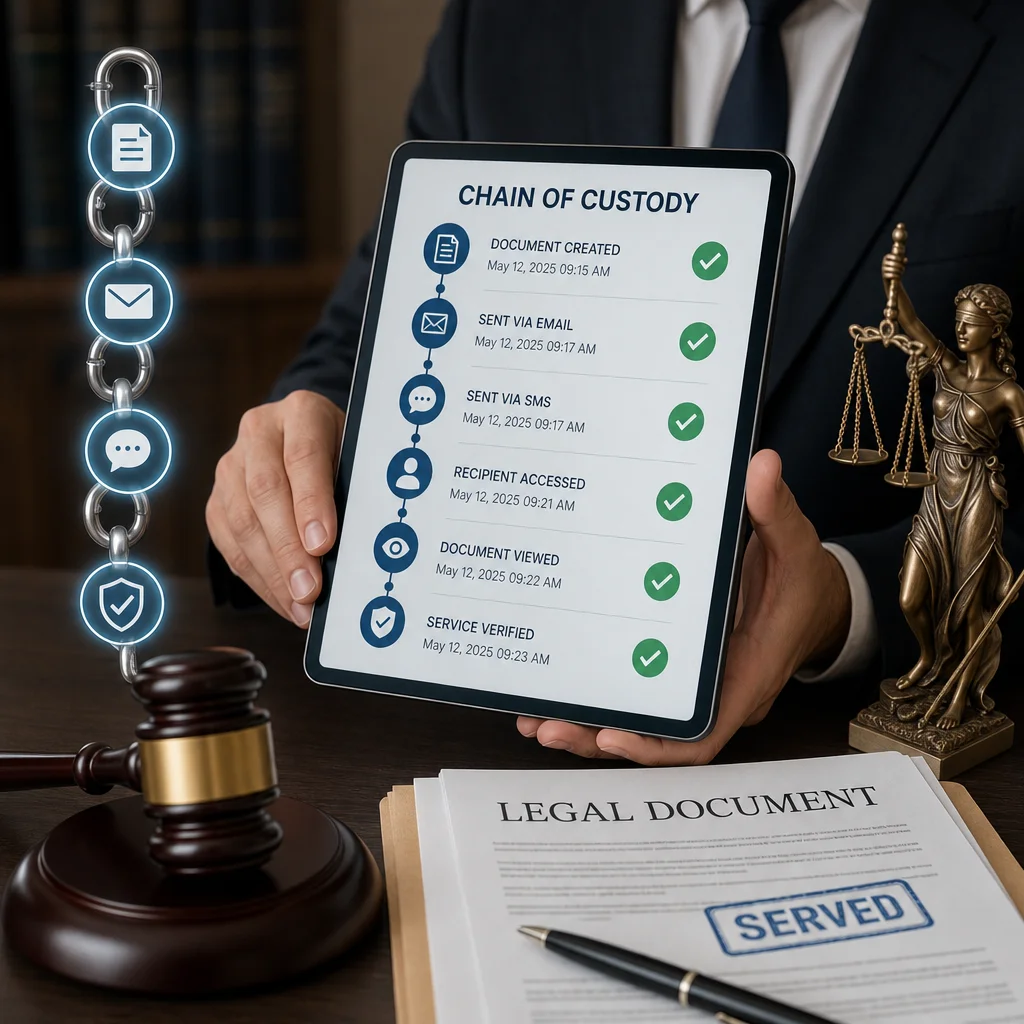
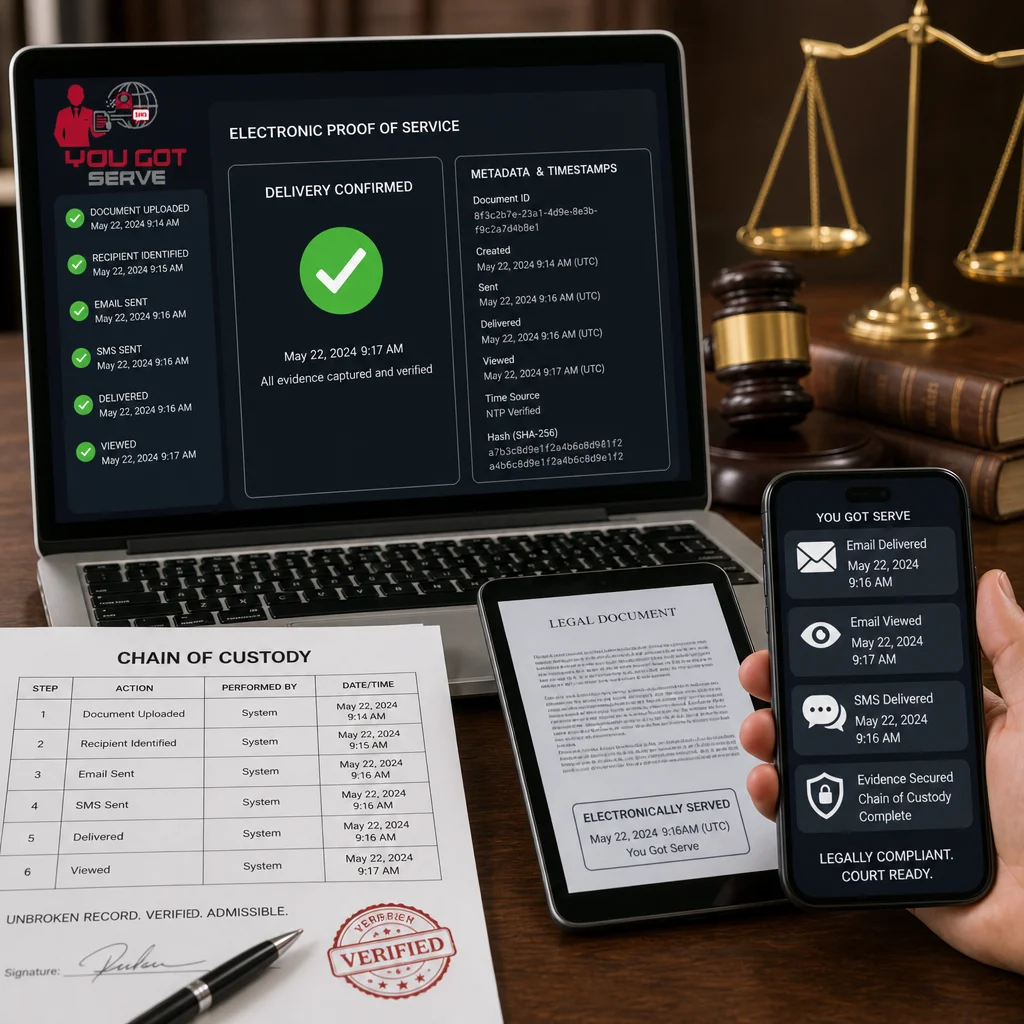
    Chain of custody begins the moment you upload your documents to your service platform. Every step from that point forward must be recorded, timestamped, and preserved: when the document was uploaded, which recipient contact information was used, when each notification was dispatched, whether it was delivered, when the recipient accessed it, and what verification data was captured.

    A fragmented record damages your credibility. If you cannot account for the document’s location and status at every stage, opposing counsel will exploit the gap. Courts expect a seamless narrative. You generated the document, secured it, sent it through a reliable channel, received confirmation of delivery, and captured evidence of receipt.

    Our platform creates this unbroken record automatically. Each document is assigned a unique identifier and tracked from upload through final access. The system records every notification attempt, delivery status, and user interaction. When you need to present evidence in court, you can download a comprehensive activity log that shows exactly what happened and when. No guesswork. No gaps.

    Metadata and Timestamping as Critical Verification Elements

    Metadata is the detail layer that transforms a simple receipt into credible evidence. Timestamps alone matter, but they gain weight when paired with additional data points: the IP address of the device accessing the document, the approximate location of access, the exact time of access, and the duration of the document viewing session.

    Courts increasingly expect this level of precision. A timestamp paired with geolocation data and viewing duration creates a robust authentication profile. Together, these elements form a narrative that is difficult to dispute: the document was sent to this number at this time, a device at this location opened it using the unique access code, and the recipient engaged with the content.

    We embed end-to-end encryption and timestamping throughout the notification cycle. Every message transmitted, every access attempt, and every verification action is dated and logged. This metadata becomes the backbone of your proof of service documentation.

    How You Got Serve Addresses Authentication Gaps

    We designed our platform specifically to close the authentication vulnerabilities that plague traditional service methods. Our multi-channel notification system allows you to enter up to three email addresses and three phone numbers per recipient. Daily automated notifications cycle through these contact points over your chosen timeframe: either a 60-day service for $350 or a 90-day service for $500.

    This persistent outreach approach creates documented evidence of repeated attempts to reach the recipient. A single failed email means little; a series of unopened emails paired with bounced SMS messages and an eventual successful document access through a verified geolocation creates a compelling narrative.

    We also offer investigative assistance when you lack sufficient contact information. If a recipient has moved or their phone number is outdated, our available investigative services help locate current contact details. This capability means you are not forced into expensive newspaper publication or abandoned service attempts.

    Multi-Channel Notification Trails: Creating Documented Proof

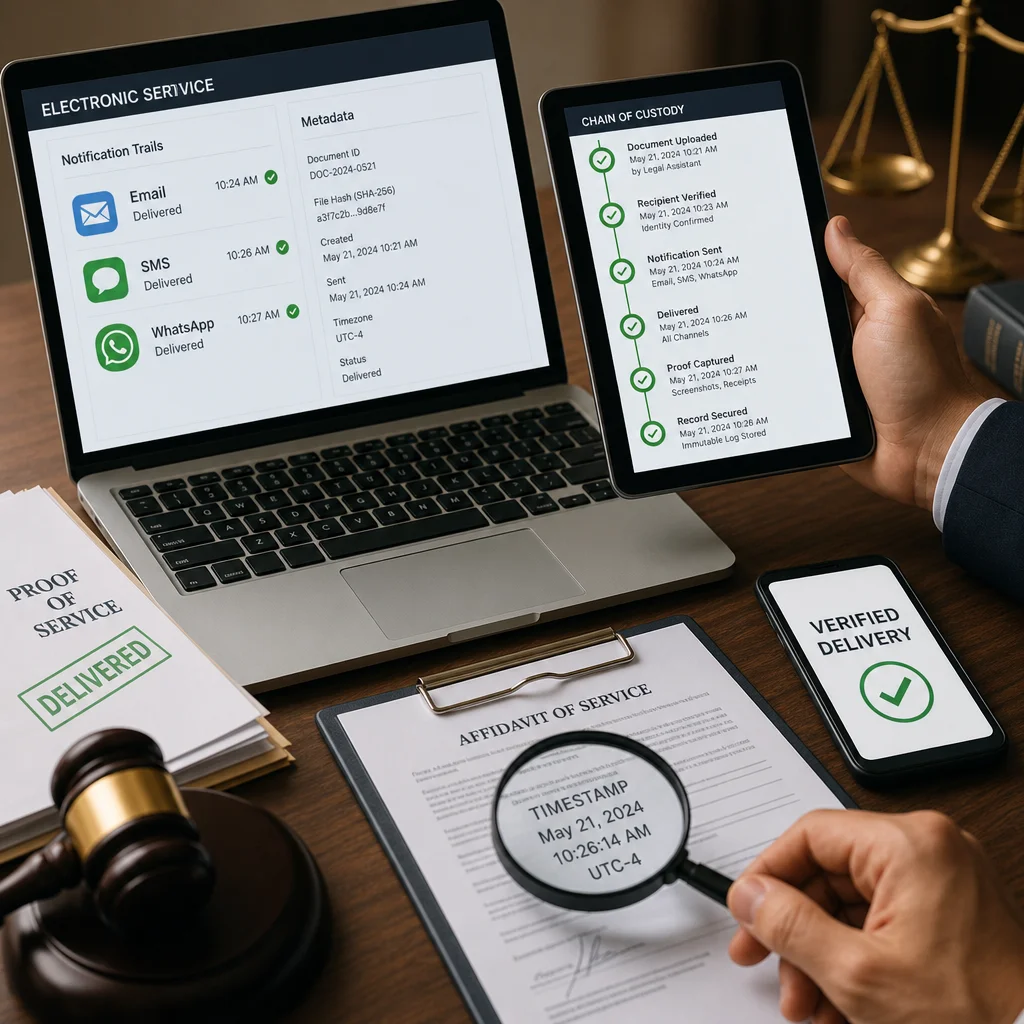
    A notification trail across email, SMS, and WhatsApp (where available) is far more persuasive than a single channel attempt. Each channel carries its own proof of delivery metadata. Email systems log delivery, bounce notifications, and (sometimes) read receipts. SMS carriers timestamp message dispatch and delivery to the handset. WhatsApp confirms message delivery and read status.

    When a recipient ignores email but responds to SMS, or vice versa, that diversity of channel usage demonstrates active receipt and engagement. Courts view multi-channel notification as a best practice precisely because it reduces the possibility of missed communication.

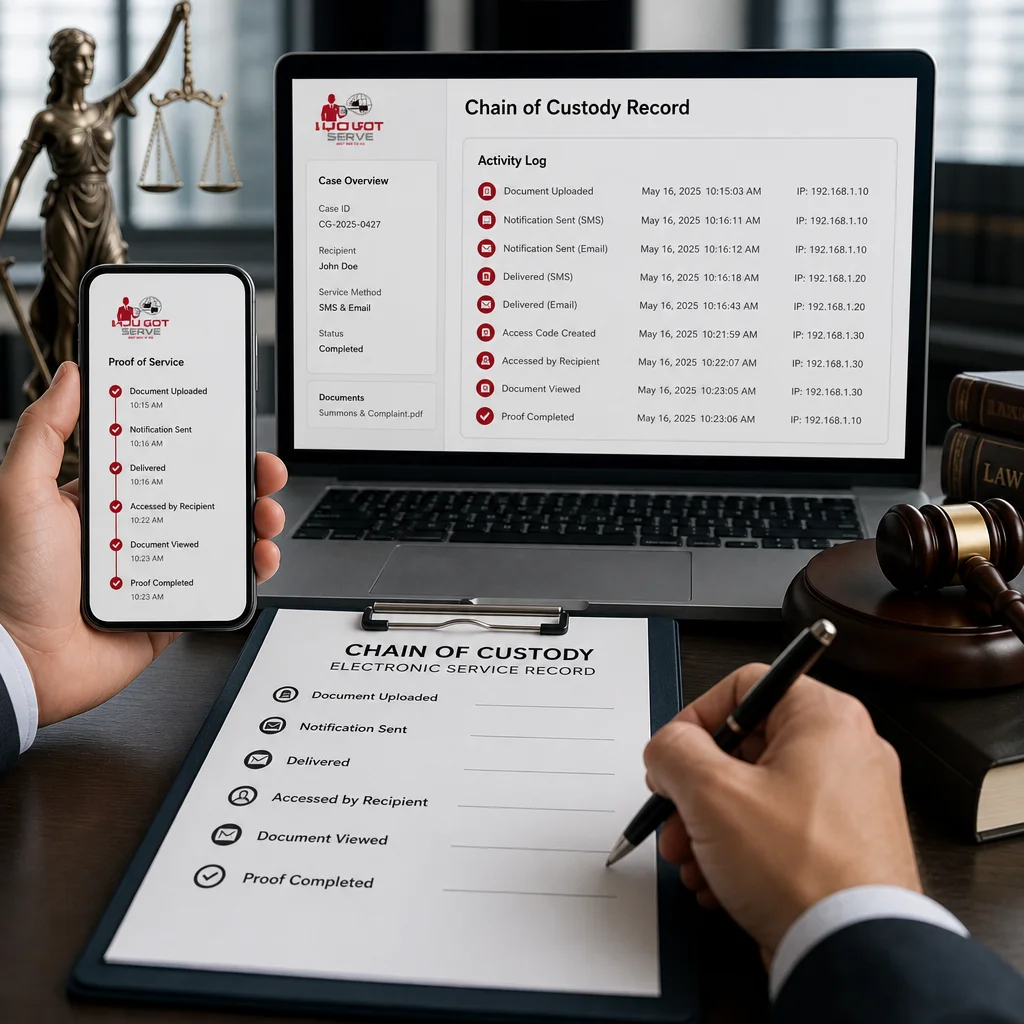
    Your system should organize these notification trails into a coherent record. Our platform consolidates all activity across channels into a single dashboard and downloadable report. You can see at a glance which channels succeeded, which failed, when access occurred, and what verification data was captured. This organization is critical when you present evidence to a court.

    Secure Code Access and Recipient Verification Features

    Recipients should never access your documents without proving their identity. A secure, unique access code tied to a specific recipient and a specific document set prevents impersonation and creates a clear record of intentional engagement.

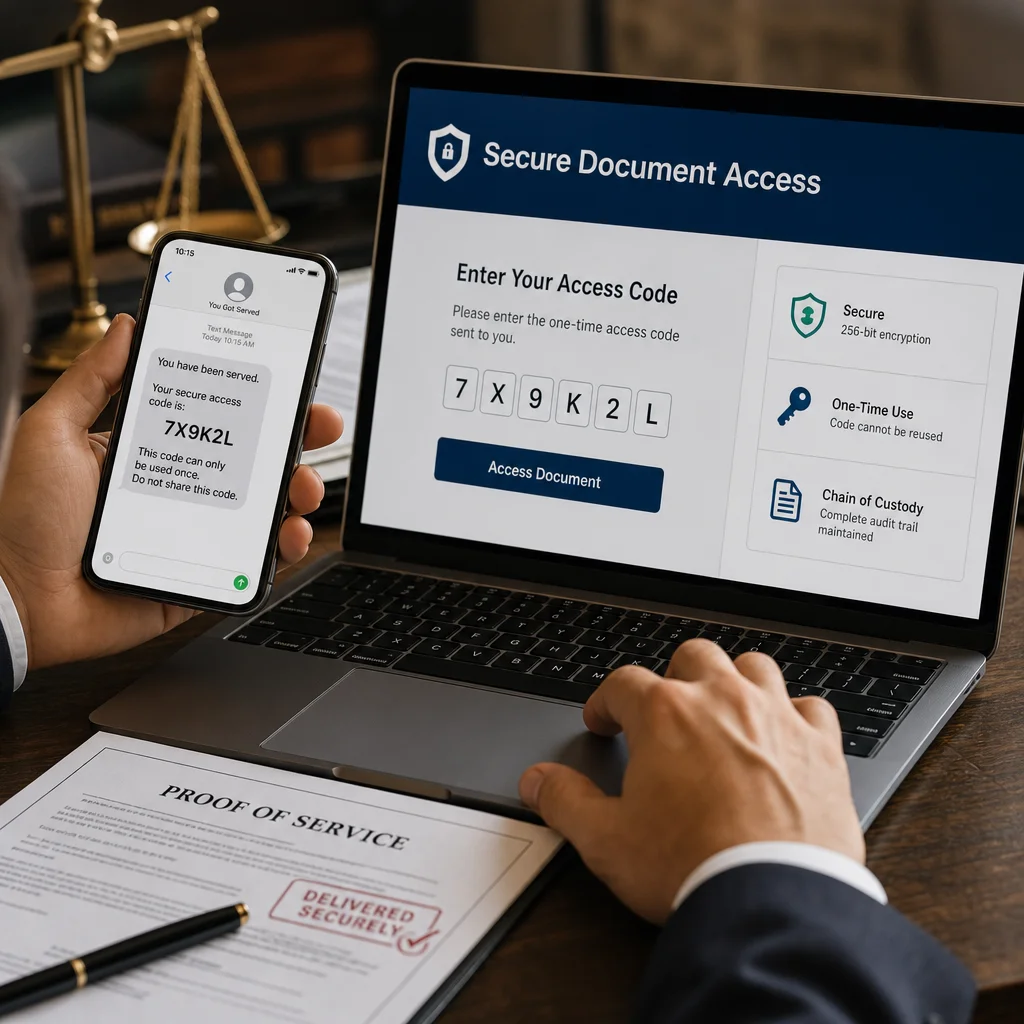
    Our platform generates a unique one-time access code for each recipient. To view the documents, they must provide this code. This requirement serves two purposes: it ensures only the intended recipient can access the documents, and it confirms that the recipient took an intentional step to retrieve the materials, not accidentally stumbled upon them.

    This code-based access mechanism is a cornerstone of your authentication strategy. It creates an affirmative act of receipt that courts recognize as credible.

    Geolocation and Selfie Capture for Enhanced Authentication

    Geolocation data adds another layer of verification. When a recipient accesses their documents, our platform can capture the approximate geographic location of the device. This information is particularly valuable if the defendant’s whereabouts are disputed or if they claim they were never reached.

    Selfie capture (where available and appropriate) provides even stronger proof of recipient identity. A verified photograph of the person accessing the documents creates visual confirmation that the intended party, not a proxy or third party, engaged with your service materials.

    Neither geolocation nor selfie capture alone proves service, but combined with timestamping, access codes, metadata, and a documented notification history, they form a comprehensive authentication profile that courts recognize as thorough and credible.

    Comprehensive Activity Logs and Service Status Tracking

    Your proof of service is only as strong as your ability to document it. From the moment you initiate service until the recipient accesses the final document, every action should be logged and timestamped.

    Our activity logs capture notification dispatch times, delivery confirmations, access attempts, document viewing duration, geolocation data, and any verification confirmations. Your account dashboard displays a real-time service status for each recipient: Pending (documents sent, awaiting access) or Delivered (recipient has accessed documents using their unique code).

    When you need to document tracking, you can export a complete chronological report suitable for filing with the court or presenting to opposing counsel. This level of detail transforms electronic service from a risky proposition into a methodical, auditable process.

    Best Practices for Organizing and Presenting Your Digital Evidence

    When the time comes to present your proof of service to a court, organization and clarity matter as much as completeness. Begin by creating a cover summary: a one-page narrative of your service efforts, the contact information used, the methods employed, and the outcome. Then attach your detailed activity log in chronological order.

    Highlight key data points in your presentation. Draw the court’s attention to the notification timeline, the number of contact attempts, the successful delivery event, any verification data, and the recipient’s access confirmation. Use clear headings and page references so the judge can quickly locate specific evidence.

    Before filing, check local court rules for electronic evidence formatting requirements. Some jurisdictions require specific file formats, metadata preservation, or declaration language. Align your presentation with these requirements to avoid procedural objections.

    Electronic service works when your platform is built for authentication from the ground up. You need a system that captures every notification touchpoint, preserves metadata, generates timestamped activity logs, enables recipient verification, and presents all evidence in a court-ready format.

    We designed You Got Serve specifically for this purpose. Our combination of persistent multi-channel notification, secure code-protected document access, available geolocation and selfie verification, detailed activity logging, and legal validity support distinguishes us from basic email or SMS tools. You get 60- or 90-day notification cycles, investigative assistance when contact information is incomplete, and comprehensive documentation that courts recognize as credible.

    Whether you are a legal professional serving a difficult-to-locate defendant or a litigant managing your own case, You Got Serve provides the infrastructure to authenticate your digital evidence and move your case forward. Our platform turns electronic service from a compliance risk into a documented, auditable process. That confidence is what the smarter way to serve looks like.

  • 7 Best Audit Trail Features for Legal Document Service Tracking

    7 Best Audit Trail Features for Legal Document Service Tracking

    1. Timestamped Delivery Notifications: Know Exactly When Recipients Receive Documents

    Every SMS and email we send records the exact moment of transmission. More importantly, we capture when the recipient actually reads or accesses your document. This timestamp is precise to the second and cannot be altered after the fact.

    Why this matters: A judge needs to know not just that you tried to serve someone, but when your attempt succeeded. Timestamped delivery proves you cleared the hurdle. If a defendant claims they never received notice, your audit trail shows otherwise.

    Each notification carries metadata that includes:

    • Exact delivery time (down to seconds)
    • Recipient phone number or email address
    • Delivery method (SMS, email, or WhatsApp)
    • Carrier or email server confirmation
    • Document access confirmation

    When you need to file an affidavit of service or respond to a motion contesting notice, these timestamps become your foundation. We maintain this data throughout your entire notification campaign, which typically runs 60 or 90 days. That means you can show a judge not just one attempt, but a complete history of when and how you reached the recipient.

    Your next step: Review your local court rules on electronic service to confirm whether timestamped delivery notifications satisfy your jurisdiction’s proof-of-service requirements.

    2. Recipient Verification Through Geolocation Data: Confirm Who Accessed Your Service

    Serving the right person matters as much as proving you served them. We offer optional geolocation capture when a recipient accesses their secure document portal. This creates a location record showing where the person was at the moment they opened the court documents.

    Geolocation data adds a layer of verification that other methods cannot match. If you served three phone numbers or email addresses for the same defendant, geolocation helps confirm which contact point reached the actual person. This is especially useful when serving hard-to-locate defendants or when multiple contact attempts go to different associates or outdated contact information.

    The geolocation record includes:

    • GPS coordinates (latitude and longitude)
    • City and state/country
    • Timestamp of access
    • Device type used to open the document
    • Network details if available

    This feature addresses a common litigation problem: uncertainty about whether the right person received notice. With geolocation, you remove guesswork. You can show that the specific individual opened the documents from their known location or workplace.

    Your next step: Confirm with your attorney or court whether geolocation verification is admissible in your jurisdiction and whether recipient consent is required before capture.

    3. Document Access Activity Logs: Track Every Click and Retrieval Attempt

    Beyond knowing when a document was accessed, we track what the recipient did after opening it. Our activity logs record every click, every page viewed, and every attempt to download or print the document. This creates a detailed picture of engagement with the served documents.

    An activity log might show: recipient opened the document on Monday at 2:47 PM, scrolled to page 3, paused for eight minutes, then closed the portal. Later that week, they returned and downloaded the full PDF. This behavior demonstrates not just receipt, but actual review of the court documents.

    Why courts care: Activity logs defeat claims of accidental or incidental receipt. They prove the defendant intentionally accessed the documents and had opportunity to review them. This is powerful in default judgment proceedings or when challenging motions claiming lack of notice.

    Our logs capture:

    • Each login and logout time
    • Pages accessed and scroll depth
    • Download attempts
    • Print attempts
    • Time spent on each page
    • Device and browser information
    • Network details

    This granular data transforms a simple “yes, they opened it” into “yes, they deliberately reviewed it multiple times and had full opportunity to respond.”

    Your next step: Document your platform access logs from day one of service. Export and preserve them before filing any affidavit of service.

    4. One-Time Secure Access Codes: Maintain Complete Chain of Custody Documentation

    Recipients access their served documents through a unique, one-time access code we generate for each recipient and each service attempt. This code is sent via SMS, email, or WhatsApp and cannot be reused or shared. Once the recipient enters their code, they gain access to the secure document portal for a set period.

    This approach solves two critical problems. First, it proves the specific person who received the notification actually opened the documents. Only someone with access to that phone or email could input the code. Second, it creates an unbreakable chain of custody. The code ties the access event to the specific recipient and the specific notification attempt.

    Unlike links that can be forwarded or accessed by anyone, one-time codes ensure that only the intended recipient can view your served documents. If opposing counsel later argues they never received notice, you can point to the code being entered correctly and documents accessed under that unique code.

    Our one-time code system also provides:

    • Unique code per recipient per notification cycle
    • Automatic code expiration after a set period
    • Access denial for incorrect code entries (with logging)
    • Separate codes for different document packages
    • Code entry history tied to timestamps

    This feature is particularly valuable when serving multiple defendants or when some recipients claim they never accessed the portal.

    Your next step: Preserve records of the code distribution and all failed/successful code entry attempts for each recipient in your case file.

    5. Daily Notification History: Create Persistent, Court-Ready Service Records

    We don’t send your documents once and hope for the best. Our platform supports continuous notification cycles spanning 60 or 90 days. Each day (or at intervals you set), recipients receive reminders via SMS, email, or both. This persistence creates a documented history that transforms your service record.

    Why persistence matters: Many defendants claim they missed initial notice due to spam filters, deleted emails, or overlooked messages. With daily notifications over months, that excuse becomes untenable. You can show the court that the defendant received 45, 60, or 90 separate attempts to notify them. Missing one is plausible; missing all of them is not.

    This approach also satisfies jurisdictions that require “diligent” or “reasonable” service efforts. Instead of arguing that one email attempt was sufficient, you demonstrate months of sustained effort across multiple channels. Judges see this as thorough, intentional, and court-compliant.

    Your notification history log shows:

    • Every notification sent (date, time, method)
    • Delivery confirmation for each attempt
    • Which attempts were opened and when
    • Which attempts bounced or failed
    • Total count of successful and failed attempts

    Courts increasingly accept this persistent electronic notification as a valid substitute for newspaper publication or repeated certified mail attempts. How the service works explains our notification cycles in detail.

    Your next step: Check your local court rules to confirm the acceptable frequency and duration of notification attempts in your jurisdiction.

    6. Automated Metadata Capture: Build Comprehensive Electronic Service Proof

    Metadata is the data about data. Every email contains metadata (sender, recipient, server details, authentication records). Every SMS contains metadata (originating number, network timestamp, carrier confirmation). We capture and preserve all of it automatically.

    This metadata becomes your documentary foundation when you need to prove service in court. Instead of relying on your word or a generic receipt, you submit technical evidence generated by communication systems themselves. Judges recognize this as inherently trustworthy because it comes from the platforms that sent and received the messages.

    Our automated metadata capture includes:

    • Email headers (SMTP details, SPF/DKIM authentication, relay information)
    • SMS origination and delivery confirmation from carriers
    • IP addresses and device identifiers
    • Authentication tokens and encryption certificates
    • Notification attempt sequence and failure reasons
    • Document access encryption and decryption logs

    This layer of technical documentation is what separates amateur electronic service from court-defensible service. When an opponent challenges your proof of service, detailed metadata allows you to answer every question about how, when, and to whom your documents were sent.

    Your next step: Request that your platform provider export metadata in formats compatible with your court’s document submission requirements (typically PDF or certified PDF).

    7. Real-Time Service Status Tracking: Monitor Pending and Delivered Statuses Instantly

    Throughout your notification campaign, you need current information about who received documents and who did not. Our real-time dashboard shows the status of every recipient and every notification attempt as it happens.

    Instead of waiting days or weeks to learn whether service succeeded, you see results immediately. A defendant opens their code at 3 PM on Tuesday? You know it within seconds. An SMS fails to deliver? The dashboard shows the failure reason (invalid number, network rejection, etc.) right away. This real-time visibility lets you adjust your strategy mid-campaign if needed.

    Status tracking includes:

    • Delivery confirmation for each attempt
    • Access confirmation (when recipient opens documents)
    • Failure reasons and retry schedules
    • Recipient engagement timeline
    • Campaign progress toward 60 or 90-day completion

    Real-time tracking is also essential when you are working under tight court deadlines. If a defendant moves to dismiss for lack of service, you can run your audit trail report immediately and file it the same day. You do not wait for manual verification or postal service timelines. Your proof is already digitally documented.

    Document delivery tracking allows you to monitor service status from start to finish without administrative overhead.

    Your next step: Log into your service account daily during active campaigns to catch delivery failures early and contact recipients through alternate channels if needed.

  • Tamper-Evident Chain of Custody in Legal Document Service

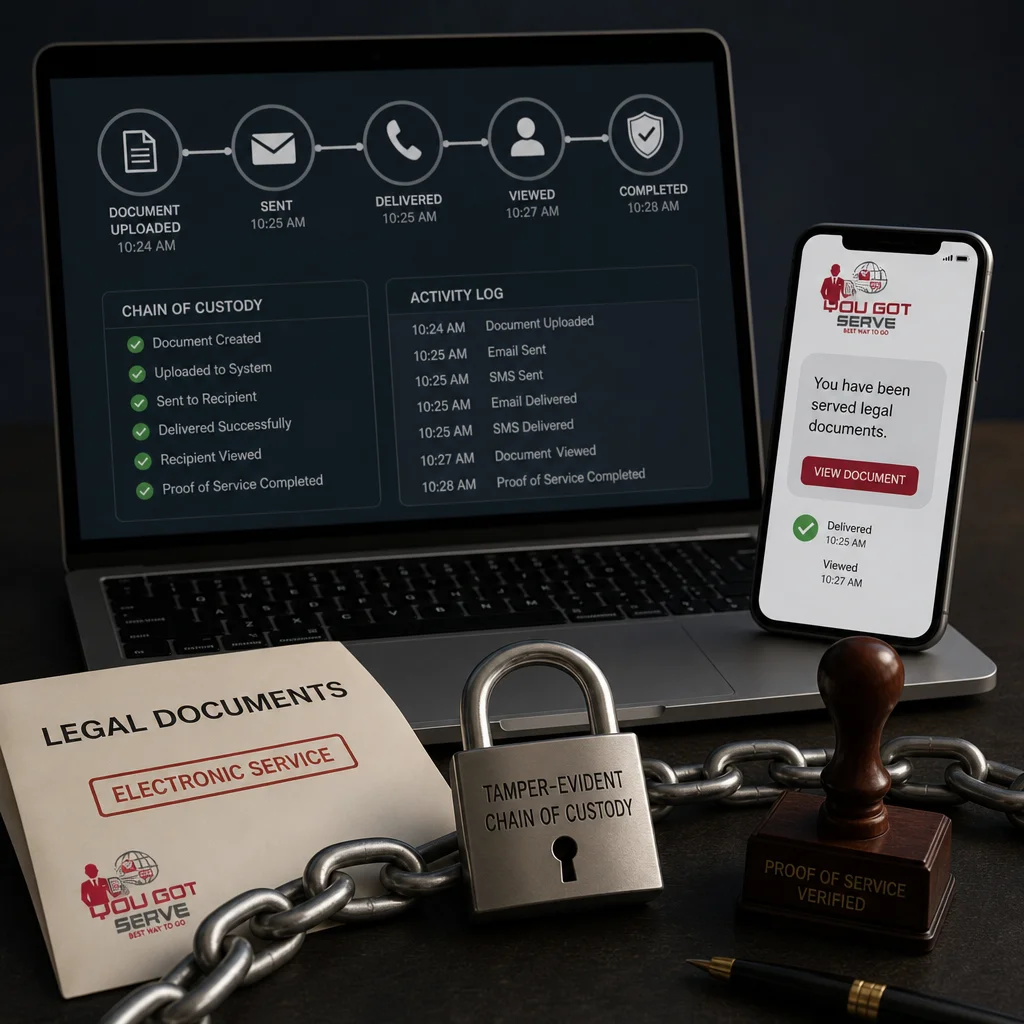
    Tamper-Evident Chain of Custody in Legal Document Service

    A judge won’t accept proof of service unless the chain of custody is clear and unbroken. Every step from document creation through recipient notification must be documented, timestamped, and verifiable. Without this trail, even a valid service attempt can be challenged in court, forcing you to restart the entire process and delaying resolution.

    Chain of custody in legal service serves a practical purpose: it proves that the document reached the intended recipient and that no one altered it along the way. When courts review proof of service, they’re checking whether the person serving the document followed proper procedures, whether the recipient actually received it, and whether the documentation can withstand scrutiny from the opposing party.

    Traditional methods create gaps. A process server hands off a document, gets a signature, and files a sworn affidavit. But what if the recipient disputes it? What if records are lost or the timeline becomes unclear? Electronic service platforms that log every action, timestamp every event, and preserve a complete record eliminate these weak points and give courts the evidence they expect.

    Action for today: Review your current proof-of-service documentation. Identify any steps where the chain of evidence becomes unclear or relies on memory rather than contemporaneous records.

    The Risks of Traditional Physical Service Methods

    Physical service of process creates multiple vulnerability points where chain of custody can break down. A process server may attempt delivery, leave a note, or hand off the document to someone at the residence. Each handoff introduces uncertainty: Was it the right person? Was it properly received? Can you prove it happened at a specific time?

    Sworn affidavits provide written confirmation, but they document only the server’s account of what occurred. If a recipient claims they never received the document, it becomes a “he said, she said” dispute. The court has no independent verification, no digital timestamp, and no automatic notification history to reference.

    Newspaper publication presents even larger compliance and evidence gaps. You publish a notice, but you cannot verify that the intended recipient ever saw it. Court rules typically require this method only after other service attempts fail, yet the proof of service relies on the newspaper’s affidavit rather than actual recipient engagement.

    Skip tracing and repeated physical attempts consume time and money. If you cannot locate the recipient, you must hire investigators, attempt service multiple times, and wait weeks for a single process server interaction. Each failed attempt creates more paperwork and less certainty about whether you’ve truly exhausted all reasonable options.

    Action for today: Document any service attempts in your current cases where chain of custody felt weak or where the recipient later disputed receiving notice.

    How Electronic Service Strengthens Evidence Integrity

    Electronic service creates an automatic, continuous record that physical methods cannot match. When a document is delivered via SMS, email, or other digital channels, the system records the exact moment of transmission, any delivery confirmation, and any recipient action that occurs afterward.

    Unlike a single point-in-time event (like a process server’s visit), electronic service can include multiple notification attempts across days or weeks. If a recipient misses an initial email, an automated follow-up SMS can be sent. Each attempt is logged with timestamp and delivery status. The recipient cannot later claim they never had opportunity to receive notice.

    Verification features add another layer. When a recipient accesses the document using a secure access code, the system captures the timestamp of that access. Some platforms also verify identity through geolocation, selfie capture, or other authentication methods. The result is a documentary record that shows not only that the document was sent, but that a specific person actually opened it and accessed its contents.

    Digital records also preserve integrity. Paper documents can be lost, misfiled, or altered. Electronic logs are stored in secure servers with encryption and backup systems. The court receives a complete transcript of all service activities, not a summary written days after the fact.

    Action for today: Consider whether your jurisdiction permits electronic service and what verification features courts in your area expect to see.

    YouGotServe’s Multi-Layer Verification Approach

    We designed our platform to build chain of custody through multiple verification points. Our multi-channel delivery system allows up to three email addresses and three phone numbers per recipient, so you capture every reasonable way to contact them.

    Notifications can continue daily through a 60- or 90-day campaign, creating a persistent, documented history of all attempts to reach the recipient. Unlike one-time delivery, this approach shows courts that you made good-faith efforts across an extended period. If the recipient claims they missed the first notice, the log shows they received 15 subsequent attempts.

    We include investigative assistance when you lack sufficient contact information. Our investigative services help locate recipients and gather verified phone numbers and email addresses before service even begins. This addresses one of the most common chain-of-custody problems: serving the wrong person or an invalid address.

    Recipients access secure documents using a unique one-time access code. This code-based protection means that only the intended recipient can open the document, and we capture the exact moment they do. The access attempt itself becomes part of the chain of custody.

    Action for today: Gather all known contact information for your recipient and identify gaps where investigative help might improve service success.

    Secure Document Access and Recipient Verification

    A secure portal eliminates the risk that documents are intercepted or accessed by unauthorized parties. Recipients log in with their unique code, view the document, and the system records their access. No email attachment floats around unsecured; no document sits in a publicly accessible folder.

    We support end-to-end encryption and timestamping so that the recipient’s access creates a permanent, unchangeable record. From a chain-of-custody perspective, this matters because it proves the specific person received and opened the document at a specific moment in time.

    Optional verification features allow you to strengthen the evidence even further. Recipients can provide geolocation data showing their physical location at the time of access. Selfie capture verifies identity before document access is granted. Document-access activity logs show whether the recipient read the entire document, how long they spent on it, and whether they downloaded or printed it.

    These verification options vary by case and jurisdiction. Some courts expect them; others do not require them. The flexibility lets you build the level of evidence your specific court rules and circumstances demand.

    Action for today: Check your local court rules to see whether any verification features are expected or prohibited in proof-of-service documents.

    Automated Timestamping and Activity Logging

    Every action on our platform generates an automatically timestamped record. The system notes when notifications are sent, when they are delivered, when access codes are created, when recipients view documents, and when follow-up attempts occur.

    Manual record-keeping introduces error and inconsistency. A process server might note the time of delivery as “afternoon” or “around 3 PM.” Digital logs show the exact second: 2:47 PM EST on March 15, 2026, confirmed by the server’s atomic clock. Courts expect this precision because it removes ambiguity and demonstrates that you took care to document your actions contemporaneously.

    The log also captures failed delivery attempts. If an SMS bounces because the number is invalid, that failure is recorded. If an email bounces, that bounce is logged. If a recipient doesn’t open an access code after five days, that inaction is noted. From a chain-of-custody standpoint, negative results are as important as positive ones because they show you attempted service through every available channel.

    Activity logs also prevent tampering concerns. Because every action is recorded automatically and stored on secure servers, neither you nor the recipient can later add events or alter timestamps. The court reviews the log exactly as it was created, without any opportunity for dispute about what happened or when.

    Action for today: Review document tracking features available in your service platform to ensure you can produce a complete activity log for court review.

    Building a Complete Documentary Record

    Proof of service is only valuable if it tells a complete, coherent story. That story should answer these questions: Who was served? What document was served? When was service attempted? Which contact methods were used? Did the recipient receive and access the document? What is the timestamp and verification?

    Our platform generates a comprehensive report that addresses all these elements in one place. Rather than assembling affidavits, emails, and delivery confirmations from multiple sources, you receive a single document that shows the entire service history from start to finish.

    This consolidated approach serves several purposes. First, it’s faster and less error-prone than manual compilation. Second, it presents a unified narrative that courts can review quickly without flipping between multiple documents. Third, it demonstrates professionalism and thoroughness, which strengthens your credibility with the court.

    The report also includes all supporting documentation: notification copies, recipient access details, geolocation and identity verification if applicable, and the full activity log. Courts can drill down into specifics if they wish, but they have the summary they need at a glance.

    Action for today: Outline what proof of service your current cases require and compare it to what your existing process generates.

    Compliance Support for Your Jurisdiction

    Electronic service rules vary significantly by court system. Federal courts, state courts, and different state practice rules all have different requirements for which methods are permitted, what verification is necessary, and how proof must be documented.

    We design our platform to support compliance with local rules, but the ultimate responsibility for checking jurisdictional requirements rests with you. Before relying on any electronic service method, verify that your specific court permits it, understand what verification elements the court expects, and confirm that your service approach meets those standards.

    Our team can help you understand which features align with your jurisdiction’s rules, but you should also consult your court’s procedures or speak with local counsel familiar with electronic service in your area. Rules change, and what was acceptable last year may have been updated.

    When electronic service is permitted, our multi-channel approach typically satisfies even strict jurisdictions because it demonstrates thorough, persistent, and well-documented attempts to reach the recipient. But “permitted” and “expected” are different things, so do your homework first.

    Action for today: Contact your court clerk or review your local court rules to determine whether electronic service is permitted and what documentation requirements apply.

    International Service and Cross-Border Considerations

    Serving documents across borders introduces additional complexity. International treaties like the Hague Service Convention govern how service can occur in signatory countries. Electronic service is increasingly accepted internationally, but acceptance still varies by country and court system.

    We support electronic notifications internationally where technically available and legally appropriate. This means SMS and email delivery can reach recipients in many countries, but you must verify that the specific country and court system where the recipient is located accepts electronic service.

    Some jurisdictions require that electronic service be combined with other methods, like mail service or judicial notification. Others prohibit purely electronic service for certain types of cases. A few countries have not yet developed clear rules on electronic service, creating uncertainty.

    Our investigative services can help identify the recipient’s location and proper service procedures under applicable treaties and local laws. Before attempting international service, research the specific requirements of the country involved or consult international law counsel.

    Action for today: If any recipients are located outside the United States, identify which country and determine whether electronic service is permitted there.

    Investigative Services for Hard-to-Locate Recipients

    One of the most common chain-of-custody problems is serving an incorrect address or phone number because you do not have current contact information. Our investigative services address this directly by locating recipients and gathering verified contact details before service begins.

    Skip tracing uses public records, prior business filings, social media, property records, and other sources to find current addresses and phone numbers. This investigative work reduces the risk that your service attempt misses the recipient entirely and provides documented evidence that you made thorough efforts to locate them.

    When service attempts fail despite good contact information, investigation can also identify why. The recipient may have moved, changed phone numbers, or intentionally avoided contact. Documentation of these failures strengthens your proof of service because it shows courts that you pursued every reasonable option.

    Strong chain of custody starts with accurate recipient identification. Investing in investigative services upfront eliminates problems later and gives courts confidence that service was properly targeted.

    Action for today: If you cannot locate a recipient or lack current contact information, discuss investigative assistance options with our team.

    Implementing Tamper-Evident Workflows Today

    Start by identifying which of your cases qualify for electronic service under your jurisdiction’s rules. Not every case permits it, but many do. Those cases benefit immediately from electronic service’s chain-of-custody advantages.

    Next, gather complete contact information for each recipient. Email addresses, phone numbers, and physical location matter. If you lack this information, pursue investigative assistance to fill gaps before service attempts begin.

    Configure your notifications to use multiple contact channels and include verification features appropriate for your jurisdiction. A 60- or 90-day notification campaign with daily reminders creates the documented persistence that courts increasingly expect to see.

    Review the document tracking and reporting features of your service platform to ensure you can generate complete proof-of-service documentation. Test the system with a non-critical case first so you understand the workflow and reporting before using it on important matters.

    Finally, maintain communication with your court. If you are using electronic service methods your court has not previously seen, consider reaching out to the court clerk or filing an early notice so the court knows what to expect in your proof-of-service filing.

    Chain of custody is no longer about hoping a process server remembers what happened. Modern legal service creates automatic, continuous, tamper-evident records that stand up to scrutiny. We built YouGotServe to make this approach accessible and straightforward. Start today by reviewing your current service practices and identifying where electronic service with verified receipt tracking can strengthen your evidence and reduce delay.

  • Best Practices for Court-Admissible Electronic Service: Statutes, Case Law & Jurisdiction Guides

    Best Practices for Court-Admissible Electronic Service: Statutes, Case Law & Jurisdiction Guides

    Why Court Admissibility Matters: The Stakes of Improper Service

    Service of process stands as one of the most critical procedural requirements in civil litigation. A defendant’s constitutional right to notice and an opportunity to be heard depends on it. If service fails, judgments can be voided, appeals upheld, and entire cases dismissed regardless of the merits.

    Courts scrutinize service methods carefully. Traditional personal service once dominated, but electronic service has become legally viable in many jurisdictions when proper procedures are followed. The challenge lies in documenting that service was actually received and that you complied with all applicable rules.

    Improper service creates expensive problems. A judgment entered without valid service is vulnerable to challenge years later. Appellate courts regularly overturn decisions on service grounds alone. For attorneys and self-represented litigants alike, the cost of re-litigating a case because service was deemed insufficient far exceeds the investment in getting it right the first time.

    Court admissibility therefore requires three elements: (1) a service method authorized by statute or court rule, (2) compliance with procedural requirements in your jurisdiction, and (3) documentation proving the recipient actually received notice. Electronic service, when properly executed, can satisfy all three.

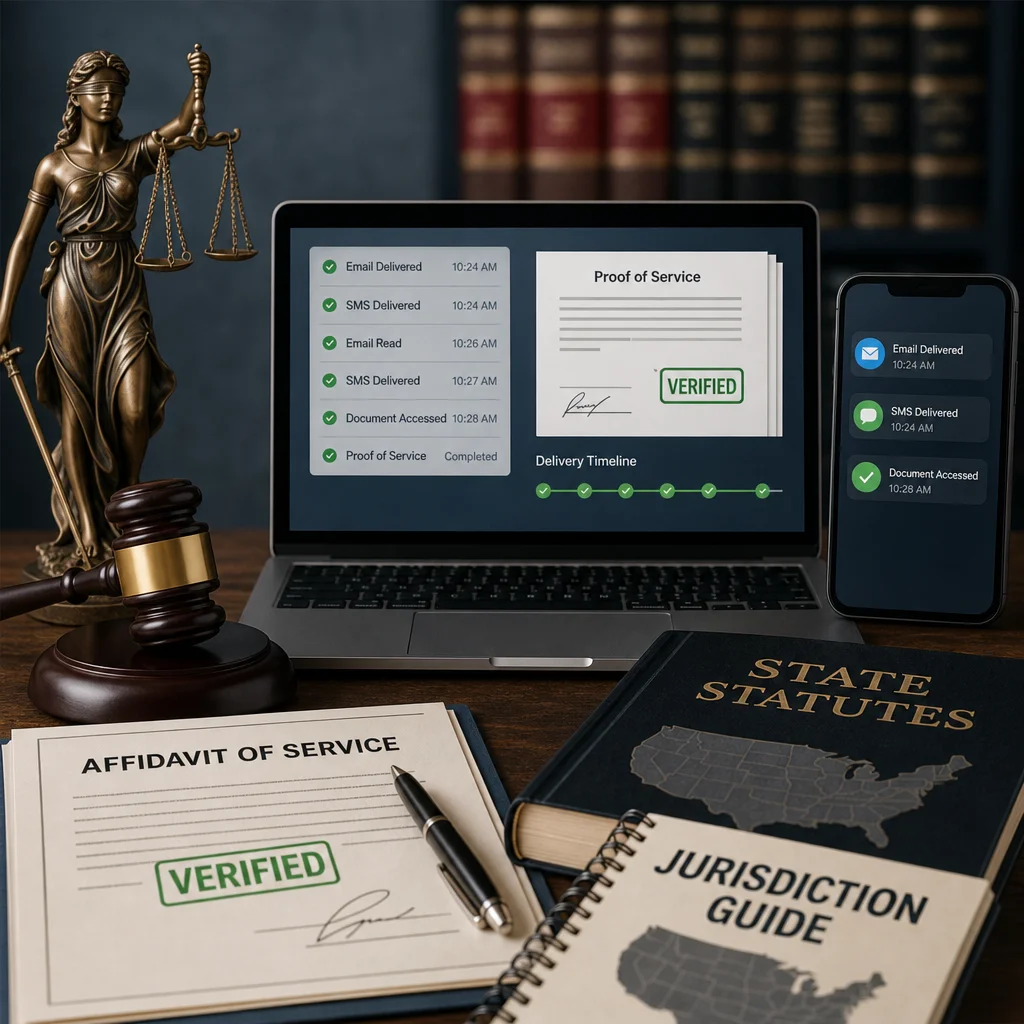
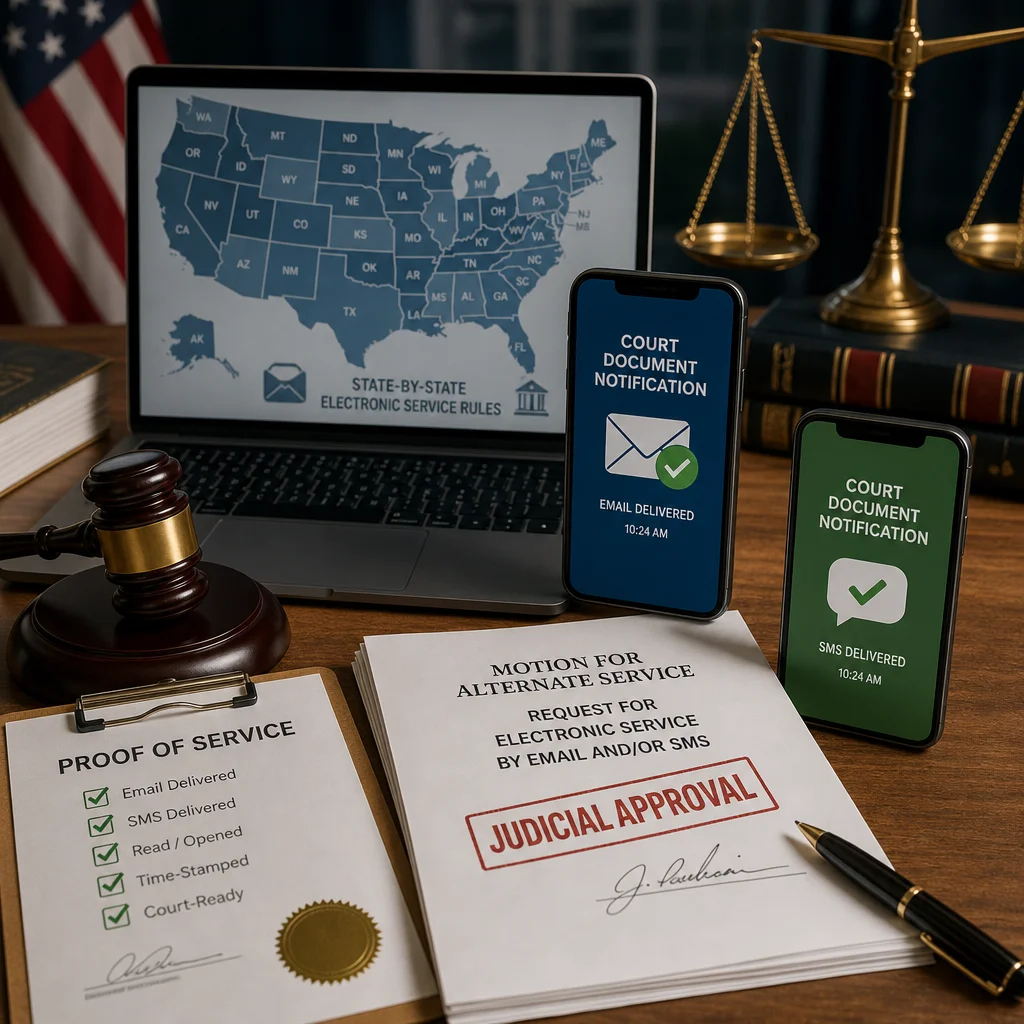
    State-by-State Electronic Service Statutes and Rules

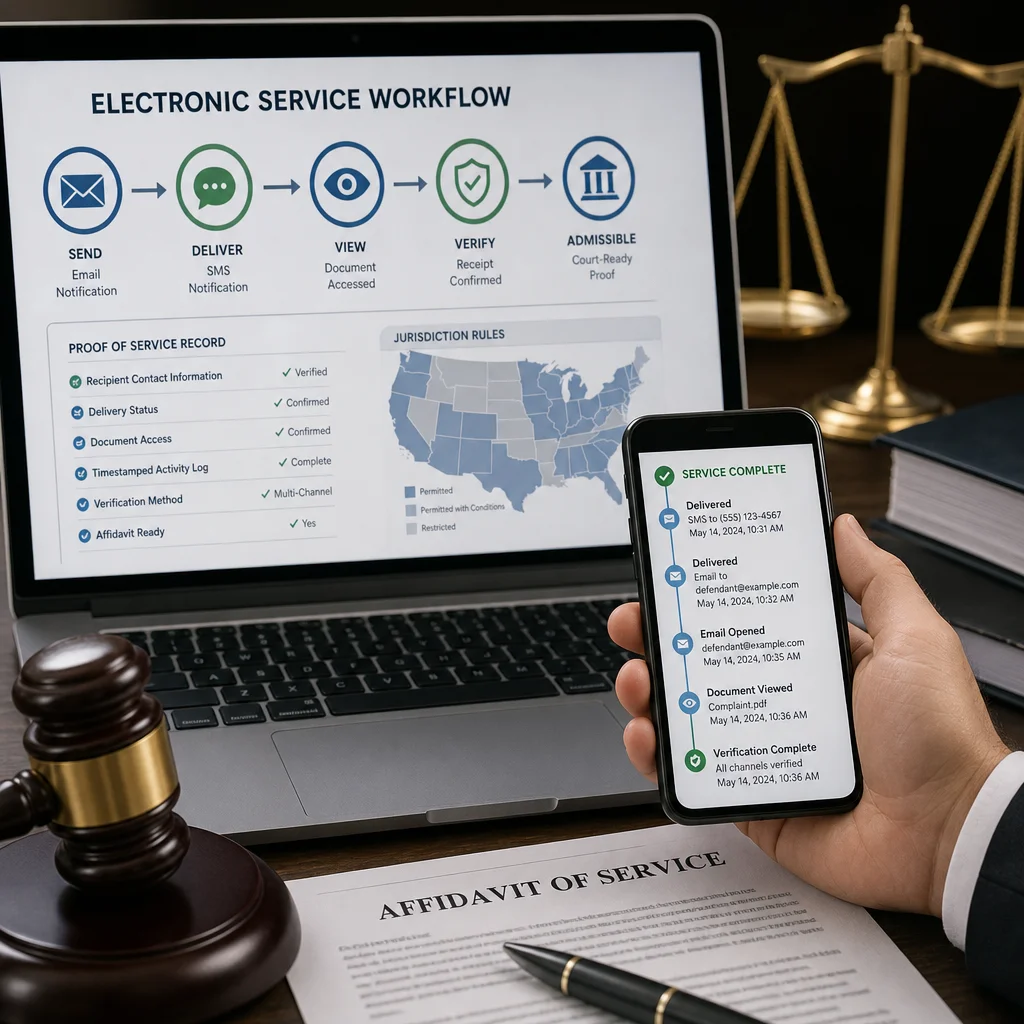
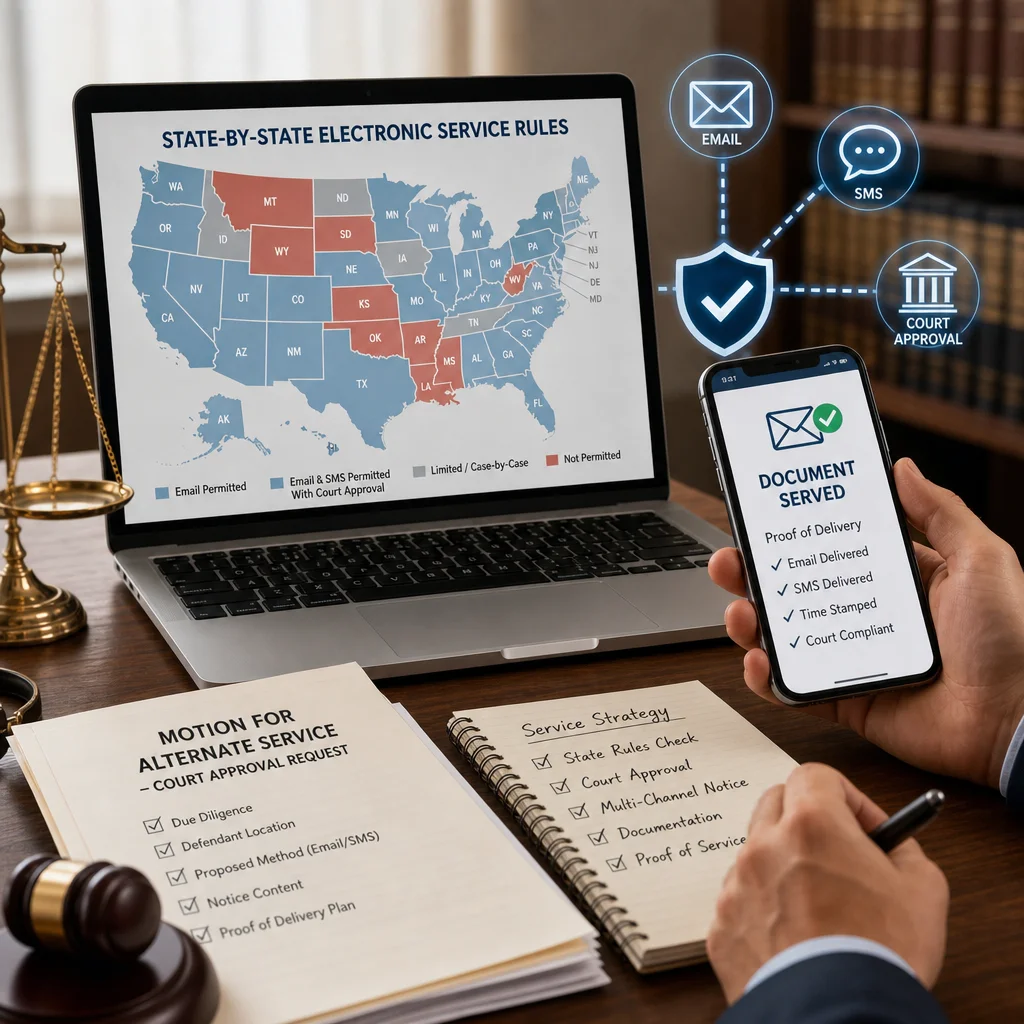
    Electronic service authority exists across all 50 states, though requirements vary significantly. Some states adopted broad electronic service rules years ago; others continue to narrow the circumstances under which email or SMS constitutes valid service.

    Federal courts follow Federal Rules of Civil Procedure Rule 5(b)(2)(E), which permits service by electronic means if parties consent or a court order authorizes it. Many state courts have adopted similar consent-based frameworks.

    State variations include:

    • Consent-based models: California, New York, and most states permit electronic service only when the recipient (or their attorney) consents. Consent must be documented.
    • Statutory authorization without consent: Some states like Texas and Florida permit electronic service to certain defendants without requiring prior consent, particularly in business or collection contexts.
    • Court approval models: Jurisdictions like Illinois and Massachusetts may require explicit court authorization before electronic service is permitted.
    • Default rules: Several states now treat email service as a default method when contact information is available, particularly in business disputes.

    The critical first step is identifying your specific jurisdiction’s statute or court rule. Rules of Civil Procedure sections 4, 5, or 305 typically govern service requirements. Local rules for your court often add additional specifications: file size limits, response time windows, or advance notice requirements.

    Before relying on electronic service, confirm that your target defendant falls within an authorized category (for example, business entities, attorneys, parties who consented, or defendants residing in another state). Check whether court authorization is needed. Document the rule or statute you relied upon in your service affidavit.

    Key Case Law Establishing Electronic Service Standards

    Judicial precedent reinforces statutory requirements and clarifies when electronic service is enforceable. Several landmark cases establish that electronic service can be constitutionally sufficient when properly documented.

    Sparks v. Republic National Life Insurance Co. (5th Cir.) established early that electronic notification can constitute adequate notice if it is reasonably calculated to reach the intended recipient. Modern courts apply this “reasonably calculated” standard to electronic means, meaning email or SMS service must reach a monitored address or number with meaningful likelihood.

    Courts have consistently held that proof of delivery matters enormously. In Casamayor v. Montanes (11th Cir.), the court emphasized that service is invalid absent reliable evidence the recipient was actually notified. Delivery receipts, read confirmations, or access logs strengthen admissibility significantly.

    More recent cases recognize multi-channel approaches. When a single method may fail, attempts through multiple channels (email plus SMS, for instance) increase the likelihood that notice reached the recipient and provide stronger documentary support for service.

    Jurisdictions differ on whether email alone suffices or whether supplemental methods are required. Some courts require SMS or phone notification in addition to email for difficult-to-locate defendants. Others permit email service but demand proof that the address was actively monitored.

    The consistent judicial theme is straightforward: credible evidence that the defendant actually received notice. Timestamps, delivery confirmations, and access records all support admissibility. Guesswork and unsupported claims do not.

    Building an Admissible Service Record with Multi-Channel Notifications

    Admissible service rests on documentation that the recipient had a genuine opportunity to receive notice. Courts recognize that single-attempt service (one email sent once) often fails to prove receipt. Multi-channel notification strategies reduce that risk and create a stronger evidentiary record.

    Our approach combines email, SMS, and WhatsApp notifications, allowing you to reach recipients across their most commonly monitored channels. You can enter up to three email addresses and three phone numbers per recipient, ensuring that you reach available contact points rather than relying on a single channel.

    Daily notification cycles over extended timeframes increase the probability of actual receipt. Recipients who ignore one email may notice an SMS. Those away from email for a few days may receive a text message. The cumulative pattern of outreach, properly documented, shows that you made persistent, good-faith efforts to notify the defendant.

    When you build a service record, structure it methodically:

    1. Identify all available contact information for the recipient (multiple email addresses, phone numbers, social media handles).
    2. Select channels appropriate to the jurisdiction and the defendant’s likely means of communication.
    3. Set notification frequency to daily (or per your court rules) over the full allowable period.
    4. Document the exact dates, times, and channels through which notifications were sent.
    5. Record whether notifications were delivered and whether documents were accessed.

    This creates a chronological narrative that a court can review. An affidavit stating “I sent emails on these dates and received delivery confirmations” is far more persuasive than “I believe the defendant received notice.”

    Verification Features That Strengthen Your Service Documentation

    Proof of delivery alone can be challenged. Did the email reach spam? Was the phone number correct? Did the recipient actually read the message? Courts increasingly expect additional verification when electronic service is contested.

    We provide layered verification to strengthen your service record. Secure, code-protected document access means the recipient must enter a unique one-time access code to retrieve documents. This adds a step beyond passive notification and creates a record of active engagement.

    Geolocation information, where available, documents where a recipient accessed documents. If a defendant claims they never received notice, but your records show they accessed the document from their registered home address at 2 p.m. on a specific date, that evidence is difficult to overcome.

    Selfie capture and recipient verification confirm that the person accessing the documents is the intended recipient, not an assistant or unrelated third party. Timestamps on every notification and access event establish an exact chronology.

    The notification history feature logs every outreach attempt: when email was sent, when SMS was delivered, when access was requested, and when documents were actually opened. This complete activity record becomes your affidavit’s foundation.

    Taken together, these features answer the core question courts ask: “Is there genuine, documented evidence this defendant received notice and had an opportunity to respond?” A complete activity record with delivery confirmations, access logs, and geolocation data provides precisely that evidence.

    Creating Defensible Affidavits with Timestamped Activity Records

    Your affidavit of service is the document that establishes admissibility in court. It must be accurate, detailed, and supported by documentary evidence from your service platform.

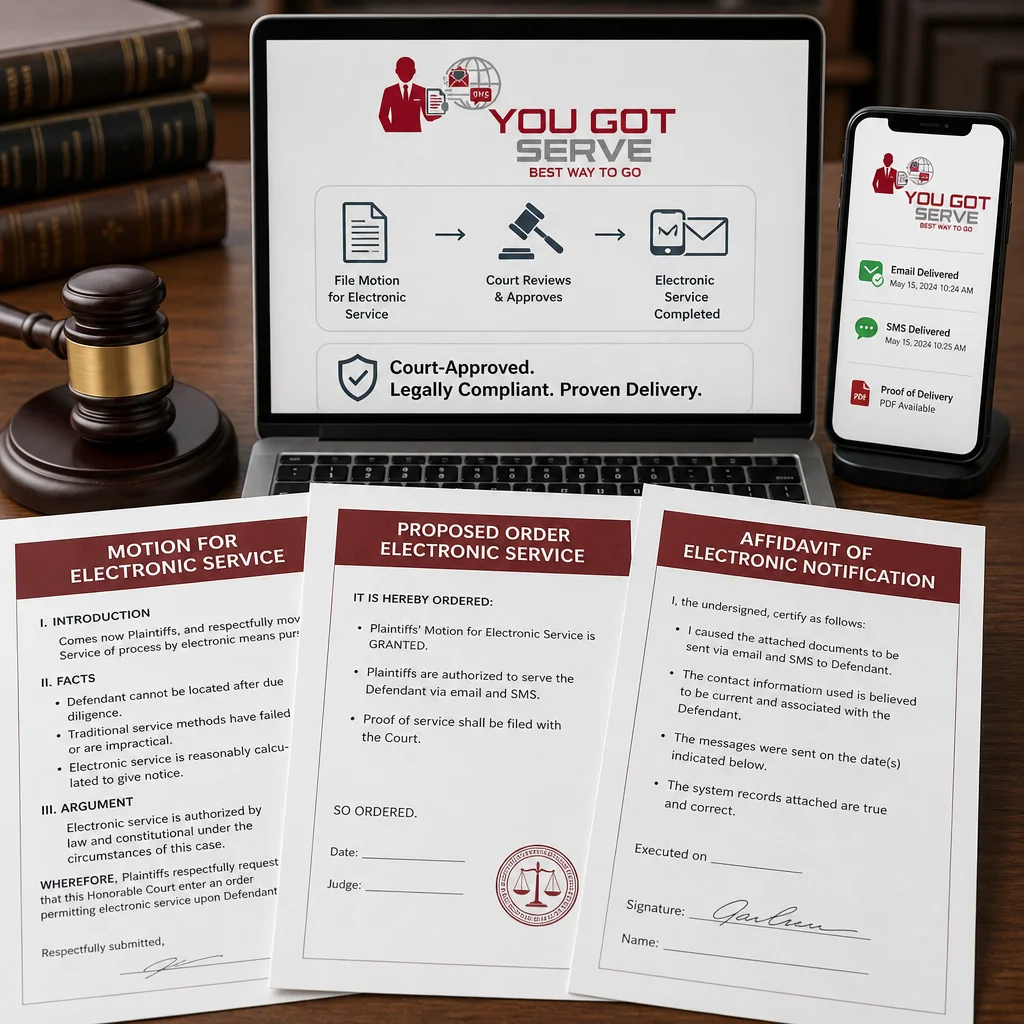
    A defensible affidavit includes:

    • Statutory authority: “Pursuant to [State Rule / Federal Rule], I served the defendant as follows…”
    • Recipient identification: Full name, last known address, and confirmation that the person served matches the defendant in the caption.
    • Service method and dates: “On [date], I electronically served [defendant] at email address [address] and phone number [number].”
    • Notification frequency: “Notifications were sent daily from [start date] to [end date], a total of [X] attempts.”
    • Delivery confirmation: “The following notifications were delivered: [list dates and channels]. The platform provided delivery receipts for each notification sent.”
    • Access verification: “On [date], at [time], the defendant accessed the served documents from [location/device], entering the secure access code provided via the notification.”
    • Exhibits: Attach screenshot logs from your service platform showing the complete notification and access history.

    The key is using timestamped activity records from your service platform as the backbone of your affidavit. Rather than relying on your recollection, you cite exact dates, times, and system confirmations. This shifts the burden of proof; if the defendant claims non-receipt, they must rebut contemporaneous, documented logs rather than challenging your memory.

    Include all available verification data. If geolocation is available, include it. If access code entry is logged, cite it. If delivery receipts exist, exhibit them. The more objective, timestamped evidence you provide, the less room opposing counsel has to argue service was deficient.

    International Electronic Service Compliance Considerations

    Cross-border service complicates electronic methods. The Hague Convention on the Service Abroad of Judicial and Extrajudicial Documents in Civil or Commercial Matters governs service on defendants in treaty countries, generally prohibiting direct service and requiring service through central authorities.

    However, electronic service exceptions are emerging. Some jurisdictions permit email service on defendants in treaty countries when:

    • The defendant consents to electronic service.
    • A court order explicitly authorizes electronic service.
    • The defendant is a business entity with an email address on file.
    • The defendant’s home country permits electronic service by treaty or domestic law.

    International service through our platform is technically available in many countries where email and SMS infrastructure is reliable. However, legal sufficiency depends entirely on the foreign jurisdiction’s rules, any applicable treaties, and whether your court recognizes electronic service across borders.

    Before relying on electronic service internationally, consult the foreign jurisdiction’s civil procedure rules and, if applicable, the Hague Convention’s specific provisions. Some countries require an official declaration that the defendant was served; others demand service through their central judicial authority regardless of the method you choose.

    When international service is permitted electronically, the same documentation standards apply: clear evidence of delivery, recipient identification, and timestamped records demonstrating that the defendant had a reasonable opportunity to receive notice.

    How Persistent 60 and 90-Day Notification Campaigns Build Proof

    Extended notification campaigns transform electronic service from a single attempt into a persistent, documented outreach strategy. Rather than sending notice once and hoping it reaches the recipient, you sustain daily notifications for 60 or 90 days, creating an indisputable record of effort.

    Our platform supports both timeframes. A 60-day campaign sends notifications daily for two months; a 90-day campaign extends to three months. Over that period, a single recipient receives up to 60 or 90 separate notifications across the channels you select (email, SMS, WhatsApp).

    The legal advantage is substantial. A court reviewing a service record that shows 60 days of daily notifications cannot reasonably conclude the defendant had no opportunity to receive notice. Even if the defendant claims they never saw a single message, the cumulative pattern of outreach demonstrates good faith, persistence, and reasonable likelihood of actual receipt.

    For difficult-to-locate defendants, persistent campaigns are particularly valuable. A defendant who changes phone numbers or email addresses during the service period may still be reached by one of the contact points you provided. The extended timeframe increases the probability that at least one notification reaches an active, monitored channel.

    From an evidentiary standpoint, a 60 or 90-day campaign record is compelling. Your affidavit can cite: “Defendant was served with 60 daily notifications from [start date] to [end date]. Delivery confirmations were received for [X] percent of notifications. Defendant accessed served documents on [dates], confirming actual receipt and opportunity to respond.”

    No court can reasonably dismiss such documentation as insufficient. The extended campaign proves both procedural compliance and practical receipt.

    Sample Service Affidavits by Jurisdiction

    Affidavit structure varies by jurisdiction, but key elements remain constant. Here are representative examples:

    Federal Court (FRCP 5(b)(2)(E) – Consent-Based)

    “I declare under penalty of perjury that on [date], I served the defendant via electronic means as follows: Email to [address] and SMS to [number], to which the defendant had previously consented in writing. From [start date] to [end date], I sent daily electronic notifications via email and SMS. Attached as Exhibit A is a complete log from the service platform documenting all notifications sent, delivery confirmations received, and access records confirming defendant’s receipt of the served documents on [date].”

    California (CCP 1010.6 – Business Defendant)

    “Pursuant to California Code of Civil Procedure section 1010.6, I electronically served [Defendant], a business entity, at the email address [address] maintained on file as the entity’s place of business. Beginning [date] and continuing through [date], I served documents daily via email and SMS to [phone number]. All notifications were delivered. On [date], the defendant accessed the documents using a secure access code, as shown in the attached delivery report.”

    Texas (TRCP 21a – Agreed Service)

    “The defendant agreed to electronic service by email at [address] on [date], as shown in the attached consent. I electronically served the document on [date] and [subsequent dates]. The attached exhibit shows delivery confirmations for all notifications, and access logs confirming that the defendant received and opened the served documents on [date].”

    Key differences center on which statute authorizes service and whether consent, court order, or statutory authority is the foundation. Always cite the specific rule, include attached logs, and describe any verification features (access codes, geolocation, selfie capture) that confirm receipt.

    Common Admissibility Challenges and How to Avoid Them

    Courts reject electronic service affidavits for predictable reasons. Anticipating and eliminating these vulnerabilities strengthens your record.

    Challenge: “You don’t prove the defendant actually received the email.” Solution: Use delivery confirmations from your service platform, access code entry logs, and geolocation data. Together, these prove the defendant engaged with the notification, not merely that the email arrived.

    Challenge: “That phone number / email address may not belong to the defendant.” Solution: Document your investigation into the recipient’s contact information. If you located the address through public records, a skip trace, or prior correspondence with the defendant, cite that in your affidavit. Explain why you believe the contact information is accurate.

    Challenge: “You only tried once. That’s not adequate notice.” Solution: Implement multi-channel notifications over an extended period. A 60 or 90-day campaign with daily attempts across email and SMS demonstrates persistence and reasonable likelihood of receipt.

    Challenge: “Electronic service wasn’t authorized in this jurisdiction / for this defendant.” Solution: Verify your jurisdiction’s rules before serving. Confirm that the defendant falls within an authorized category (business entity, consenting party, or defendant in another state, depending on your rules). Cite the specific statute or court rule in your affidavit.

    Challenge: “Your affidavit doesn’t explain what rule you relied on.” Solution: Always cite the statute or court rule authorizing service in your opening sentence. Include the exact text if your jurisdiction requires it. Make the legal foundation explicit.

    The common thread: comprehensive documentation defeats challenges. An affidavit that establishes legal authority, documents the service method, proves delivery, shows evidence of receipt, and explains any verification features is difficult to credibly attack.

    Selecting the Right Platform for Court-Ready Documentation

    Not all service platforms provide the documentation courts require for admissibility. Some platforms send notifications but lack proof of delivery. Others offer delivery receipts but no access verification. A few provide one-time access codes but no activity logging.

    You need a platform designed specifically for court admissibility: one that generates timestamped, comprehensive records of every step in the service process.

    We designed You Got Serve to address precisely this requirement. Our platform combines multi-channel notification (email, SMS, WhatsApp), extended 60 or 90-day campaigns, and layered verification features into a single, court-ready system.

    Here’s why we stand apart: You can enter up to three email addresses and three phone numbers per recipient, ensuring you reach available contact points rather than gambling on a single channel. Daily notifications over 60 or 90 days create persistent outreach records that courts recognize as demonstrating reasonable likelihood of actual receipt. Secure access codes require active engagement from the recipient, generating proof beyond passive email delivery.

    Our timestamped activity records provide the documentation your affidavit needs. Every notification is logged with exact date and time. Delivery confirmations appear in real-time. Access events include timestamp, geolocation data (where available), and unique access code entry records. You can export a complete narrative of your service efforts directly from your account dashboard.

    How it works: You upload your documents, provide recipient contact information, select your service period (60 or 90 days), and our platform automates daily notifications. You monitor status in real-time, track delivery and access, and download your complete activity record when service concludes. Your affidavit then cites this documented evidence, transforming service from a procedure you hope succeeded into one you can prove did.

    Eligible organizations receive a 10% discount on service, with 60-day campaigns starting at $350 and 90-day campaigns at $500. That investment protects you against the far greater expense of re-litigation caused by deficient service.

    Courts increasingly expect electronic service platforms to provide exactly what we offer: persistent multi-channel notification, verified delivery, access verification, and comprehensive timestamped documentation. You Got Serve is built to meet those expectations.

    When admissibility is on the line, choose a platform purpose-built for court-ready proof. You Got Serve is the smarter way to serve.

  • Best State-by-State Email Service Rules for Court-Authorized Electronic Notifications

    Best State-by-State Email Service Rules for Court-Authorized Electronic Notifications

    Understanding Court-Authorized Electronic Service Requirements

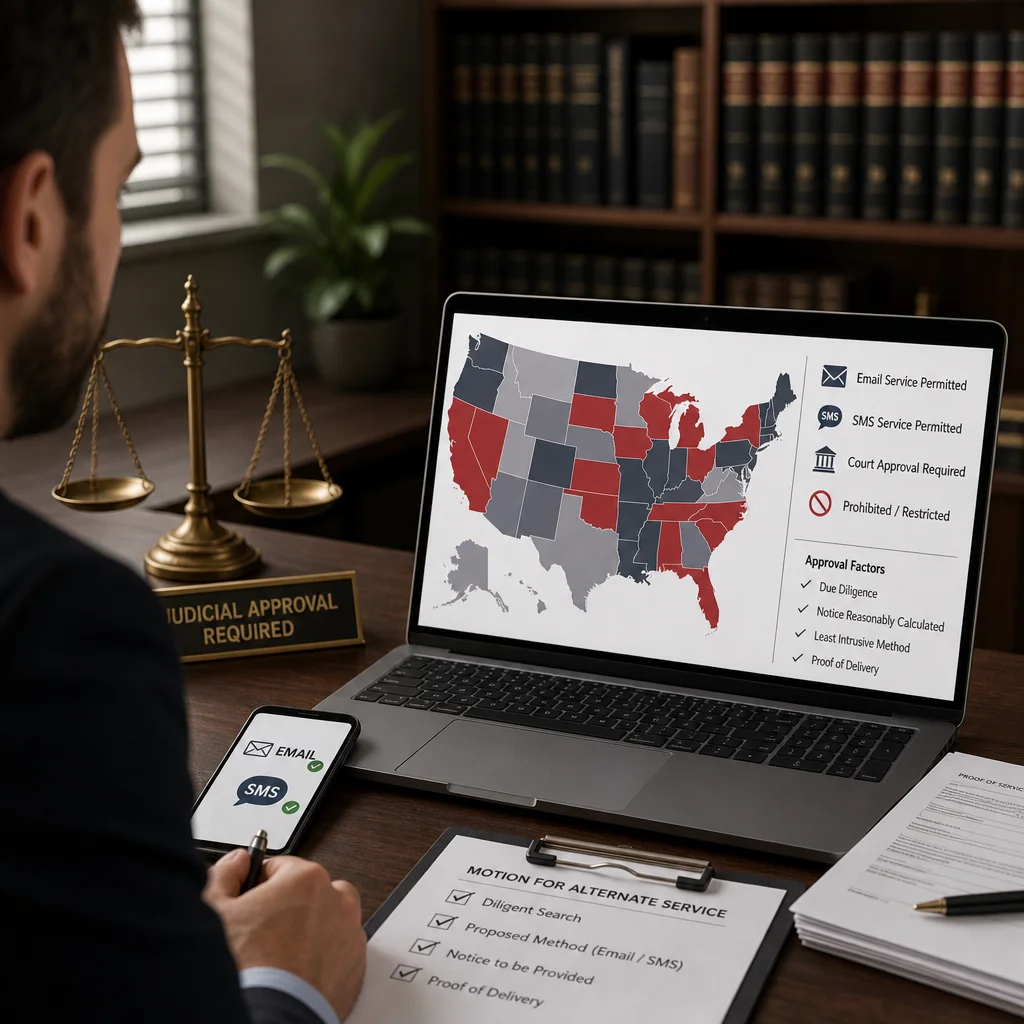
    Electronic service of court documents has become essential in modern litigation, yet state rules remain fragmented and often confusing. The rules that govern when you can serve documents via email, SMS, or other digital channels vary significantly by jurisdiction, and getting it wrong can delay your case or invalidate service entirely. Understanding how your state’s rules work, and how to document compliance, is critical to protecting your legal position.

    Electronic service is not automatically permitted in every court or every case. Courts recognize it only when specific conditions are met: either your state’s rules explicitly allow it for certain document types, a court order authorizes it, or both parties consent to electronic delivery.

    Federal courts operate under Federal Rule of Civil Procedure 5(b)(2)(E), which permits electronic service if a party consents or if court rules allow it. Most state courts have adopted similar frameworks, but the details differ. Some states permit electronic service by default for most civil filings; others require a motion or specific judicial approval before you can serve electronically.

    The key distinction is between serving initial complaints (which often require stricter compliance) and serving subsequent documents within an ongoing case (which may allow broader electronic methods). Courts scrutinize initial service more closely because defendants have a stronger due-process interest in actual notice at that stage.

    Before proceeding with any electronic service strategy, verify what your jurisdiction actually permits. Check your state’s court rules, local rules for the specific court, and any relevant case law. What works in one state or one court division may not work in another.

    How State Rules Differ for Email and SMS Delivery

    Email and SMS occupy different regulatory spaces across the country. Email service has gained broader acceptance over the past decade; most states now explicitly permit email as a method of service in civil cases, provided certain conditions are met.

    SMS service faces more restrictive rules. Fewer states have explicitly authorized text message delivery of court documents. Courts worry about deliverability, readability on small screens, and whether SMS truly constitutes reliable notice. Some jurisdictions allow SMS only if paired with email, or only with specific judicial approval.

    This variability means your service strategy must adapt to your jurisdiction. A dual-channel approach using both email and SMS can strengthen your position, but you must verify that your specific state and court recognize both methods. Some courts will accept SMS as supplementary proof of a good-faith attempt to notify, even if SMS alone would not be sufficient.

    WhatsApp and other messaging platforms remain largely unrecognized by state rules, though some courts in certain jurisdictions have begun to consider them in exceptional circumstances. Unless your local rules or a court order specifically permits these channels, they should not be your primary method.

    Your compliance obligation starts with reading the exact language of your state rules and asking the court directly if you have doubts.

    Federal and State Jurisdictional Requirements for Electronic Service

    Jurisdictional rules establish when a court has the power to require a party to accept electronic service. Generally, a party waives jurisdictional objections if they receive notice, even if that notice comes through an unconventional method. However, the method must be adequate to give actual notice.

    The test courts apply is whether the method used was reasonably calculated, under all the circumstances, to apprise the recipient of the action and afford an opportunity to be heard. This standard comes from constitutional due-process principles and applies across all states and federal courts.

    Electronic service meets this test if:

    • The recipient’s email address or phone number is reliably connected to the defendant
    • The method chosen is reasonably likely to deliver the message
    • The sender can document that the message was sent and received
    • The recipient had reasonable opportunity to access the document

    State rules codify these principles differently. Some states require express consent before electronic service; others presume consent if the party has appeared in the case. Federal courts are more permissive; many federal judges will approve electronic service motions if the method is reasonable and the defendant can confirm receipt.

    Your jurisdiction’s specific approach to these foundational questions shapes your entire service strategy. If your state requires consent, electronic service without it will fail regardless of how many times you send documents. If your state presumes consent after appearance, multiple-channel notifications become more defensible.

    Key Criteria for Approving Alternate Service Methods

    When you cannot locate a defendant using standard service methods, courts allow you to petition for an alternate service method. Judges evaluate these petitions using consistent factors, though terminology and emphasis vary by jurisdiction.

    Courts typically require evidence that:

    • You made a diligent effort to locate the defendant using traditional methods
    • You have a valid basis for believing the proposed method will reach the defendant
    • The proposed method is reasonably calculated to give notice
    • You can document the service attempt and prove receipt or delivery

    Some courts also consider whether the case is significant enough to justify non-standard service methods, though this factor is less emphasized in modern practice. The trend has moved toward accepting any reasonable method that is likely to give notice, rather than restricting alternate service to exceptional cases.

    Email and SMS service frequently satisfy these criteria, especially if you have evidence the defendant regularly uses these channels. A defendant’s social media profile indicating an active email address, for example, supports a motion for email service. Similarly, if the defendant previously provided a phone number during discovery or in prior communications, SMS service becomes more defensible.

    Courts in most jurisdictions will grant motions for electronic service if you demonstrate that standard methods have failed and that electronic service is reasonable under the circumstances.

    Why Multi-Channel Notification Strengthens Your Compliance Position

    Sending documents through a single channel creates risk. Email servers malfunction; SMS messages get lost; defendants claim they never received notice. Courts recognize these vulnerabilities, which is why multi-channel service carries more judicial credibility.

    When you use email, SMS, and WhatsApp simultaneously—or in succession—you create a documented record showing you took multiple steps to ensure notice. Even if the defendant deletes one message or misses one notification, evidence that you sent documents through multiple channels demonstrates diligence and supports your compliance defense.

    From a practical standpoint, multi-channel service increases the actual likelihood of notice. Studies on message delivery show that combining email and SMS achieves significantly higher open rates than either channel alone. Defendants who ignore email often respond to texts, and vice versa.

    Courts recognize this benefit. When you present evidence of service through multiple channels along with verified delivery confirmation, judges are far more likely to find service adequate, even in cases where strict single-channel service might have raised questions.

    Investing in a service platform that supports simultaneous delivery across email, SMS, and other channels transforms your compliance position from defensible to demonstrably strong.

    Documentation Standards That Courts Require for Service Proof

    Proof of service is not merely bureaucratic; it is your evidence that service was adequate. Courts require documentation that satisfies specific evidentiary standards, and what you can offer depends heavily on your service method.

    For traditional personal service, an affidavit from the process server suffices. For electronic service, courts require more rigorous documentation because there is no human witness to the delivery event.

    At minimum, you must provide:

    • Proof that the message was sent (timestamp, recipient address, transmission log)
    • Proof that the message was delivered (delivery receipt, read receipt, or bounce-back confirmation)
    • Proof that the recipient accessed the document (if applicable)
    • The content served (copy of the document or link sent)

    Some courts also require metadata showing the IP address, geolocation, or device used to access documents. Others accept simpler affidavits attesting to the service process.

    Timestamping is critical. Courts look for precise records showing exactly when you sent each notification. A 60-day or 90-day service campaign creates a detailed timeline that demonstrates your persistent good-faith efforts.

    Verification features such as selfie capture, geolocation data, and recipient device information elevate your proof package significantly. These details address judicial skepticism about whether the recipient actually received and understood the notification.

    Build your service documentation as though you will need to defend it in an evidentiary hearing. Thorough timestamped records, delivery confirmations, and recipient verification data give courts confidence that service was genuine.

    Building a Compliant Service Strategy Across Different States

    If your case involves defendants in multiple states, you face a layered compliance challenge. Each state has different rules, and you must satisfy the rules of the state where the defendant is located and where the court is located.

    Start by mapping the applicable rules:

    • Identify the state court rules governing service in your jurisdiction
    • Research whether the defendant’s home state has reciprocal rules
    • Note any local court rules specific to your judge or courthouse
    • Check whether federal rules apply (if in federal court)
    • Document the basis for believing the defendant will receive notice via your chosen method

    Once you have this map, choose a service method that complies with the most restrictive applicable rule. If you are serving a California defendant from a New York court, you should satisfy both California and New York standards.

    Multi-state service also benefits from extra documentation. When you can show that your service method is recognized and accepted in multiple jurisdictions, courts are more likely to view it as legally sound.

    Building your strategy early, before you have already failed at service, positions you to win approval for electronic service methods quickly. Courts move faster on electronic service motions when you come to them with clear evidence that traditional methods have failed.

    How You Got Serve Supports State Rule Compliance

    We designed our platform to address the compliance challenges that trip up attorneys and self-represented litigants using electronic service methods. Our approach combines the technical rigor courts demand with the documentation standards needed to defend your service in court.

    Here is how we support compliance:

    Our platform enables you to enter up to three email addresses and three phone numbers per recipient. This multi-point approach satisfies judicial expectations that you are making serious, documented attempts to reach the defendant. Rather than relying on a single contact point, you are using multiple channels simultaneously.

    Notifications run on a 60-day or 90-day schedule, with daily email and SMS delivery where available. This persistence creates a timestamped record of attempts—exactly what courts want to see when evaluating whether you made diligent efforts. Each notification includes a timestamp, delivery status, and a unique one-time access code for secure document retrieval.

    Recipients can access documents through an encrypted portal using their unique code. This system generates verification data showing whether the recipient accessed the document, when they accessed it, and from what device. Geolocation and selfie capture are available where appropriate, providing additional proof of receipt.

    We also handle the investigative side. If you lack sufficient contact information for the intended recipient, we can assist through available investigative services, or connect you with professional investigators through CII Services Corp. This removes a major obstacle to electronic service petitions: you can demonstrate that you made good-faith efforts to locate the defendant before requesting court approval for service via electronic means.

    All of this data integrates into a single service account where you can track delivery status, monitor access activity, and generate service documentation. By the time you need to prove service in court, you have a complete, timestamped record satisfying the documentation standards judges expect.

    How the service works with a step-by-step walkthrough of our notification process and verification features.

    Verification Features That Satisfy Judicial Standards

    Judges scrutinize electronic service more closely than traditional service, and they expect more granular verification data in return. We built verification into every layer of our process to address this demand.

    Timestamping is automatic. Every notification, every delivery event, and every document access generates a precise timestamp. These records create an indisputable timeline that courts can review.

    Recipient verification options include geolocation data (showing where the document was accessed), selfie capture (confirming the recipient’s identity), notification history (showing all attempts to reach the recipient), and document-access activity (showing whether and when the recipient opened the notification and accessed the document).

    These features address the core judicial concern: did the recipient actually receive the document, or is this just evidence that you sent something into the void?

    When you present a complete verification record showing multiple delivery attempts, successful delivery confirmation, and document access with geolocation and timestamp data, courts have concrete evidence that notice was adequate. You move beyond theoretical compliance into demonstrable fact.

    This level of documentation transforms electronic service from a method courts tolerate into one they actively recognize as thorough and reliable.

    If you need to move beyond service methods explicitly allowed by your state rules, you will need to petition the court for approval. This petition is your opportunity to persuade the judge that electronic service is reasonable and appropriate in your case.

    Your petition should:

    • Explain why standard service methods have failed or are unavailable
    • Describe the electronic method you propose in detail
    • Explain why the proposed method is reasonably likely to give notice
    • Identify the defendant’s email address or phone number and explain your basis for believing it belongs to the defendant
    • Specify how you will document the service attempt
    • Attach supporting affidavits or evidence (prior communications to these addresses, social media profiles, discovery responses, etc.)

    Judges are more likely to grant these petitions if you demonstrate diligence. Evidence that you hired investigators, served multiple addresses, made repeated traditional service attempts, and consulted local counsel all strengthen your case.

    Electronic service petitions succeed more often when you propose a documented, multi-channel approach rather than a single-point method. Tell the court exactly how many times you will attempt service, over what timeframe, and how you will verify receipt.

    Include in your petition a commitment to electronic service of documents that will generate detailed verification records. Courts appreciate knowing you will have thorough documentation if they approve your request.

    File your petition early, before your case stalls. Judges move faster on electronic service motions when they are not viewed as a last-resort delay tactic.

    Common Pitfalls When Relying on Single-Channel Service Methods

    Many litigants underestimate the risks of single-method service. Email alone, SMS alone, or social media alone creates vulnerability because the method can fail silently.

    Email servers bounce messages for delivery errors that recipients never see. Spam filters intercept legitimate emails. Recipients ignore messages they do not recognize. Even if you have a delivery receipt, it does not prove the recipient read or understood the message.

    SMS service carries similar risks. Text messages are sometimes delayed or lost, especially when sent to international numbers. Defendants switch phone numbers. Without explicit confirmation that the defendant received the message, SMS alone leaves doubt about whether service was adequate.

    Social media notifications are unreliable by definition. Platforms change their algorithms, users disable notifications, and messages sometimes fail to deliver. Courts have rejected social media service as a primary method in most jurisdictions.

    The mistake is not attempting these methods; it is attempting them exclusively and then claiming compliance when a single delivery channel fails. If your only evidence of service is an email delivery receipt, and the defendant credibly claims they did not receive the message, you face a genuine compliance problem.

    Single-channel service works only when it is paired with documented, multi-point efforts. Even then, courts are more confident in your position when you use multiple channels simultaneously.

    Why Persistent Multi-Channel Service Is Your Best Solution

    Persistent multi-channel service addresses every judicial concern about electronic notification. It demonstrates diligence, creates redundancy, generates comprehensive documentation, and produces verification data that courts recognize as credible.

    Rather than sending one email and hoping for the best, you send daily notifications through email and SMS over 60 or 90 days. You enter multiple contact points for each recipient. You collect timestamped delivery records, access confirmations, and recipient verification data. You document the entire process in a format courts understand and trust.

    This approach transforms electronic service from a risky shortcut into a methodical, well-documented process that courts can confidently recognize as adequate notice.

    We built our platform around exactly this model. Multi-channel notification with 60- and 90-day service cycles, verified recipient access, geolocation and timestamp data, secure code-protected document access, and complete activity tracking give you the compliance foundation courts demand.

    Whether you are serving a hard-to-locate defendant, following a court order authorizing electronic service, or seeking judicial approval for an alternate service method, persistent multi-channel notification is your clearest path to defensible, documented compliance. It works because it combines technology that actually reaches recipients with documentation that satisfies judicial scrutiny.

    We designed You Got Serve to be this complete solution. Every feature reflects what courts actually require and what modern litigation practice demands. When you need to serve documents electronically and you need the court to accept that service as adequate, persistent multi-channel notification through a verified platform is the smarter approach.

  • Motion Templates for Electronic Service: Get Court-Approved Alternate Delivery

    Motion Templates for Electronic Service: Get Court-Approved Alternate Delivery

    When Traditional Service Fails: The Growing Case for Electronic Alternatives

    Finding a defendant who doesn’t want to be found is one of the oldest challenges in litigation. Skip tracing, repeated attempts at personal service, and newspaper publication all consume time and money, often with no guarantee of actual notice. When traditional methods fail or become prohibitively expensive, electronic service offers a documented, efficient path forward.

    We’ve seen this frustration firsthand. Clients pursuing legitimate claims find themselves trapped: they can’t locate the defendant, repeated attempts at traditional service yield nothing, and newspaper publication feels like shouting into a void. Electronic service through SMS and email solves this by creating multiple verified touchpoints with documented proof. Rather than hoping a newspaper notice reaches someone, you’re sending direct notifications and logging every attempt.

    Courts increasingly recognize that electronic service can achieve what traditional methods cannot: actual notice to the defendant in a cost-effective way. When your motion demonstrates good-faith efforts and uses a reliable delivery platform, judges see a rational solution rather than an end-run around procedural requirements.

    Why Courts Are Approving Electronic Service in More Cases

    The shift toward electronic service reflects both practical necessity and judicial evolution. As defendants become harder to locate and digital communication becomes the norm, courts are reexamining rigid reliance on traditional service methods. Many judges now view persistent electronic notification as more reliable than a single attempt at personal service or a newspaper ad.

    Rule 4.1 of the Federal Rules of Civil Procedure allows service by other means when “authorized by these rules, by the law that provides the basis for jurisdiction, or by a court order.” Individual states and courts have expanded this authority significantly. New York, California, Florida, and many others now have explicit rules permitting electronic service under specific circumstances, particularly when a defendant cannot be located or has evaded service.

    The rationale is straightforward: electronic service, when well-documented, proves notice better than traditional alternatives. A timestamped SMS and email campaign with access logs and recipient verification creates an auditable record. A newspaper notice generates no confirmation that anyone read it. Judges understand this difference and are approving electronic service motions with greater frequency when the supporting documentation is thorough and honest.

    What Judges Need to See: Documentation and Compliance Standards

    A successful motion for electronic service rests on three pillars: compliance with local rules, good-faith efforts to locate and serve the defendant, and clear documentation of why traditional methods failed or are inappropriate.

    Judges expect to see concrete evidence of your efforts before turning to electronic service. This includes:

    • Multiple attempts at personal service with dates, locations, and outcomes
    • Results from investigative skip tracing or database searches showing the defendant’s location is unknown or inaccessible
    • Explanation of why newspaper publication is inadequate (cost, time, lack of defendant engagement)
    • Confirmation that electronic service is permitted under your jurisdiction’s rules or that you’re seeking an exception

    Your affidavit must also demonstrate that the proposed electronic method is reasonably likely to reach the defendant. If you have email addresses or phone numbers on file, say so. If you’ve confirmed the defendant uses social media or maintains an active digital presence, that strengthens your case. The court wants assurance that the method you’re proposing will actually notify the defendant.

    Finally, be transparent about compliance with local rules. Reference the specific rule or statute that permits electronic service in your jurisdiction. If you’re asking for relief under a general “other means” provision, explain how your method aligns with the policy behind that rule. Judges are more inclined to grant motions that show careful attention to procedural requirements.

    Building Your Motion: Key Components Judges Expect

    A motion for electronic service should follow your jurisdiction’s motion template but include several specific elements. Start with a clear caption identifying the case, the parties, and the relief sought. Then structure your motion in this order:

    Statement of Facts: Describe the defendant, the case background, and—critically—your efforts to serve. Name the persons or entities contacted, dates of service attempts, results, and any evidence that traditional methods will not succeed.

    Legal Argument: Cite your jurisdiction’s rules permitting electronic service. Explain how your proposed method complies with those rules. If you’re relying on a “good cause” exception or a general “other means” provision, explain the policy reasons supporting electronic service in your case.

    Proposed Electronic Service Method: Specify the channels you’ll use (email, SMS, WhatsApp, etc.), the contact information you have, and the notification schedule. Will you send daily notifications for 60 days? Weekly reminders? Explain your approach and why it’s reasonable.

    Why Traditional Service Is Inadequate: Be direct. Does skip tracing show the defendant is evading location efforts? Is newspaper publication too costly or time-consuming? Has personal service failed despite diligent attempts? Judges appreciate candor here.

    Request for Relief: Ask the court to approve your proposed electronic service method and to declare that compliance with it constitutes valid service of process. Include a proposed order (see section below).

    How You Got Serve Generates Court-Ready Proof and Documentation

    Our platform is built to support exactly this motion process. We generate court-ready documentation automatically, eliminating guesswork about what evidence judges need to see.

    When you serve documents through us, every action is logged with timestamps: each SMS and email sent, each notification delivered, each time a recipient accesses their document using their secure code. We capture and document recipient verification data when available, including geolocation, device information, and access patterns. This creates an auditable trail that demonstrates the defendant received actual notice.

    Our investigative skip-tracing capability helps you gather contact information before filing your motion. If you don’t have verified phone numbers or email addresses, we can assist in locating them, strengthening your argument that you’ve conducted a diligent search.

    Most importantly, we generate a complete delivery report and affidavit template that documents your entire service campaign. This report becomes Exhibit A to your motion and your supporting affidavit, giving the court a professional, detailed accounting of every notification attempt and outcome. You’re not asking the court to trust your memory or your handwritten notes; you’re presenting an automated, system-generated record.

    Template Structure: Motion, Proposed Order, and Supporting Affidavit

    A complete motion package includes three documents working together. We provide templates for all three, customized to your case details.

    The Motion Itself: This is your argument to the court. It asks for approval to serve the defendant electronically and explains why traditional service has failed or is impractical. Keep it concise: three to five pages maximum. Courts appreciate brevity and clear reasoning.

    The Proposed Order: This is the order you want the judge to sign. It should state exactly what electronic service method is approved, the contact information for the defendant, the notification schedule, and a declaration that compliance with this order constitutes valid service of process. Courts often use proposed orders verbatim, so precision matters.

    The Supporting Affidavit: This is your sworn statement detailing your efforts to locate and serve the defendant, why those efforts failed, and why electronic service is appropriate. This is where you cite specific dates, locations, and skip-tracing results. Attach the delivery report from our platform as an exhibit, showing how electronic service will work and what documentation it will generate.

    Courts often grant these motions when all three documents are cohesive, well-organized, and clearly cross-referenced. The motion explains your reasoning, the affidavit provides detailed evidence, and the proposed order gives the judge a ready-made ruling.

    Preparing Your Electronic Service Records Before Filing

    Before you file your motion, gather and organize all evidence supporting your request. This includes your skip-tracing records, logs of attempted personal service, and any communications with the defendant or third parties about their location.

    If you’re already using our platform to serve documents, export your delivery records and review them for completeness. Confirm that all contact information is accurate and that your notification schedule is clearly documented. A clean, organized delivery report strengthens your motion considerably.

    Also prepare a summary chronology of your service attempts over time. List each attempt by date, method, and result. If you attempted personal service on three different dates and all failed, say so explicitly. If skip tracing revealed the defendant’s phone number but not a mailing address, document that. This chronology becomes part of your affidavit and demonstrates the progression from traditional service to electronic service.

    Check local court rules to see whether your jurisdiction requires any additional documentation, such as a certificate of diligent search or proof of investigative efforts. Different courts have different standards. Some require affidavits from process servers; others accept detailed written accounts. Confirm these details before filing.

    Jurisdiction-Specific Requirements and Court Rule Compliance

    Electronic service rules vary significantly by jurisdiction. A motion that succeeds in one court may fail in another if it doesn’t address local procedural requirements.

    Federal courts use Federal Rule of Civil Procedure 4, which permits service by “other means” if authorized by court order. This requires you to show why traditional service under Rule 4(e)-(f) is inadequate and why your alternative method is reasonable.

    State courts operate under their own rules. New York permits electronic service by court order under CPLR 308. California allows it under CCP 1010.6 when the defendant has an email address on file. Florida permits electronic service by court order under Fla. Stat. 48.161. Each has slightly different standards and evidence requirements.

    Before drafting your motion, research your specific court’s rules and prior rulings on electronic service. Check your local court’s standing orders or website for any local rules addressing electronic service. If your court has issued precedent on this topic, cite it. Judges appreciate counsel who demonstrate familiarity with their court’s existing framework.

    Also confirm whether your proposed electronic service method aligns with your court’s preferences. Some courts favor email; others emphasize SMS as more intrusive and therefore more likely to ensure notice. If your court has expressed a preference, tailor your proposal accordingly.

    Our Platform’s Role in Supporting Your Motion Success

    We designed our platform specifically to support motions for electronic service. Rather than cobbling together email logs and SMS records from separate vendors, you have one integrated source of truth for your entire service campaign.

    Our 60- and 90-day notification cycles align with many courts’ expectations for persistent, documented service attempts. We send notifications through multiple channels (email, SMS, WhatsApp where available) to increase the likelihood of reaching the defendant while creating comprehensive logs of every attempt. Recipients access documents using a secure code, and we document when they do, adding another layer of proof to your motion.

    Verification features such as geolocation, timestamp logging, and access activity create the kind of detailed documentation judges now expect. You’re not asking the court to assume the defendant received your notification; you’re showing them precisely when and how the defendant accessed the document.

    Our platform also handles international digital service where legally and technically appropriate, expanding your options if the defendant is located outside the United States. Our investigative capability helps you build the case that you conducted a diligent search before requesting electronic service approval.

    When you’re ready to file your motion, we provide a complete delivery report and affidavit template populated with your specific case data. This report becomes your primary evidence, reducing the work of translating service records into court-ready documentation.

    Next Steps: Filing Your Motion with Complete Delivery Evidence

    Start by gathering your skip-tracing and service attempt records. Document precisely why traditional service has failed and what electronic service contact information you have. If you don’t have adequate contact information, use our platform’s investigative assistance to locate email addresses and phone numbers.

    Then draft your motion and affidavit using our templates as a starting point. Tailor each section to your jurisdiction’s rules and your specific case facts. Be honest and detailed about your efforts to locate the defendant; courts respect candid, well-organized arguments.

    Before filing, review your proposed order to ensure it clearly describes the electronic service method, contact information, notification schedule, and the declaration that compliance constitutes valid service. Run your motion by a local attorney if you’re self-represented; procedural requirements vary, and a quick review can prevent costly delays.

    File your motion well in advance of any relevant deadlines. Include your delivery report and any skip-tracing affidavits as exhibits. Serve the defendant with the motion if their location is known; if not, comply with your court’s requirements for service on other parties.

    Once the court approves your motion, begin your electronic service campaign immediately. Keep detailed records throughout, and preserve all delivery logs and access documentation. If the defendant later challenges service, your complete record will demonstrate compliance with the court order and the reliability of our platform’s documentation.

    The courts are ready to approve electronic service when you present a thorough, honest case. We’re here to help you build that case with complete, court-ready documentation.

    For further reading: How it works.

  • Electronic Service of Process vs. Newspaper Publication: Which Method Serves Your Needs

    Electronic Service of Process vs. Newspaper Publication: Which Method Serves Your Needs

    The Challenge: Why Traditional Service Methods Fall Short

    When you need to serve court documents to a defendant who is difficult to locate or unresponsive, the options feel limited. Traditional personal service requires hiring a process server, which can stretch timelines and budgets. Newspaper publication, once a reliable fallback, now costs hundreds or thousands of dollars and produces minimal verifiable proof that anyone actually saw the notice.

    The real problem: these methods were designed for a different era. Newspaper circulation has collapsed, and process servers often spend weeks pursuing outdated addresses. Meanwhile, your case stalls and your legal costs climb. You need a faster, more cost-effective way to reach people where they actually are: on their phones and email.

    Electronic service of process offers a modern solution. Instead of waiting for a publication cycle or hoping a process server finds someone at home, you can send documents directly to multiple contact points and track every attempt in real time. The result is both faster resolution and documented proof of your efforts to comply with court rules.

    Electronic Service vs. Newspaper Publication: A Direct Comparison

    Newspaper publication requires court authorization, typically costs $400 to $1,500 depending on the publication and circulation period, and takes several weeks to complete. The newspaper publishes your notice once or twice, and then what? You have limited proof that the defendant actually read it. Most defendants never see the notice at all.

    Electronic service works differently. We send your documents via email and SMS simultaneously to multiple contact points you provide. Notifications continue daily for 60 or 90 days, creating a persistent record of attempts to reach the recipient. If they access the document, we capture the timestamp, geolocation data, and access activity. If they ignore the notifications, you still have timestamped evidence of every attempt.

    The cost comparison is stark. A newspaper publication campaign can run $800 to $2,000 total. Our 60-day electronic service plan costs $350; our 90-day plan costs $500. You also compress the timeline from weeks down to hours. Your case moves faster, and you maintain stronger documentation of service throughout.

    Eligible organizations receive a 10% discount on our plans, making electronic service even more accessible for nonprofits, government agencies, and established legal aid providers.

    Multiple Contact Points and Daily Notifications: Our Advantage

    We allow you to upload up to three email addresses and three phone numbers per recipient. This matters because people change devices, delete old email accounts, and switch phone carriers. By using multiple channels simultaneously, you dramatically increase the odds of successful contact.

    Each recipient receives daily automated notifications through email, SMS, and WhatsApp where available. Unlike a newspaper notice that appears once and disappears, our platform delivers persistent reminders. Many recipients who initially ignore a single notice will respond to the accumulated weight of multiple touchpoints over time.

    Recipients access documents securely using a unique one-time access code. They don’t need to download software or create an account. A simple click or code entry retrieves the document, and we log the exact timestamp they accessed it.

    Your service record tells a complete story: notification dates, delivery success, document access times, and any verification data such as geolocation or selfie capture. This level of documentation strengthens your position if the defendant later claims they never received notice.

    Verified Recipient Access and Documentation: Building a Strong Record

    Proof of service is only as strong as your documentation. When you rely on newspaper publication, you receive an affidavit of publication from the newspaper. It proves the notice ran, but it says nothing about whether the defendant actually saw it.

    Our platform captures multiple verification layers. When a recipient accesses their document, we record:

    • Timestamp of access
    • Geolocation information (where available)
    • Device and browser details
    • Complete notification history
    • Service status (Pending or Delivered)

    You can also enable optional selfie capture to add biometric verification. Collectively, these data points create a detailed electronic trail that demonstrates good-faith efforts to reach the recipient and proof of actual knowledge or reasonable opportunity to know.

    This documentation becomes powerful evidence if the defendant contests service later. You can show the court exactly when and how many times the notification was sent, and whether the recipient accessed the document.

    We provide proof of service tracking through your account dashboard. You monitor the service status in real time, rather than waiting for the process server’s report or the newspaper’s affidavit.

    Cost and Timeline Efficiency: What You Actually Save

    The dollar savings are immediate. A typical newspaper publication runs $600 to $1,200. Hiring a private investigator to locate a hard-to-find defendant adds $300 to $500 more. Then you hire a process server to attempt service, another $200 to $400. Total: $1,100 to $2,100.

    Our platform handles multiple functions in one tool. Sixty-day service costs $350. Ninety-day service costs $500. If you need investigative support to locate a recipient, we offer skip tracing through our platform and can connect you with professional investigative services when needed.

    The timeline advantage is equally important. Traditional service can consume 4 to 8 weeks. Electronic service begins immediately. Your documents go out today, and you start building your service record within hours. If the recipient is reachable, you may secure proof of delivery within days.

    This speed translates to faster case resolution, lower attorney fees for you or your client, and reduced likelihood that the case stalls due to incomplete service.

    Securing Compliance While Serving Difficult-to-Locate Recipients

    Electronic service is not a free pass to ignore court rules. Different jurisdictions have different requirements. Some courts explicitly permit electronic service under their civil procedure rules. Others require specific authorization or conditions.

    Our platform is designed to support compliance with local rules, but it’s your responsibility to check whether your jurisdiction allows electronic service for your specific case and recipient type. Before filing any motion for electronic service, verify the applicable court rules and any standing orders in your case.

    The advantage we provide is this: if your court does authorize electronic service, our platform delivers the sophisticated, auditable proof you need to demonstrate compliance. We don’t just send documents and hope. We document every action, timestamp every event, and provide verification that gives courts confidence in the service method.

    When you file a motion requesting permission to serve electronically, you can attach our service records as evidence that you’ve attempted good-faith notification through practical, reliable means.

    How Our Platform Streamlines the Service Process

    Using our platform takes minutes, not hours. You log into your account, upload your documents, enter up to three email addresses and three phone numbers for the recipient, and select your service period (60 or 90 days).

    How our platform works is straightforward: we handle all the automation. Your documents are encrypted in transit and at rest. Recipients retrieve them using a secure code. Notifications continue daily automatically. Your account dashboard tracks everything in one place.

    You avoid the coordination headache of managing multiple vendors. No need to call the process server, wait for updates, chase the newspaper for proof of publication, or juggle investigator reports. We centralize it all.

    If you’re missing current contact information for the recipient, we can assist through available skip tracing. This integrated approach means you can move from uncertainty to active service in a single workflow.

    Sample Motions and Proposed Orders: Supporting Your Court Filings

    When you request permission to serve electronically, courts typically want to see evidence that traditional service is impractical or that electronic service is otherwise permitted under the rules. Your motion should include:

    • Explanation of why personal service or certified mail has failed
    • Description of the electronic service method you propose
    • Cite to the applicable court rule permitting electronic service
    • Evidence of good-faith attempts to locate the defendant
    • Your proposed service timeline and verification plan

    Our service records provide the backbone of this motion. You can demonstrate that you’ve identified multiple contact points, explain why electronic notification is appropriate, and show (if service has already begun) that your method is reliable and documented.

    When you file, attach our terms of service, your platform screenshots showing the service setup, and any completed service records to date. This evidence shows the court that your method is professional, auditable, and designed to give the defendant fair notice.

    Courts are increasingly comfortable with electronic service when it’s pursued professionally and documented thoroughly. Our platform gives you that professional infrastructure.

    Investigative Support When Contact Information Is Incomplete

    You can’t serve documents if you don’t know where to send them. When you lack sufficient contact information, we can help you locate the recipient through available skip tracing integrated into our platform. We investigate and update contact details so you have phone numbers and email addresses to work with.

    If you need deeper investigative support, we can connect you with professional investigative services through CII Services Corp. This partnership means you can stay within one trusted ecosystem rather than juggling multiple vendors.

    The advantage is practical: you move from “I don’t have current contact info” to “I have multiple verified contact points and a service strategy” without delays.

    Making the Decision: Why Electronic Service Wins

    Newspaper publication is slower, more expensive, and produces weaker proof of notice. You get minimal documentation and little assurance the defendant ever saw anything. It’s a method designed for a world where people read newspapers.

    Electronic service is faster, cheaper, and far more auditable. You send documents to multiple channels simultaneously, notifications persist for 60 or 90 days, and you capture detailed verification of every attempt and any access. Your service record is professional, timestamped, and difficult to challenge.

    The choice is clear. If your court permits electronic service, we enable you to do it right. You combine multiple contact points, daily automated notifications, secure document access, recipient verification, and complete documentation in one platform. Your case moves faster, your costs drop, and your proof of service is stronger.

    We are You Got Serve, and we’ve built this platform specifically for legal professionals and self-represented litigants who need to serve difficult-to-locate recipients. Our 60-day service for $350 or 90-day service for $500 gives you a faster, more reliable, and more affordable alternative to newspaper publication.

    Check your local court rules. If electronic service is permitted in your jurisdiction, we’re the platform designed to make it work. Serve documents electronically, track delivery in real time, and build a service record that holds up in court.

    You Got Serve — The Smarter Way to Serve.

  • Motion for Electronic Service: Templates and Jurisdictional Guidance for Courts

    Motion for Electronic Service: Templates and Jurisdictional Guidance for Courts

    When Personal Service Fails: The Electronic Service Gap

    Traditional personal service through a process server often breaks down when defendants are difficult to locate, deliberately evading service, or living outside your jurisdiction. Newspaper publication—the last resort under many court rules—is slow, expensive, and leaves little room

    for verified receipt. That gap between “I can’t find the defendant” and “I’ve exhausted all practical alternatives” creates real delays in litigation.

    Courts recognize this problem. When standard methods fail and you’ve documented those failures, electronic service via email and SMS becomes a viable bridge. This approach delivers documents to the recipient’s actual communication channels, creates a timestamped record of delivery attempts, and often reaches someone faster than waiting for a process server or newspaper publication deadline.

    The key is preparing a motion that demonstrates diligence and explains why electronic service serves the interests of justice better than your other options.

    Why Courts Are Authorizing Electronic Service of Documents

    Courts are increasingly permitting electronic service because it aligns with modern communication patterns. Most people check email and text messages daily; many ignore mail or avoid process servers. When you can show the court that the defendant is likely to receive notice through these channels, judges recognize the practical value.

    Federal Rule of Civil Procedure 4(e)(1) and corresponding state rules now explicitly authorize electronic service in many contexts. Courts also have inherent authority to modify service requirements when traditional methods have failed and alternative methods reasonably calculate to notify the defendant. This flexibility reflects a shift toward outcome-focused rules: if electronic service actually reaches the defendant and provides fair notice, courts want to enable it.

    By filing a motion for electronic service with documented evidence of your earlier attempts, you’re asking the court to apply rules that already exist in your favor.

    Key Components of a Motion for Electronic Service

    Your motion should contain four critical elements:

    Certification of diligence. Describe every reasonable attempt to serve the defendant through traditional means: process server efforts, address searches, recent personal service attempts. Include dates, locations, and why each failed. This shows you’ve exhausted standard methods.

    Identification of contact information. List the email addresses, phone numbers, or social media handles you’ve verified belong to the defendant. Explain how you obtained this information and why you’re confident it reaches the right person.

    Proposed service method. Specify the channels you plan to use: email, SMS, WhatsApp, or a combination. Explain the frequency and duration of notifications (for example, daily attempts over 60 days). Detail how the defendant will access documents securely and confirm receipt.

    Legal basis. Cite your jurisdiction’s rules permitting electronic service, the court’s inherent authority to modify service, or both. A brief statement of fairness—why electronic service is reasonably calculated to notify—completes this section.

    Jurisdictional Variations and Court Rule Requirements

    Electronic service rules differ sharply across jurisdictions. Federal courts follow Federal Rule of Civil Procedure 4(e)(1), which requires written consent or court order for electronic service. Many state courts have adopted similar rules, though some are more permissive.

    Before you draft your motion, check your specific jurisdiction:

    • Does your state’s civil procedure rule explicitly address electronic service?
    • Are there recent cases in your district authorizing service by email or SMS?
    • Does your court have local rules or administrative orders expanding service options?
    • What threshold must you meet: mere diligence, impossibility, or just reasonable calculation to notify?

    Some jurisdictions require you to attempt service at the defendant’s last known address before seeking electronic alternatives. Others focus solely on whether the proposed method reaches the defendant. A quick conversation with the court clerk or a search of recent decisions in your district will clarify the local standard. Your motion’s persuasiveness depends on matching the right legal theory to your court’s expectations.

    Drafting Your Proposed Order for Electronic Notification

    A proposed order is often more important than the motion itself. Courts prefer clear instructions they can sign without revision. Your order should specify:

    Service details. The defendant’s name, the documents to be served, and the email addresses or phone numbers where service will occur.

    Service protocol. How many attempts per day, over how many days, and through which channels. For example: “Defendant shall be served via SMS at [number] and email at [address], daily from [start date] through [end date], or until receipt is confirmed.”

    Access mechanism. Whether documents will be sent as attachments, links, or secure access codes. Explain how the defendant receives and verifies a one-time code to retrieve documents.

    Proof of service requirements. What documentation you’ll provide the court: screenshots, delivery reports, timestamped records of notification attempts, and any verification of access or receipt.

    Fallback provision. Many courts appreciate an exit clause: “If electronic service is ineffective after [X days], petitioner may file a supplemental motion for alternative service.”

    A concise, specific order gives the judge confidence that you’re proceeding methodically and won’t abuse the authority.

    How You Got Serve Supports Motion Compliance

    We designed our platform to address exactly what courts require when evaluating a motion for electronic service. When you use You Got Serve, we handle the logistical and documentary burdens so you can focus on drafting a persuasive motion.

    Our system delivers documents via email, SMS, and WhatsApp across up to three email addresses and three phone numbers per recipient. You can set notification campaigns to run for 60 or 90 days, creating an unambiguous record of persistent, good-faith attempts to notify. Every delivery attempt is timestamped and logged; you receive automated reports showing which messages succeeded, which failed, and when.

    Beyond delivery, we provide the documentation courts expect. Our platform tracks notification history, recipient access events, and verification activity all in one dashboard. When you file your motion, you can attach a comprehensive service report showing every attempt and its outcome. That level of detail strengthens your credibility with the judge and demonstrates that electronic service was methodical and fair.

    We also integrate investigative assistance. If you’re unsure whether you have the right contact information, we can conduct skip tracing to verify or update email addresses and phone numbers before your service campaign begins. This addresses one of the biggest judicial concerns: that the defendant never actually receives notice.

    Document Security and Verification Features That Courts Require

    Courts care deeply about proof. A vague claim that “we sent an email” won’t pass scrutiny. You need timestamped records, evidence that the document was accessed, and ideally some confirmation that the right person received it.

    We offer multiple verification layers:

    Code-protected access. Recipients retrieve documents using a unique one-time code, adding friction that confirms intentional access rather than accidental clicks.

    Timestamp logs. Every notification and access event is recorded with precise timing. These logs become part of your proof of service.

    Optional verification capture. Where legally permissible and with appropriate consent mechanisms, customers can enable selfie capture or geolocation tagging during document access. This creates stronger evidence that the recipient personally retrieved the documents.

    Notification history. Our reports show the defendant not only that service was attempted but also the method, date, and outcome of each attempt. This transparency supports your motion’s credibility.

    When you cite these features in your motion and proposed order, you give the court confidence that electronic service isn’t a shortcut; it’s a documented, verifiable process.

    Multi-Channel Notification: Building Your Service Strategy

    Rely on one channel and you risk a failed service claim if that channel falters. Spreading notifications across email, SMS, and WhatsApp dramatically increases the likelihood that at least one reaches the defendant.

    Structure your strategy this way:

    Primary channel. If you have the defendant’s most reliable contact, start there but support it with secondary channels.

    Daily reinforcement. Send notifications every day rather than once or twice. Courts understand that people miss messages; repetition over time demonstrates fair effort.

    Channel rotation. Alternate between email, SMS, and WhatsApp over your campaign window. A defendant who deletes one email might see a text message notification.

    Escalation triggers. If delivery fails on one channel, increase frequency on others. Our platform can automate this logic, shifting resources to channels showing success.

    This multi-channel approach serves two audiences: it actually reaches the defendant more often, and it demonstrates to the judge that you’ve designed your service method to succeed.

    Tracking and Proof of Service Documentation

    The proof you file with the court can make or break acceptance of electronic service. Judges want granular detail. A single affidavit saying “I served the defendant via email” invites skepticism. A comprehensive report showing delivery attempts, failures, retries, and eventual access tells a complete story.

    When you file your proof of service, include:

    • A timeline of all notification attempts, sorted by date and channel
    • Delivery confirmations or failure reports from your service platform
    • Documentation of access, if available (e.g., “Recipient accessed document 03/15/2026 at 2:47 PM using access code XXXX”)
    • Screenshots of the access interface and any verification capture
    • A summary affidavit attesting to your compliance with the court’s order

    Digital service platforms should generate these reports automatically. You simply download, review, and file. This efficiency is one reason courts increasingly favor electronic service: it’s easier to verify and audit.

    Preparing for Objections and Court Approval

    The defendant may object to your motion, arguing that electronic service is unfair, that you haven’t exhausted traditional methods, or that you lack valid contact information. Anticipate these arguments in your motion.

    Address concern preemptively:

    Diligence question. “We attempted personal service on [dates] at [locations], engaging a licensed process server who reported unsuccessful service attempts. We searched public databases and obtained the contact information detailed below.”

    Fairness question. “Electronic service via email and SMS reaches the defendant’s actual communication channels more reliably than newspaper publication or further process server efforts. The defendant’s own use of these channels suggests notice will be received.”

    Contact validity. “We verified this email address and phone number through [method], confirming they are associated with the defendant.”

    If possible, include a declaration from your process server or investigator confirming diligence efforts. This third-party perspective carries weight.

    Filing Your Motion: Checklist and Best Practices

    Before filing, confirm these elements:

    • Local court rules and recent case law reviewed for electronic service standards
    • Certification of diligence drafted with specific dates, locations, and process server details
    • Valid contact information identified and verified
    • Proposed order drafted clearly, specifying service method, duration, and proof requirements
    • Legal citations included, matching your jurisdiction’s rules and recent precedent
    • Proposed order is concise and leaves minimal room for judicial revision
    • Supporting documentation organized: process server affidavits, address verification records, screenshots of contact information
    • File with the court according to local rules; serve the defendant if that’s still possible

    Format matters. A well-organized motion with consistent formatting and clear headings reads faster and persuades more effectively. Judges appreciate professionalism.

    File early if you’re already in litigation. Judges expect service motions in early stages; filing one months into a case raises questions about whether you’ve delayed unnecessarily.

    After Approval: Executing Your Electronic Service Campaign

    Once the court approves your motion and signs your proposed order, execution begins immediately. This is where a dedicated electronic service platform becomes invaluable.

    Log into your account, input the defendant’s contact information, set your notification schedule (daily, for the duration the court approved), and activate the campaign. The system handles the rest: sending messages on schedule, logging delivery status, and alerting you to failures so you can adjust if needed.

    Monitor your dashboard weekly. If one channel shows consistent failures, investigate whether the contact information is stale or the defendant has blocked your number. If access codes aren’t being used, you may need to confirm the order or serve a reminder notice.

    Document everything. Save screenshots of your dashboard showing delivery attempts, access events, and verification activity. These records become your proof of service affidavit when the time comes.

    If the campaign succeeds and the defendant accesses documents, file your proof of service promptly. If it doesn’t succeed within your campaign window, you have grounds to request alternative service or return to the court with updated information.

    Electronic service, once approved, turns a procedural risk into a controlled, documented process. You’re no longer hoping a process server finds someone; you’re executing a court-authorized notification plan with complete visibility into results. That control and transparency are what courts want—and what makes electronic service worth pursuing.

    For further reading: How electronic service works.